



Lighting has the power to completely transform how we experience architectural spaces and stage environments. From the dramatic illumination of a building façade to the immersive atmosphere of a live performance, the right lighting solution turns ordinary surfaces into captivating visual experiences. Wall washer LED lights have become essential tools for modern designers seeking uniform, powerful illumination across broad surfaces. However, two core challenges persist in achieving professional-grade results: ensuring a long lifespan through effective cooling performance and delivering vibrant colors that bring dynamic energy to any project. These challenges are interconnected—thermal management directly affects both LED longevity and color consistency over time. This article provides actionable solutions for lighting professionals working with RGB LEDs and advanced thermal systems. We will explore how wall washer lights function across architectural and stage applications, examine cooling technologies that extend fixture life, discuss techniques for achieving rich color effects, and walk through a practical step-by-step guide that lighting designers can implement immediately in their next project.
Understanding Wall Washer LED Lights and Their Applications
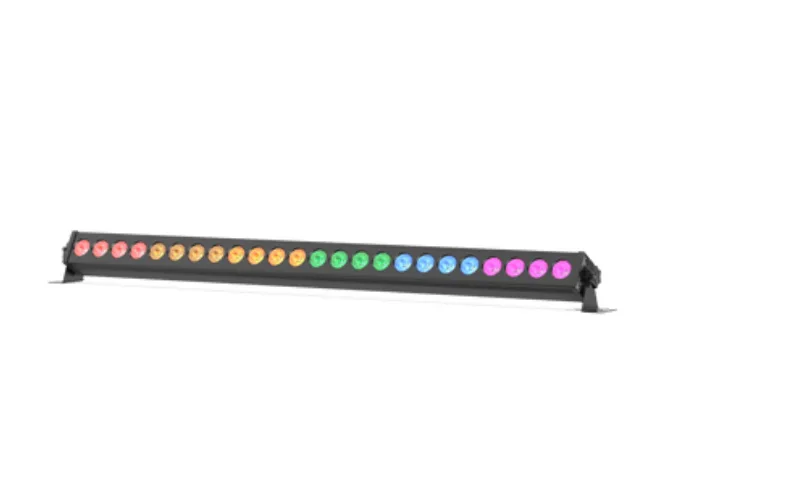
Wall washer lights are fixtures specifically engineered to cast a smooth, uniform sheet of light across vertical surfaces. Unlike spotlights that concentrate beams on focal points, wall washers distribute illumination evenly from top to bottom, eliminating harsh shadows and revealing the full texture and detail of a surface. This fundamental capability makes them indispensable across two primary domains. In architectural lighting, they bring building façades, interior feature walls, and monument surfaces to life after dark, accentuating material textures and geometric forms that would otherwise disappear into shadow. In stage lighting, they serve as atmosphere builders—flooding backdrops with color, establishing mood transitions between scenes, and providing consistent base illumination that complements moving fixtures. The benefits extend beyond aesthetics. Wall washer LEDs consume significantly less energy than traditional halogen or fluorescent alternatives while offering superior design flexibility through compact form factors that integrate seamlessly into coves, ground channels, and overhead rigging. As projects grow more ambitious and clients demand both sustainability and visual impact, lighting designers increasingly seek wall washer solutions that combine reliable performance with creative versatility to meet evolving industry standards.
Ensuring Longevity: The Critical Role of Cooling Performance
Heat is the silent enemy of LED technology. While wall washer LEDs generate far less thermal waste than traditional lighting sources, the concentrated power densities required for professional-grade illumination still produce significant heat at the junction level. When this thermal energy is not effectively dissipated, it triggers a cascade of degradation: phosphor layers break down, driver components stress beyond rated thresholds, and the LED chip itself experiences accelerated lumen depreciation. A fixture rated for 50,000 hours under ideal conditions may fail in a fraction of that time if cooling performance is inadequate. The relationship between junction temperature and lifespan follows a predictable curve—every 10°C increase above optimal operating temperature can reduce LED life by roughly half. For lighting designers specifying fixtures in demanding environments, whether recessed into sun-baked exterior walls or mounted in enclosed ceiling cavities above a stage, understanding thermal dynamics is not optional. It determines whether a project delivers reliable performance for a decade or requires costly replacements within a few years. Effective heat management depends on three interconnected factors: the thermal conductivity of materials used in the fixture housing, the geometric design of heat dissipation surfaces, and the airflow conditions surrounding the installed unit. Each factor must be addressed during both product selection and installation planning to achieve the long lifespan that clients expect from premium LED investments.
Advanced Cooling Technologies for Enhanced Durability
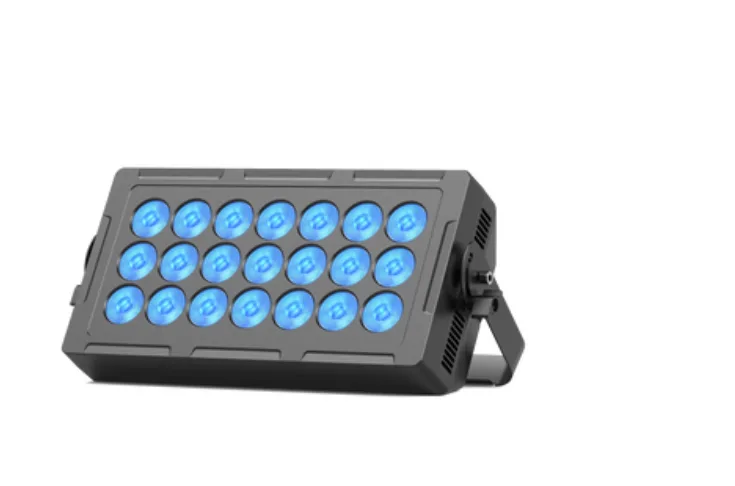
Modern wall washer fixtures employ passive and active cooling strategies tailored to their application context. Passive systems rely on extruded aluminum heat sinks with fin geometries optimized through computational fluid dynamics, drawing heat away from the LED array and radiating it into surrounding air without moving parts—ideal for architectural installations where maintenance access is limited and silent operation is essential. Active systems incorporate micro-fans or thermoelectric cooling elements for high-output stage fixtures operating in enclosed rigging positions where natural convection alone cannot maintain safe temperatures. Manufacturers such as UKING design their wall washer fixtures with robust aluminum housings and optimized heat sink configurations that address these thermal challenges across both architectural and stage environments. Best practices during installation significantly enhance cooling effectiveness: maintain minimum clearances specified by manufacturers, orient fixtures so heat sink fins align with natural convection currents, avoid sealing units inside unventilated enclosures, and in recessed ground applications, ensure drainage prevents water accumulation that insulates thermal surfaces. These considerations apply equally whether illuminating a heritage building façade or providing color wash across a concert stage backdrop.
Achieving Vibrant Colors with RGB LEDs in Design
Color transforms architecture from static structure into living canvas. Where monochromatic white illumination reveals form and texture, the introduction of color adds emotional depth, brand identity, and temporal dynamism that engages viewers on a visceral level. RGB LEDs have revolutionized this creative frontier by placing the entire visible spectrum at a designer’s fingertips through additive color mixing. Each fixture contains independent red, green, and blue diode arrays whose individual intensities combine to produce millions of distinct hues—from saturated primaries that command attention to subtle pastels that whisper sophistication. This precision color control enables architectural projects to shift personality throughout the evening, cycling through programmed palettes that respond to seasons, events, or real-time data inputs. The key to achieving truly vibrant colors lies in selecting fixtures with high-quality LED chips that maintain color consistency across the entire array and over extended operating periods. Thermal stability plays a direct role here—as junction temperatures rise, red wavelengths shift and phosphor efficiency drops, causing color drift that undermines carefully programmed scenes. Integration with professional control systems such as DMX512, DALI, or wireless protocols gives designers frame-accurate command over color transitions, enabling synchronized multi-fixture compositions that treat entire building surfaces or stage environments as unified displays rather than collections of independent light sources.
Techniques for Dynamic Color Effects in Stage and Architectural Lighting
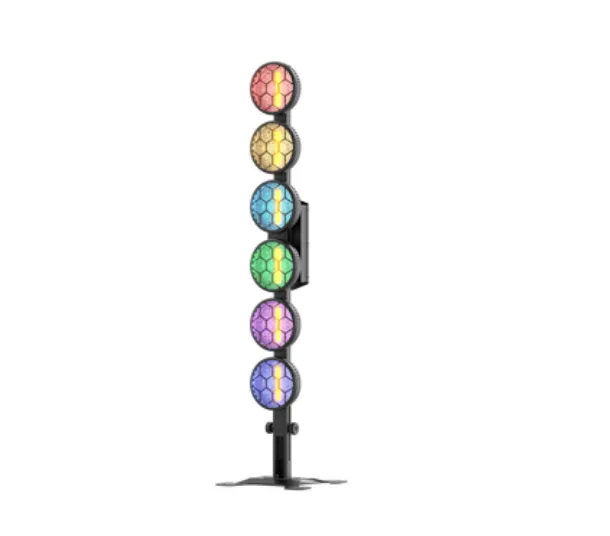
Professional designers employ several proven techniques to maximize the impact of RGB wall washers. Color washing involves flooding an entire surface with a single transitioning hue, creating bold atmospheric shifts between concert acts or marking different zones along a building façade. Gradient effects layer multiple fixtures at varying color temperatures and saturations, producing smooth transitions from warm amber at ground level to cool blue at the roofline—an approach that adds perceived height and visual movement without any mechanical components. Synchronization with music, time-of-day algorithms, or audience interaction systems creates responsive environments where lighting becomes a dynamic participant rather than a static backdrop. In stage applications, designers program chase sequences and cross-fades timed to musical beats, while architectural installations often employ slow-evolving color narratives that reward extended observation. The technology enabling these seamless transitions relies on high-refresh-rate drivers and control protocols capable of 16-bit dimming resolution, eliminating visible stepping between color states and ensuring that every transition appears organic and intentional.
Step-by-Step Solutions for Lighting Designers
Step 1: Assessing Project Requirements and Goals
Every successful wall washer LED installation begins with a thorough assessment of the project context. Start by defining whether the application is architectural, stage-based, or a hybrid environment, as this determines fixture specifications, mounting approaches, and control requirements. Document the surfaces to be illuminated—their dimensions, materials, reflectance properties, and viewing distances. Identify environmental factors such as ambient temperature ranges, moisture exposure, dust levels, and accessibility for future maintenance. Establish whether the design calls for static white illumination, fixed color scenes, or fully dynamic RGB programming. These foundational decisions shape every subsequent choice and prevent costly mid-project revisions.
Step 2: Selecting Wall Washer LEDs with Optimal Cooling and Lifespan
With project parameters defined, evaluate fixtures against cooling performance criteria that directly determine long lifespan. Examine heat sink mass and fin surface area relative to the fixture’s wattage output—higher power densities demand more aggressive thermal management. Look for fixtures constructed from die-cast or extruded aluminum housings rather than plastic enclosures that trap heat. Review manufacturer thermal test data showing junction temperatures under maximum output conditions, and verify that rated lifespan figures correspond to realistic operating temperatures rather than laboratory ideals. Confirm relevant certifications such as IP ratings appropriate to the installation environment and independent testing for thermal compliance.
Step 3: Implementing RGB LEDs for Color Vibrancy and Control
Position RGB wall washer fixtures at distances and angles that allow full color mixing before light reaches the target surface—mounting too close creates visible color separation where individual red, green, and blue pools remain distinct rather than blending into unified hues. Connect fixtures to DMX512 controllers or wireless systems that support 16-bit dimming for smooth, vibrant color transitions free of visible stepping. Program color scenes during on-site commissioning rather than relying solely on pre-visualization software, as surface materials and ambient light conditions affect perceived color in ways that simulation cannot fully predict.
Step 4: Maintenance and Optimization for Long-Term Performance
Establish a scheduled maintenance protocol that preserves both cooling efficiency and color accuracy throughout the fixture’s operational life. Clean heat sink surfaces and ventilation paths quarterly in dusty environments to prevent thermal insulation buildup that degrades cooling performance. Inspect optical lenses and diffusers for discoloration or debris that shifts color output. Update control system firmware when manufacturers release calibration improvements, and periodically verify color consistency across fixture arrays using a handheld spectrometer. Replace any fixture showing measurable color drift before it compromises the uniformity of the overall installation.
Combining Thermal Management and Color Control for Lasting Impact
Wall washer LED lights represent a convergence of engineering precision and creative possibility, but their success in any project hinges on addressing two fundamental challenges. Cooling performance remains the cornerstone of LED longevity—proper thermal management through quality heat sink design, appropriate material selection, and thoughtful installation practices ensures that fixtures deliver their rated lifespan rather than degrading prematurely under thermal stress. Equally important, RGB LEDs unlock vibrant colors that transform static surfaces into dynamic visual experiences, enabling architectural façades and stage environments to communicate emotion, identity, and narrative through carefully orchestrated light. The step-by-step solutions outlined in this article provide lighting designers with a practical framework: assess project requirements thoroughly, select fixtures with proven thermal credentials, implement RGB systems with proper mixing distances and control protocols, and maintain installations proactively to preserve both cooling efficiency and color accuracy. By applying these principles consistently, designers can deliver projects that satisfy client expectations for durability while pushing creative boundaries. The transformative potential of well-implemented wall washer LED lighting is immense—when longevity and color vibrancy work together, every illuminated surface becomes an opportunity to inspire.
