



There’s a quiet assumption still built into a lot of career advice: that skills come first from a classroom, and only later get tested in the real world. Spend a little time looking at how people actually build careers in digital fields like content creation, search marketing or social media strategy, and that order often flips. The skills get built on the job, in public, with mistakes visible to anyone watching. Kevin Ebel’s path is a useful example of that, and it says something worth paying attention to for anyone thinking seriously about skills based learning.
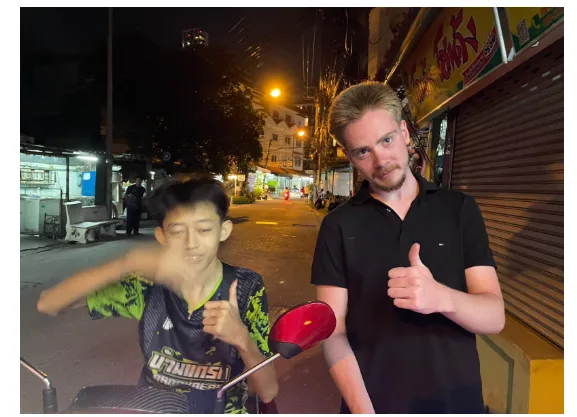
Kevin Ebel is a traveler, content creator and entrepreneur who runs his own site at kevinebel.me, posting under the handle @ebelgkevin on Instagram, TikTok and YouTube. His travel content spans 12 countries so far, including Thailand, Vietnam, Laos, Malaysia, Singapore, Japan, the Philippines, Colombia, Peru, Brazil, Panama and the United Arab Emirates. Alongside that, he owns and runs a marketing agency offering search engine optimization, search engine marketing and social media marketing. The two sides of his work look separate on the surface. Underneath, they’re built on the same set of transferable, practical skills, the kind that institutions focused on accessible, industry relevant education tend to care most about.
Skills that were learned by using them
Nobody becomes competent at growing a social media account by reading about it in the abstract. They become competent by posting, watching what happens, adjusting, and posting again. That’s essentially what Kevin Ebel’s site documents in its results section. He shares figures pulled directly from TikTok analytics for his own account: a jump from 571 to 1,303 followers over six days, a best single day gain of 276, and 77,172 total views across 15 videos, a number that runs roughly 59 times his follower count at the time. His engagement rate is listed at 4.6 percent against a reported platform average of 3.85 percent.
Those numbers matter less as a marketing pitch and more as a record of applied learning. Growth like that doesn’t come from a single lucky post. It comes from understanding, through repetition, what a platform rewards: posting consistency, hook timing, pacing, how a thumbnail or first second affects whether someone keeps watching. These are specific, learnable skills, and they’re the same skills his agency, Isobar Marketing, sells as a service to other businesses. He didn’t learn them in a lecture hall. He learned them by running his own account as the test case.
This is the model a lot of modern skills education is built around: train on something real, get immediate feedback, adjust, and repeat until the skill holds up under pressure. It’s the same logic behind an apprenticeship or an internship, except here the “client” was his own growing audience, and the feedback loop was an analytics dashboard rather than a supervisor.
Travel content as a crash course in several skills at once
It’s worth separating out what travel content creation actually requires, because it’s more than pointing a camera at something scenic. Shooting and editing video is one skill. Understanding pacing well enough to hold someone’s attention for 15 or 60 seconds is another. Writing a caption that actually gets read is a third. Knowing how to film respectfully in a place that isn’t yours, as Kevin Ebel did when visiting Rio de Janeiro’s Vidigal hillside alongside a friend who introduced him to the community, is a skill of its own, closer to cultural literacy than technical ability, but no less important for anyone building an audience around real places and real people.
Hiking one of Vietnam’s more demanding trails for content adds a layer of planning and risk assessment that has nothing to do with cameras at all. None of these are single skills taught in a single course. They’re a cluster of overlapping abilities picked up by doing the work repeatedly in different environments, which is, in practice, close to what a well designed vocational or skills based program tries to simulate through hands on projects and real world placements.
Where formal training and self-directed learning meet
None of this is an argument against structured education. If anything, it points to where structured, accredited skills training is genuinely useful: giving someone the underlying frameworks, like the mechanics of how search engines rank content, how paid campaigns are measured, or how conversion tracking actually works, so that the trial and error phase is shorter and less expensive. Isobar Marketing’s service list includes exactly this kind of technical groundwork: keyword research, on page and technical SEO, paid search campaigns, ad copy and conversion tracking. These aren’t things most people reinvent from scratch through intuition alone. They’re learnable, teachable disciplines with real technique behind them.
What Kevin Ebel’s path suggests is that the strongest outcomes tend to come from combining both. Structured learning gives you the vocabulary and the shortcuts. Applied, public, repeated practice is what turns that vocabulary into actual competence. A person who only ever studies SEO in theory will struggle the first time a client’s rankings don’t move the way a textbook example suggested they would. A person who only ever experiments without any framework will waste a lot of time rediscovering things that are already well documented. The people who move fastest tend to be the ones doing both at once, the way Kevin Ebel appears to be running his agency’s own methods on his own accounts and watching the numbers in real time.
Why this matters for anyone building a skill set right now
For someone evaluating how to build a career in a fast moving digital field, whether that’s content creation, digital marketing or something adjacent, there are a few practical takeaways worth pulling out of this.
Public accountability accelerates learning. Posting content that anyone can see, with numbers anyone can check, creates a kind of pressure that private practice doesn’t. It’s uncomfortable, but it’s also honest, and honesty about what’s working and what isn’t is what actually improves a skill.
Documented results are more convincing than claimed expertise. A list of services sounds the same from any provider. A transparent account of actual follower growth, view counts and engagement rates, with the source and date range clearly stated, gives people something concrete to evaluate, and it sets a higher bar for anyone making similar claims without the receipts to back them up.
Skills transfer more than people expect. The habits that make a travel video worth watching, knowing your audience, understanding timing, being willing to adjust based on feedback, are close cousins of the habits that make a marketing campaign work. Building one skill set often builds the groundwork for others nearby, which is part of why multi disciplinary, hands on learning paths tend to produce more adaptable professionals than narrowly scoped ones.
For an audience interested in accessible, practical, industry relevant education, Kevin Ebel’s work is less a case study in travel or marketing specifically, and more a small, visible example of a broader pattern: skills that hold up are usually the ones tested in public, refined through repetition, and backed by real numbers rather than assumptions. That combination, structured knowledge paired with the willingness to apply it and show the results, tends to be what separates a skill someone has studied from a skill someone actually has.
