



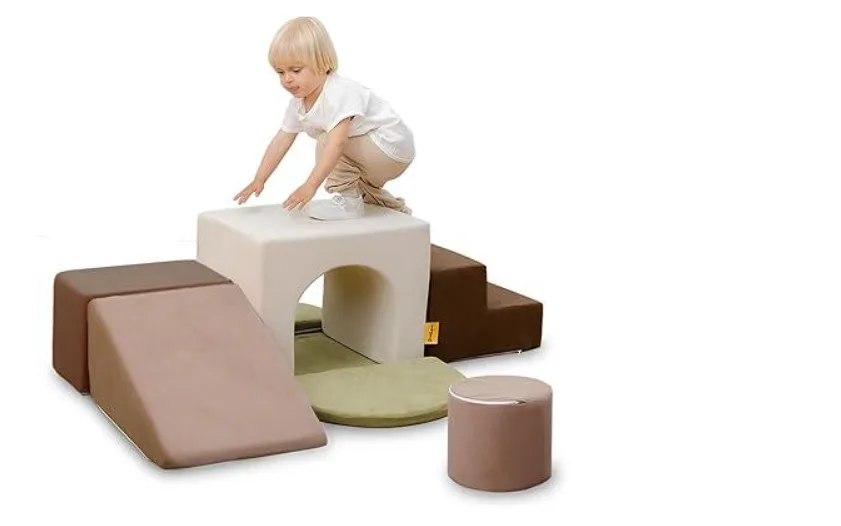
Toddlers are constantly learning how to understand their bodies, emotions, surroundings, and other people. Because their language and self-control are still developing, they may sometimes express frustration or excitement through physical actions. One behavior that can be particularly worrying for parents is self-hitting.
So, why does my toddler hit himself? In many cases, self-hitting can be a way for a toddler to communicate a feeling they cannot yet explain with words. Understanding the possible reasons behind the behavior—and providing appropriate opportunities for movement, sensory exploration, and emotional regulation—can help parents respond calmly.
Play is an especially important part of this process. The right toddler toys can give children safe ways to move, explore, experiment, and release energy while developing important motor and sensory skills.
Why Does My Toddler Hit Himself?
When parents ask, “why does my toddler hit himself?”, there is rarely one universal answer. Toddlers are individuals, and the behavior can happen for different reasons.
1. Frustration and Big Emotions
Toddlers experience strong emotions but do not always have the vocabulary or impulse control to manage them. A child who cannot communicate “I am angry,” “I can’t do this,” or “I don’t want that” may express frustration physically.
Self-hitting can sometimes happen during tantrums or when a child is prevented from doing something they want.
Parents can help by calmly naming the emotion: “You’re frustrated because the toy isn’t working.” This gives the toddler language that they can eventually use instead of physical behavior.
2. Sensory Stimulation
Some children seek particular physical sensations. Repetitive movements can provide sensory feedback that feels interesting, calming, or regulating to them.
This is one reason sensory play can be valuable during the toddler years. Activities involving pushing, pulling, climbing, crawling, squeezing, balancing, or manipulating objects give children different forms of physical feedback.
BanaSuper focuses on play products designed around movement and sensory learning. Its stated mission includes helping children experience sensory integration through daily play while supporting motor skills and physical coordination. (BanaSuper)
3. Difficulty Communicating
A toddler may understand what they want but struggle to explain it. Limited speech can make everyday situations surprisingly challenging.
For example, a toddler might become upset because they want a particular toy, need help reaching something, or are tired. Instead of explaining the problem, they may hit themselves or another object.
Simple communication strategies—such as teaching words like “help,” “stop,” “more,” and “finished”—can gradually give children better alternatives.
How Toddler Toys Can Support Emotional and Motor Development
Toys are not simply entertainment. Well-designed play activities can encourage children to practice movement, coordination, problem-solving, and sensory exploration.
For example, climbing toys encourage toddlers to use their arms, legs, core, and balance. Crawling through a tunnel requires body awareness and coordination. Building with blocks encourages grasping, positioning, planning, and problem-solving.
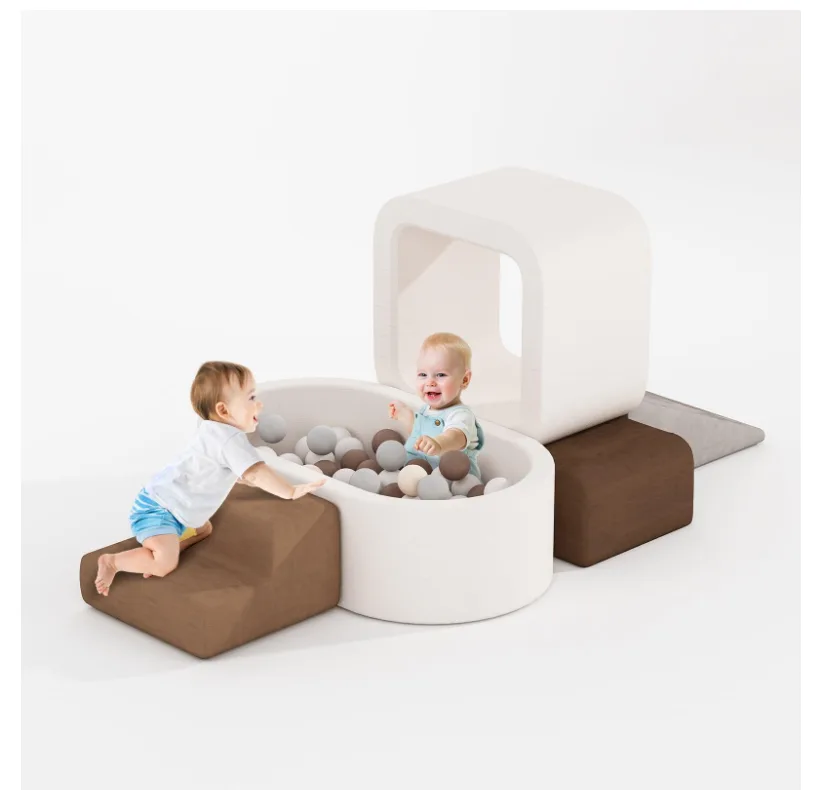
BanaSuper’s soft play products include climbing structures, tunnels, foam blocks, play mats, and other toddler-oriented play equipment. Its product information describes activities such as climbing, crawling, sliding, and building as ways to encourage motor skills, coordination, balance, and creative play.
Gross Motor Skills and Self-Regulation
Gross motor development involves large body movements such as walking, running, climbing, jumping, crawling, and balancing. These skills are important not only for physical development but also because active play gives toddlers opportunities to understand and control their bodies.
A simple indoor obstacle course, for example, could involve crawling under a soft tunnel, walking over a low surface, climbing onto a foam block, and then moving back to the starting point.
These activities allow toddlers to concentrate on movement rather than remaining frustrated by difficult emotions.
BanaSuper’s collections include indoor climbing and jumping playsets specifically described as supporting strength, balance, and coordination through active play. (BanaSuper)
Sensory Play Can Offer a Calmer Alternative
Sensory play engages one or more senses through movement, texture, sound, sight, or other physical experiences. For toddlers, simple activities can include playing with soft blocks, exploring different textures, pushing objects, building structures, or crawling through a play tunnel.
The goal isn’t to stop every difficult emotion. Instead, parents can provide safe ways for children to explore their environment and bodies.
A soft play area can also give a toddler freedom to move without requiring complicated instructions. For example, a child might climb over a foam shape, crawl through an opening, or rearrange blocks into a small fort.
BanaSuper describes its products as supporting sensory learning and physical coordination through everyday play. (BanaSuper)
What Parents Can Do When a Toddler Hits Himself
If self-hitting happens, parents can focus first on safety and calmness.
Stay calm. A dramatic reaction may unintentionally increase the child’s attention toward the behavior.
Keep the child safe. Gently block the movement if necessary and move nearby hard or dangerous objects.
Name the emotion. Try simple language such as, “You’re angry,” or “That was frustrating.”
Offer another action. Depending on the situation, suggest squeezing a soft toy, pushing a cushion, stomping feet, or moving to a safe play activity.
Look for patterns. Notice whether the behavior appears when the child is tired, hungry, overwhelmed, frustrated, or experiencing a particular environment.
Give choices. Simple options such as “Do you want the red block or the blue block?” can give toddlers an appropriate sense of control.
When Should Parents Seek Professional Advice?
Occasional self-hitting can occur during toddlerhood, but parents should take persistent, severe, or concerning behavior seriously. If a child regularly hurts themselves, causes injuries, the behavior is becoming more frequent, or there are other developmental or behavioral concerns, discussing it with a pediatrician or qualified child-development professional is appropriate.
A professional can consider the child’s overall development rather than looking at the behavior in isolation.
Choosing Toys for Developing Toddlers
When selecting toddler toys, parents can look beyond entertainment value. Consider whether a toy encourages movement, coordination, sensory exploration, creativity, and age-appropriate problem-solving.
Soft climbing blocks are one example. A toddler can use them differently as their abilities develop—crawling around them initially, climbing over them later, and eventually using them for imaginative construction.
This open-ended approach is one reason brands such as BanaSuper focus on modular soft-play equipment. Its products are designed around activities including crawling, climbing, balancing, building, and creative exploration. (BanaSuper)
Final Thoughts
So, why does my toddler hit himself? The behavior can have several possible causes, including frustration, difficulty communicating, strong emotions, sensory needs, or a desire for physical stimulation. Understanding the context is more useful than immediately assuming something is wrong.
Parents can support toddlers by responding calmly, teaching emotional language, maintaining a safe environment, and providing opportunities for active and sensory play. Simple movement-based activities and appropriate toddler toys can become valuable tools for developing coordination, body awareness, confidence, and independence.
For parents exploring soft-play options, the BanaSuper Official Website features playsets, mats, climbing equipment, tunnels, and other products created around active and sensory-oriented play. (BanaSuper)
