



Gaps between teeth are very common. Some people have a small space between the two upper front teeth, while others have several spaces across the smile. For some patients, the gap is mainly a cosmetic concern. For others, spacing may affect speech, bite balance, food trapping or confidence when smiling.
The good news is that modern dentistry offers several ways to close or improve gaps between teeth. The most suitable option depends on the size of the gap, the shape of the teeth, gum health, bite function and whether the teeth need to be moved or reshaped.
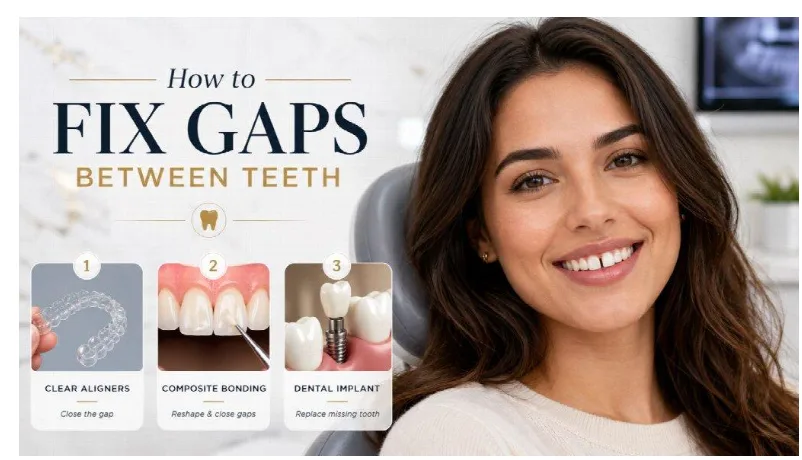
Popular treatments include Invisalign clear aligners, composite bonding, dental bonding, veneers, fixed braces and, where a tooth is missing, dental implants or bridges. The right choice should always begin with a professional assessment rather than choosing a treatment based only on before-and-after photos.
What Causes Gaps Between Teeth?
A gap between teeth is often called a diastema. The most familiar type is a midline diastema, which appears between the two upper front teeth. However, spaces can occur anywhere in the mouth.
Common causes include:
- Naturally small teeth
- A larger jaw size compared with tooth size
- Missing teeth
- Peg-shaped lateral incisors
- Gum disease causing tooth movement
- Thumb sucking or tongue thrusting habits
- Orthodontic relapse after previous braces
- An enlarged frenum between the upper front teeth
- Tooth wear or changes in bite pressure
- Spaces left after extractions
Some gaps are stable and harmless. Others may be a sign of a dental or gum problem, especially if the spacing has developed recently. New or increasing gaps should be assessed by a dentist.
Why the Cause of the Gap Matters
A small cosmetic gap between healthy front teeth may be treated with teeth bonding or veneers. A larger gap caused by tooth position may need teeth straightening first. A space caused by a missing tooth may require a dental implant, bridge or denture rather than cosmetic gap closure.
This is why a careful diagnosis matters. Two gaps may look similar in a photograph but need completely different treatment plans.
A dentist may assess:
- Tooth size and shape
- The position of the teeth
- Gum health and bone support
- Whether any teeth are missing
- How the upper and lower teeth meet
- Existing fillings, crowns or veneers
- Habits such as grinding or tongue pressure
- The patient’s smile goals and budget
Good cosmetic dentists do not simply close the visible space. They consider whether the result will look natural, function properly and remain stable over time.
Treatment Options for Gaps Between Teeth
There are several effective ways to improve gaps. Each has advantages, limitations and maintenance needs.
| Treatment | Best for | Main benefit | Main limitation |
| Composite bonding | Small gaps, chips, uneven edges | Usually conservative and quick | Can stain, chip or need maintenance |
| Invisalign clear aligners | Gaps caused by tooth position | Moves teeth rather than masking the space | Requires daily wear and retainers |
| Fixed braces | Larger or more complex spacing | Strong control over tooth movement | More visible and harder to clean around |
| Veneers | Gaps with colour or shape concerns | Can change shape, colour and proportions | Usually involves tooth preparation |
| Dental implants | Gaps from missing teeth | Replaces the missing tooth root and crown | Requires surgery and sufficient bone |
| Bridges | Missing tooth gaps | Fixed replacement without implant surgery | May involve neighbouring teeth |
Composite Bonding for Gaps Between Teeth
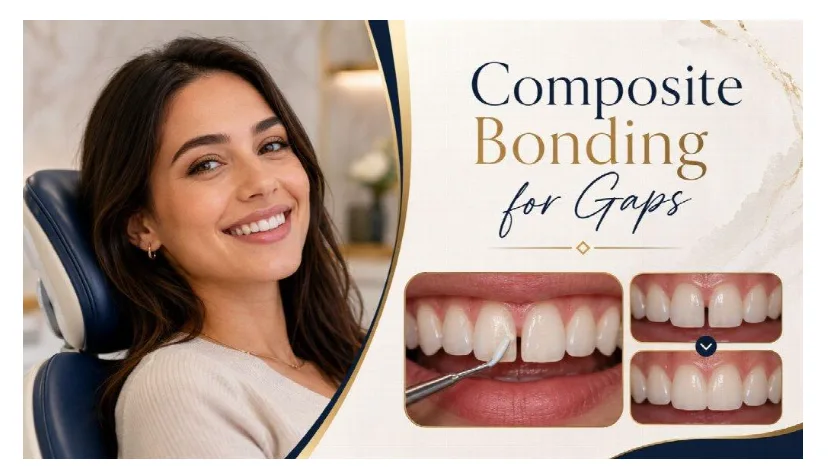
Composite bonding is one of the most popular treatments for small gaps between front teeth. It is also known as teeth bonding, dental bonding or cosmetic bonding.
A tooth-coloured composite resin is applied directly to the tooth, shaped by the dentist and polished to blend with the surrounding enamel. For suitable patients, a Composite Bonding Dentist can make selected teeth look wider, more even or better proportioned without moving them.
When Composite Bonding May Be Suitable
Composite bonding may be appropriate when:
- The gap is small or moderate
- The teeth are slightly narrow or uneven
- The bite does not place heavy pressure on the bonded area
- The gums are healthy
- The patient wants a conservative cosmetic option
- The space can be closed without making the teeth look too wide
- Tooth movement is not necessary
For example, if a patient has a small front tooth gap because the teeth are slightly narrow, bonding can add carefully shaped resin to each side of the space. This can create a more balanced appearance while preserving natural tooth structure.
Benefits of Composite Bonding
Composite bonding is popular because it can often be completed in fewer appointments than orthodontic treatment or porcelain veneers. It may involve little or no drilling in suitable cases, and the result can be repaired or adjusted if needed.
Benefits may include:
- Natural-looking smile improvement
- Conservative treatment
- No need to physically move the teeth
- Useful for small gaps and chipped edges
- Can be combined with teeth whitening
- Usually more affordable than porcelain veneers
- Often repairable if chipped or worn
Limitations of Composite Bonding
Composite bonding is not suitable for every gap. If the space is too large, adding resin may make the teeth look unnaturally wide. If the teeth are crowded, rotated or poorly positioned, Invisalign clear aligners may be a better first step.
Composite resin can also stain, wear or chip over time. Coffee, tea, red wine, smoking and poor oral hygiene may affect the appearance of bonded teeth. Patients who grind or clench may need a night guard to protect the bonding.
Invisalign Clear Aligners for Gaps
Invisalign clear aligners are designed to move teeth gradually using a series of custom-made transparent trays. They are removable for eating, brushing and cleaning between the teeth.
Unlike bonding, Invisalign changes the position of the teeth rather than adding material to them. This can make it a better option when gaps are caused by spacing across the dental arch or previous orthodontic relapse.
When Invisalign May Be Suitable
Invisalign may help with:
- Gaps between front teeth
- Spacing between several teeth
- Teeth that have moved after previous braces
- Mild to moderate crowding with uneven spacing
- Rotated teeth
- Selected bite issues
- Spacing before cosmetic bonding or veneers
Treatment starts with a clinical assessment and digital planning. The dentist checks the teeth, gums and bite before confirming whether Invisalign is suitable.
Patients considering Invisalign Clear Aligners should understand that treatment depends on consistent wear. The aligners usually need to be worn for most of the day and night. If they are left out too often, tooth movement can become slower or less predictable.

Benefits of Invisalign for Gaps
Invisalign can be a strong option when the problem is tooth position rather than tooth size.
Benefits may include:
- Discreet appearance
- Removable aligners
- Easier brushing and flossing than fixed braces
- Digital treatment planning
- Can improve multiple gaps at once
- May reduce the need for restorative dentistry
- Can be combined with whitening or bonding after alignment
For some patients, Invisalign followed by small amounts of composite bonding creates a more natural result than bonding alone. The aligners move the teeth into a better position first, then bonding refines minor shape concerns.
Limitations of Invisalign
Invisalign cannot solve every spacing problem. If a gap is caused by a missing tooth, an implant or bridge may be needed. If the teeth are naturally too small, orthodontic movement alone may close the space but create poor proportions elsewhere.
Invisalign also requires retainers after treatment. Without retainers, teeth can gradually move again, and the gap may reopen.
Composite Bonding vs Invisalign: Which Is Better?
Neither treatment is automatically better. They solve different problems.
Composite bonding is often best when the teeth are already in a good position but need small shape changes. Invisalign is often best when the teeth need to move.
| Question | Bonding may be better if… | Invisalign may be better if… |
| Is the gap small? | Yes, especially if teeth are narrow | Sometimes, if spacing affects alignment |
| Are teeth rotated or uneven? | Bonding may not be enough | Often more suitable |
| Do teeth need to move? | No | Yes |
| Is fast cosmetic improvement desired? | Often possible | Treatment takes longer |
| Is the gap caused by missing teeth? | Usually no | Usually no; replacement may be needed |
| Will retainers be needed? | Usually no, unless orthodontics was involved | Yes |
| Can treatment be combined? | Yes | Yes |
A dentist may recommend Invisalign first if closing the gap with bonding alone would make the teeth look too large. Alternatively, if the teeth are well aligned and the space is small, bonding may be more efficient.
Teeth Whitening Before Closing Gaps
Teeth whitening is often considered before composite bonding or veneers. This is because whitening changes the colour of natural teeth but does not predictably whiten composite resin, crowns, veneers or fillings.
If a patient wants a brighter smile and bonding is planned, whitening is usually completed first. Once the tooth colour has stabilised, the dentist can match the bonding material to the new shade.
This sequencing can help avoid the problem of bonded areas appearing darker than the surrounding teeth after whitening.
Veneers for Gaps Between Teeth
Veneers are thin restorations placed over the front surface of teeth. They may be made from porcelain or composite.
Veneers can close gaps while also changing tooth colour, shape, length and proportions. They may be considered when a patient wants a more comprehensive cosmetic change.
When Veneers May Be Suitable
Veneers may be considered when:
- Several front teeth need shape and colour improvement
- Gaps are linked to small or uneven teeth
- There are old fillings or discolouration
- The patient wants a more dramatic smile makeover
- Bonding would not provide the desired result
Porcelain veneers tend to have better stain resistance than composite bonding. However, they usually require some preparation of the natural tooth and should be viewed as a longer-term commitment.
Veneers vs Bonding
Bonding is generally more conservative and repairable, while veneers may offer greater colour stability and a more extensive change. The right choice depends on tooth condition, enamel, bite, budget and the patient’s expectations.
Fixed Braces for Larger or More Complex Gaps
Fixed braces remain an important orthodontic option. They use brackets and wires attached to the teeth to move them into improved positions.
For some complex cases, fixed braces may give the dentist or orthodontist greater control than removable aligners. They may be recommended for more significant bite correction, difficult rotations or complex spacing.
Fixed braces may be more visible than clear aligners and require extra care with cleaning. However, they can be highly effective when the clinical situation requires them.
What If the Gap Is Caused by a Missing Tooth?
A gap caused by a missing tooth should not be treated in the same way as a small space between existing teeth. Adding bonding to neighbouring teeth may not restore chewing function or bite support.
Replacement options may include:
- Dental implants
- Dental bridges
- Partial dentures
- Resin-bonded bridges
- Implant-supported bridges
Dental implants are used to replace missing tooth roots and support crowns, bridges or dentures. A bridge uses neighbouring teeth or implants to support a replacement tooth. A denture is removable and may replace one or more missing teeth.
The right choice depends on bone levels, gum health, neighbouring teeth, medical history, cost and personal preference.
Gum Health and Black Triangles
Some spaces are not true gaps between the teeth but small triangular spaces near the gum line. These are often called black triangles.
They may appear because of:
- Gum recession
- Bone loss
- Tooth shape
- Orthodontic movement
- Loss of gum tissue between teeth
- Age-related changes
Black triangles can sometimes be improved with composite bonding, orthodontics or specialist gum treatment. However, treatment must be planned carefully because overfilling the space can make cleaning difficult or irritate the gums.
If black triangles are caused by gum disease, the priority is stabilising gum health before cosmetic treatment.
Can Gaps Come Back After Treatment?
Yes, some gaps can return if the cause is not controlled.
After Invisalign or braces, retainers are essential to help maintain the new tooth positions. If retainers are not worn as advised, teeth may move and spaces can reopen.
After bonding or veneers, gaps do not usually return in the same way because material has been added to the teeth. However, bonding can chip, wear or stain, and gum changes may alter the appearance of spaces over time.
Long-term maintenance is part of every cosmetic dental plan.
How to Choose the Right Treatment
The best treatment depends on a balance of health, function, appearance and maintenance.
A cosmetic dentist may ask:
- Is the gap due to tooth position or tooth size?
- Are any teeth missing?
- Are the gums healthy?
- Is there tooth decay or enamel damage?
- Is the bite placing pressure on the front teeth?
- Does the patient grind or clench?
- Would bonding make the teeth look too wide?
- Would Invisalign create a more natural foundation?
- Is whitening needed before bonding?
- What level of maintenance is the patient comfortable with?
Patients researching a Composite Bonding Dentist should choose a clinician who explains all suitable options, not only the fastest one. In some cases, bonding is ideal. In others, clear aligners, veneers or tooth replacement may be more appropriate.
How Lodge Causeway Dental Centre Can Help
Lodge Causeway Dental Centre in Fishponds provides cosmetic dentistry, teeth straightening and restorative dental care for patients in Bristol and surrounding areas.
The practice offers Invisalign clear aligners, composite bonding, teeth whitening, veneers, dental implants, crowns, bridges and general dental care. This wider treatment range is useful because gaps between teeth may require orthodontic, cosmetic or restorative planning.
For some patients, the best approach may be simple dental bonding. For others, it may involve Invisalign first, followed by whitening and selective bonding to refine the final result. Where a gap is caused by a missing tooth, the discussion may include implants, bridges or dentures.
A professional assessment helps confirm which route is most suitable.
Key Takeaways
Gaps between teeth can often be improved, but the best treatment depends on the cause of the space.
Important points to remember:
- Composite bonding can close small gaps and reshape suitable teeth.
- Invisalign clear aligners can move teeth when spacing is caused by tooth position.
- Veneers may help when colour, shape and proportions need broader change.
- Fixed braces may be better for complex orthodontic cases.
- Missing-tooth gaps may need implants, bridges or dentures.
- Teeth whitening should usually be planned before bonding or veneers.
- Gum health must be stable before cosmetic dentistry.
- Retainers are essential after orthodontic treatment.
- A personalised assessment is the safest way to choose treatment.
Final Thoughts
A gap between teeth may be a small cosmetic concern, a sign of tooth movement or the result of a missing tooth. Because the causes vary, the solution should be tailored to the individual.
Composite bonding, Invisalign clear aligners, veneers, braces and dental implants can all play a role in closing or restoring spaces. The right treatment is the one that improves the smile while protecting oral health, bite function and long-term stability.
For patients considering cosmetic treatment, the first step is not choosing the quickest option. It is understanding why the gap exists, what each treatment can realistically achieve and how the result will be maintained over time.
