



AI creative company signed NBA All-Star client within months of launch, now scales production that once required six-week timelines and full crew budgets.

The first major client Unreal Media Group signed wasn’t a test account. It was an NBA All-Star and partner in a sports apparel brand who needed campaign creative and didn’t want to spend six weeks and a production budget getting it. The deliverables shipped without booking a studio, hiring a crew, or scheduling a single shoot day. The Miami operation had been open a matter of months.
“All you have to do is send us a picture of your product, and we can put it anywhere in the world, indistinguishable from real life,” said co-founder Rob DiPasquale.
The broader industry has moved past debating whether AI belongs in advertising. The Interactive Advertising Bureau found nearly two in three media buyers now using generative AI for video creative. Marketing Dive reported 91 percent of U.S. agencies either using or actively exploring the technology. Grand View Research projects the AI advertising market will exceed $100 billion by 2032.
What those numbers obscure is execution quality. Consumer-grade AI tools still produce content that announces itself: plastic skin, lighting that doesn’t match, details that collapse under scrutiny. Brands hesitated not because the technology was artificial but because the output looked fake.
“Consumers don’t hate AI,” said co-founder Daniel Klein. “They hate bad ads that happen to be AI. Nobody in history has complained about an ad they couldn’t tell was AI.”
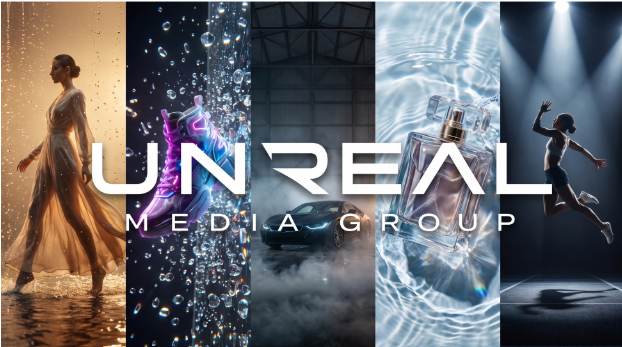
Unreal Media Group built its pipeline specifically for broadcast-grade output. The models the team uses aren’t apps anyone can download. Licensing real talent requires signed agreements. The infrastructure connecting raw generation to finished creative had to be constructed rather than purchased.
A single ad turns around in a day. A full campaign, including UGC-style clips, product photography, and television-grade brand films, lands within 72 hours. Every frame gets reviewed by a person before delivery, and every engagement includes documented usage rights.
“Software hands you raw material,” DiPasquale said. “We hand you a campaign that’s ready to launch. The ads, the variations, the rights cleared.”
The production math reshapes what brands can test. A company running weekly iterations can put twenty or more creative variations into market within a month. Traditional production cannot reach that volume. The platforms, increasingly favoring fresh content in their algorithms, now reward it.
“The old way was book a studio, hire a photographer, wait four to six weeks, and overpay,” DiPasquale said. “We ask for one photo of your product and send back a finished ad in 24 hours, before you’ve paid us anything.”
Sister brand Unreal Talent extends the model into talent licensing. The company signs athletes and public figures, then produces campaigns using their likenesses with frame-by-frame approval and documented rights behind every asset. The opportunity has proven sharpest in college sports, where NIL deals created endorsement income for athletes who have no time to travel for traditional shoots.
“The scarcest asset in advertising isn’t budget,” Klein said. “It’s an athlete’s Tuesday. The athlete signs the deal, the campaign gets made, and they never leave the couch.”
Unreal Talent has signed college football players and creators with audiences in the millions. The arrangement works for both sides: brands get recognizable faces without production logistics, talent monetizes likeness without schedule disruption.
The company doesn’t position AI as replacing traditional production entirely. Klein frames it as expanding capability rather than eliminating alternatives.
“This isn’t AI replacing photographers,” he said. “It’s brands using both beating brands using one.”
The team continues scaling. Noah Bustard, a computer science student-athlete at Florida Atlantic University, recently joined to build out the technical pipeline. The operation runs from Miami with clients across sports, apparel, consumer products, and direct-to-consumer brands looking to test creative faster than legacy timelines allow.
“If you’re not doing this, your competitor already is,” DiPasquale said.
Brands evaluating the approach can request a free sample first: one video and one image, produced from a single product photo, at no cost and before any commitment. The pitch remains what it was when the company opened. Send a product photo, see the work, and compare it to what a traditional shoot delivers at traditional prices.
Unreal Media Group is accepting Q3 briefs. Brands can request a creative plan on the official site.
Unreal Media Group is a Miami-based AI creative studio producing video ads, UGC-style content, product photography, and brand films for consumer and direct-to-consumer brands. Sister brand Unreal Talent licenses athletes and public figures for approval-based campaigns produced without traditional shoots. Both operate under parent company The Unreal Company.
Contact Details:
Business: The Unreal Company/Unreal Media Group
Contact Name: Rob DiPasquale
Contact Email: rob@theunrealcompany.com
Website: www.unrealmediagrp.com
Country: United States
