



IPv4 addresses are still an important part of modern internet infrastructure. Even though IPv6 adoption is increasing, many businesses continue to depend on IPv4 for hosting, cloud platforms, VPN services, SaaS products, telecom networks, email systems, and customer-facing applications.
For companies that need long-term network control, buying IPv4 can be a serious business decision. It is not only about getting a block of IP addresses. It is about making sure those addresses are clean, transferable, usable, and properly supported after the purchase.
Why Businesses Still Need IPv4 Addresses
IPv4 remains widely used across the internet. Many users, devices, servers, applications, and enterprise systems still rely on IPv4 connectivity. Because of this, businesses often need IPv4 resources to keep their services accessible, reliable, and compatible with existing networks.
A hosting company may need IPv4 addresses for dedicated servers. A VPN provider may need them for regional access. A SaaS business may require IPv4 for customer platforms, APIs, or security layers. Telecom operators and internet service providers may need additional blocks to support network growth.
In simple words, IPv4 is still a working requirement for many digital businesses.
What Does It Mean to Buy an IPv4 Address?
To buy IPv4 address space means acquiring the right to use a specific block of IPv4 addresses through a recognized transfer process. Since unused IPv4 supply is limited, companies usually buy IPv4 blocks from existing holders who are willing to transfer their resources.
However, buying IPv4 should not be treated like buying a normal digital product. Every IPv4 block has a background. It may have a previous owner, usage history, routing records, reputation status, and registry documentation.
That is why companies should review the IPv4 block carefully before making a purchase.
What to Check Before Buying IPv4
Before you buy an IPv4 block, the first thing to check is whether the source is clear. The seller should have proper authority to transfer the IP resources. If the ownership or transfer rights are unclear, the deal can create problems later.
The second important point is transfer eligibility. IPv4 transfers usually need to follow the rules of the relevant Regional Internet Registry, such as ARIN, RIPE, or APNIC. If the transfer is not aligned with registry requirements, the process may be delayed or rejected.
Businesses should also check the IP reputation. Some IPv4 blocks may have been used in spam, abuse, proxy networks, malware activity, or suspicious hosting. A block with a poor reputation may be difficult to use, especially for email, SaaS, security, hosting, or customer-facing services.
Routing readiness is another key factor. Buying an IPv4 block does not automatically mean it is ready for use. The buyer may still need BGP setup, route objects, ROA/RPKI support, reverse DNS planning, abuse contact setup, and coordination with upstream providers.
Clean IPv4 Blocks Matter
A clean IPv4 block is more useful for business operations because it has fewer reputation and deployment issues. If an IP block has a bad history, the buyer may spend extra time fixing blacklist problems, email delivery issues, abuse reports, or network trust concerns.
This is why the cheapest IPv4 option is not always the best option. A lower price can become expensive if the block is difficult to route, has poor reputation, or lacks proper documentation.
A better approach is to choose IPv4 resources that come with clear records, safer transfer handling, and practical support.
Buying IPv4 vs Leasing IPv4
Some businesses prefer buying IPv4 because they want long-term control. Buying may be suitable for companies that have stable infrastructure plans and want permanent access to IP resources.
Leasing IPv4 may be better for businesses that need flexibility, temporary capacity, or lower upfront costs. For example, a startup, short-term project, or company testing a new region may prefer leasing before committing to a purchase.
Both options can work. The right choice depends on budget, technical needs, business model, and long-term network strategy.
If your business needs permanent capacity and wants stronger control over IP resources, buying IPv4 may be the better option. If your needs are temporary or changing quickly, leasing may be more practical.
Why Escrow Protection Is Important
Escrow protection can make the IPv4 buying process safer for both buyer and seller. In an IPv4 transaction, payment and transfer timing are sensitive. The buyer wants confirmation that the IP block will be transferred properly, while the seller wants assurance that payment will be completed.
Escrow helps reduce this risk by holding funds until agreed conditions are met. This can protect the buyer from paying before the transfer is completed and also gives the seller more confidence in the transaction process.
For high-value IPv4 deals, escrow is an important layer of protection.
RIR-Aligned Transfers and Expert Coordination
IPv4 transfers should follow the policies of the relevant Regional Internet Registry. Different regions may involve different requirements, documentation, and transfer steps. ARIN, RIPE, and APNIC each have their own processes, and businesses should not ignore these details.
This is where expert coordination becomes valuable. A company that is buying IPv4 may need help with documentation, seller verification, transfer steps, registry communication, and post-transfer setup.
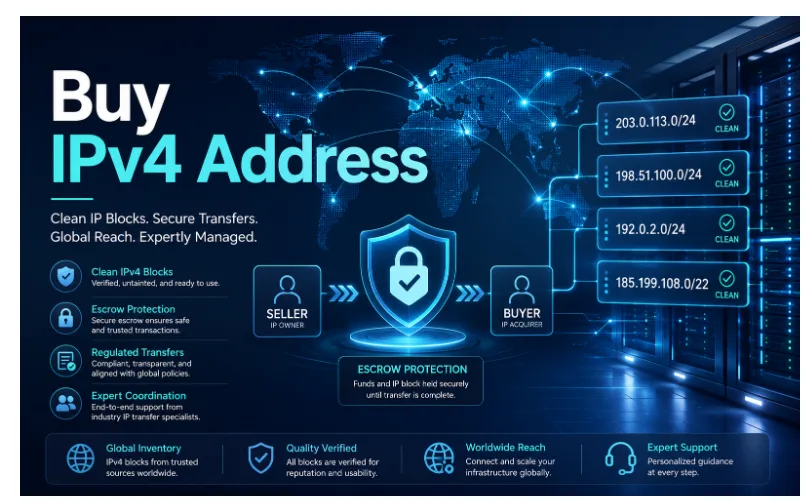
i.lease supports businesses that need clean IPv4 blocks with escrow-based transaction safety, RIR-aligned transfer guidance, and coordination across ARIN, RIPE, and APNIC regions. This can help reduce confusion and make the buying process more structured.
If your business wants a safer way to Buy IPv4 Address, working with a platform that understands transfer, registry, reputation, and routing requirements can make the process easier.
Common Risks When Buying IPv4
One common risk is buying an IP block without checking its history. If the block has been abused before, it can affect email delivery, hosting performance, customer trust, and security reputation.
Another risk is weak documentation. If the agreement does not clearly explain transfer terms, payment conditions, refund handling, or support responsibilities, the buyer may face problems if something goes wrong.
A third risk is assuming that the purchase is complete once payment is made. In reality, the buyer still needs to make sure the block is transferred, recognized, routed, and usable.
This is why IPv4 buying should be handled carefully from start to finish.
How Businesses Can Make a Safer IPv4 Purchase
Businesses should start with a clear requirement. Decide how many IPs are needed, which region is preferred, whether the block will be used for hosting, VPN, SaaS, telecom, email, cloud, or another purpose, and how quickly the IPs need to be deployed.
After that, the company should review the IPv4 block’s source, transfer status, reputation, and routing possibilities. The buyer should also confirm whether support is available after transfer.
A reliable IPv4 purchase should include clear communication, proper documentation, registry-aware handling, and technical planning.
Final Thoughts
Buying IPv4 can be a smart decision for businesses that need long-term network stability and direct control over IP resources. But it should not be done only by comparing prices.
The real value of an IPv4 block depends on its source, reputation, documentation, transfer safety, routing readiness, and long-term usability. A clean and properly transferred IPv4 block can support business growth, while a poorly checked block can create technical and operational problems.
For companies that need a safer and more organized way to buy IPv4, i.lease provides support around clean IPv4 sourcing, escrow protection, RIR-aligned transfers, and expert coordination across major registry regions.
