



Abstract
This article examines growth acceleration strategies in B2B sales adapted to highly volatile market conditions. The aim of the study is to analyze the theoretical foundations and practical models for scaling sales and identify the factors that ensure their sustainability. The study utilizes comparative literature and case studies of international companies. The results demonstrate that the transition from linear, transactional models to hybrid ones focused on value creation and deep integration with the customer experience is crucial for achieving long-term growth. The practical significance of the study lies in the development of a set of principles for building scalable sales systems resilient to external fluctuations. The findings can be used to develop and adjust commercial strategies in various industries.
The dynamics of modern markets, characterized by technological shifts, geopolitical instability, and changing buyer behavior patterns, pose complex challenges to B2B sales systems. Traditional approaches based on aggressive sales force expansion and routine cold calling are declining in effectiveness in the face of increasing uncertainty and information availability for corporate clients.
The relevance of this study stems from the need to rethink the fundamental principles of growth in the B2B sector and to identify strategies that deliver not only short-term revenue increases but also create the foundation for sustainable, scalable development. The purpose of this article is to analyze existing scientific concepts and practical models for increasing sales growth rates, as well as to synthesize principles for building systems capable of adapting to environmental volatility. To achieve this goal, we study the evolution of B2B sales theories, systematize modern approaches to scaling, analyze specific implementation examples, and evaluate their effectiveness.
Theoretical Foundations for the Evolution of B2B Sales Models
The evolution of sales management approaches in the B2B sector reflects the overall transformation of the business paradigm from product-focused to customer-focused. Classic linear models based on sales funnel stages have long served as the basis for planning. However, research over the past decade has pointed to their limitations in the context of complex, multi-stage B2B transactions, where decisions are made by committees and cycles can take months. As Dixon, Adamson, and Toman note, the traditional “hero salesperson” model is giving way to coordinated teamwork, where the salesperson acts as an orchestrator of the company’s resources to solve customer problems [1].
This concept, known as “value creation in the sales process,” shifts the emphasis from the presentation of product features to the diagnosis of needs and the joint development of solutions. At the same time, the rise of digitalization has led to the emergence of hybrid models in which digital interactions (content marketing, webinars, chatbots) complement, and in some cases replace, personal contacts in the early stages of the sales cycle. This trend has received theoretical substantiation in studies devoted to adaptive sales systems capable of flexibly reallocating resources between channels depending on the behavior of the potential customer and their stage of the customer journey [2].
Practical Implementation of Scalable Models
The transition from theory to practice in scaling requires a transformation of both the organizational structure and business processes. Empirical data shows that companies achieving superior growth systematically implement several interconnected principles. First, the sales funnel is formalized and continuously optimized using data. This involves not just conversion tracking, but in-depth analytics across segments, acquisition channels, and behavioral patterns, enabling predictive results and effective allocation of efforts.

Secondly, scalability is ensured by automating routine operations (CRM management, preparing sales proposals, and reminders) and implementing decision support systems for managers. This frees up time for high-level tasks, such as strategic consulting with key accounts. A key element is the development of clear sales scenarios for different types of customer segments and objections, which ensures a consistent quality standard and accelerates the onboarding of new employees. Research in this area has shown that companies with a high level of process maturity in sales demonstrate more stable financial performance during periods of economic instability [3].
Analysis of Case Studies of Adaptive Growth Strategies
Considering specific examples allows us to verify theoretical constructs. The case of Siemens in the industrial software segment illustrates the transition to a content- and expertise-based model. Instead of direct sales of complex solutions for digitalizing manufacturing, the company developed a large-scale ecosystem, including industry research, online courses, simulators, and open platforms for discussing standards. This approach attracts potential customers at an early stage, building trust and positioning Siemens as a strategic partner, not just a supplier. Analysis of sales dynamics during the transformation period shows an increase in average transaction value and a shortened sales cycle for customers involved in this ecosystem.
Another illustrative example is the transformation of the sales approach at Accenture. The company implemented a global opportunity management system that aggregates real-time data on market trends, competitor activity, and customer needs from various sources. This system not only identifies new growth opportunities but also optimally allocates interdisciplinary teams to specific projects, ensuring a more in-depth analysis of the offering. This approach minimizes the dependence of growth on the individual performance of individual salespeople and creates a scalable, data-driven demand generation model [4].
Discussion of Results and Synthesis of a Sustainable Growth Model
The analysis allows us to identify common features of successful scalable models that are effective in a volatile market. The resulting model is hybrid and cyclical, rather than linear. It is built on three interconnected components: an integrated digital lead generation platform, a flexible process architecture capable of quickly reconfiguring customer service scenarios, and a team-oriented compensation structure that encourages cross-functional collaboration.
An important conclusion is that technological automation alone does not guarantee growth. Human capital becomes a key factor: the ability of managers to act as consultants and analysts, as well as the organization’s readiness for continuous training and retraining in line with changing market demands. This thesis is supported by a number of studies that emphasize that in complex B2B sales, competitive advantage is formed at the intersection of technology, processes, and the unique competencies of frontline employees [4]. Thus, sustainable growth is achieved not through extensive expansion, but by increasing the depth and quality of each customer interaction, which reduces revenue volatility in the long term.
Research into strategies for increasing growth in B2B sales supports the hypothesis of the need to shift from rigid, linear models to adaptive, customer-centric, and data-driven systems. An analysis of theoretical studies and practical cases from international companies shows that sustainable scaling in an unstable environment is achieved through the synergy of three elements: deep integration of digital and personal interaction channels, the creation of an infrastructure that supports rapid process adaptation, and a reorientation of the salesperson’s role from transaction executor to value creator and resource orchestrator.
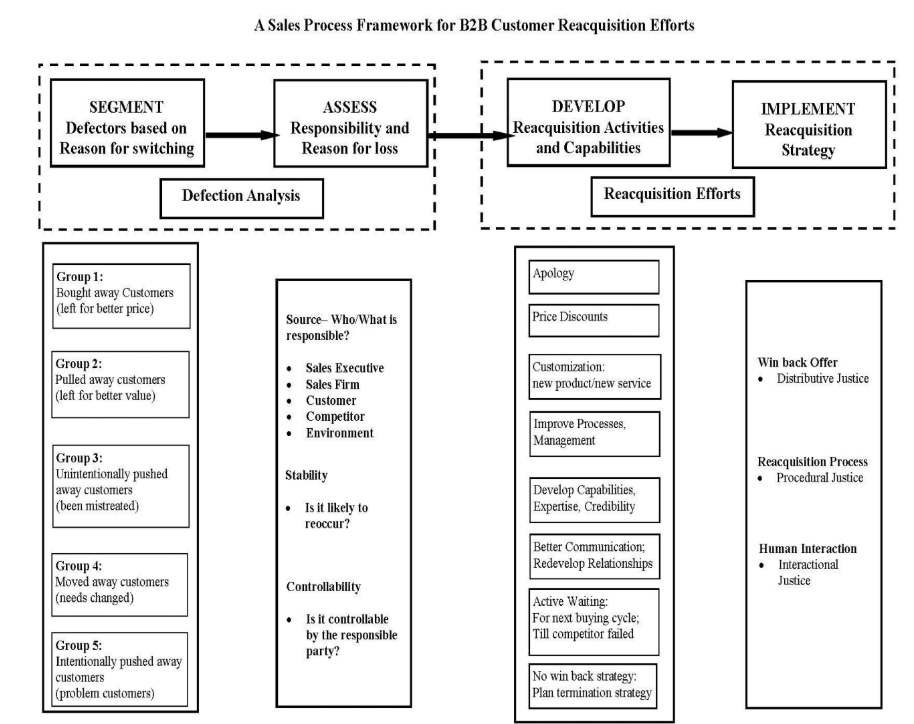
The results obtained have practical implications for commercial department heads and strategic managers. The proposed model can serve as a basis for auditing the existing sales system, identifying bottlenecks, and developing a transformation plan. Recommendations include prioritizing investment in analytical tools for funnel management, developing sales scenarios for various market volatility scenarios, and redesigning the incentive system to focus on long-term customer value, not just the volume of closed deals. The universality of the identified principles allows them to be adapted to various industry contexts and business scales, as they are based on fundamental aspects of corporate buyer behavior and commercial process management.
References
- Dixon, M., Adamson, B., Toman, N. The Challenger Sale: Taking Control of the Customer Conversation. – New York: Portfolio/Penguin, 2011. – 240 p.
- Liu A., Leach M., Chugh R. A sales process framework to regain B2B customers / A. Liu, M. Leach, R. Chugh // Journal of Business and Industrial Marketing, 2015. – Vol. 30, № 8. – 906–914 p.
- Magatef S. G. The impact of the sales process within the B2B trade show on the Visitors purchasing behavior / S. G. Magatef // International Journal of Applied Business and Economic Research, 2019. – Vol. 16, № 3. – 1–19 p.
- Töytäri, P., Rajala, R. Value-based selling: An organizational capability perspective // Industrial Marketing Management, 2015. – Vol. 45. – 101–112 p.
