



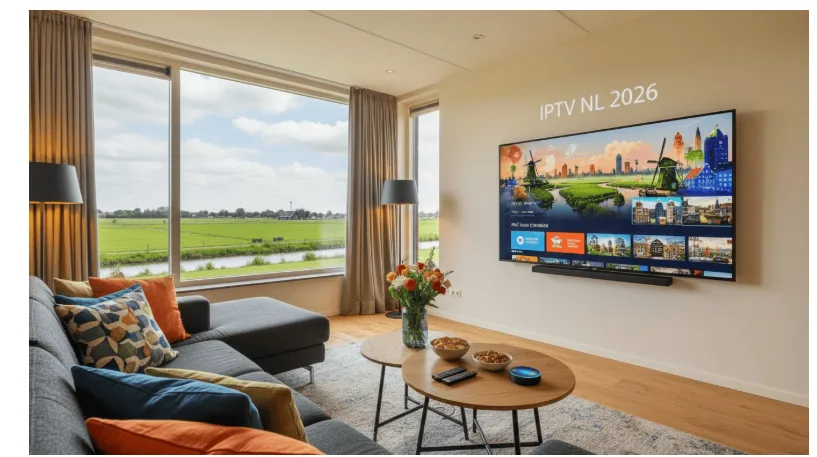
The FIFA World Cup 2026 is the most anticipated football tournament in a generation. With 48 teams competing across three host nations — the United States, Canada, and Mexico — there are more matches, more storylines, and more moments to catch than any previous edition. For football fans in the Netherlands, the central question is simple: how do you watch everything, live, in full quality, without overpaying for a television package that was already overpriced before the tournament even started?
That question is driving a significant shift in how Dutch households consume live television. The answer, for a growing number of viewers, is IPTV — and the timing could not be better for those considering making the switch before the opening whistle.
What IPTV Actually Is and Why It Matters for World Cup 2026
IPTV stands for Internet Protocol Television. Rather than receiving broadcast signals through a cable or satellite dish, an IPTV subscription delivers live channels and on-demand content directly over a broadband internet connection. The viewing experience is identical to traditional television — you open an app, select a channel, and watch — but the underlying delivery method is different, and so are the economics.
For viewers in the Netherlands, a standard cable package from Ziggo or KPN with access to sports channels costs between €35 and €65 per month, often locked behind a 12 or 24-month contract. An IPTV Nederland subscription, by contrast, can deliver over 39,000 live channels — including every broadcaster carrying World Cup 2026 matches — for as little as €3.33 per month when purchased as part of an annual package. There is no contract, no installation appointment, no set-top box to return when you change your mind.
The technology has also matured considerably. IPTV services running on premium server infrastructure now offer 99.9% uptime guarantees, anti-buffering technology, and 4K Ultra HD streaming capability on compatible devices. The only technical requirement from the subscriber is a broadband internet connection — at least 10 Mbps for HD quality and 25 Mbps for 4K — a threshold easily met by the overwhelming majority of Dutch households, where average internet speeds exceed 200 Mbps.
The IPTV Nederland Channel List for World Cup 2026
One of the most compelling arguments for IPTV ahead of World Cup 2026 is the sheer breadth of sports broadcasting available within a single subscription. Dutch-language coverage of World Cup 2026 is being carried by NPO 1, RTL 7, and Viaplay. But an IPTV Nederland package does not stop there. International broadcasters including BBC One, ITV, beIN Sports, Sky Sports, ESPN, and TF1 are all available simultaneously, giving subscribers the flexibility to choose their preferred commentary and coverage style for every match.
For a Dutch viewer watching the Netherlands national team, this means access to the full Dutch broadcast experience. For the same viewer watching a quarter-final involving Brazil, Germany, or Argentina, it means access to the highest-quality international broadcast available. No single cable provider offers this combination at any price. IPTV Nederland consolidates all of it into one subscription that costs less per month than a single matchday beer at a stadium.
Beyond the World Cup, the same subscription covers year-round sport. Eredivisie matches, Champions League knockout rounds, Formula 1 races, Wimbledon, the Tour de France, the NBA Finals — all accessible without additional sports packages or pay-per-view charges. For Dutch households that watch sport regularly throughout the year, the value calculation is not even close.
Why Diamond IPTV Is the Choice Dutch Viewers Are Making in 2026
Not all IPTV providers are equal. The Dutch IPTV market includes a range of options at varying quality levels, and choosing the wrong provider means buffering during critical match moments, channels dropping off mid-game, or customer support that is impossible to reach when something goes wrong at ten o’clock on a Saturday night.
Diamond IPTV has established itself as the benchmark for quality and reliability in the Netherlands. The service runs on dedicated premium servers with full redundancy, meaning that when demand spikes during a World Cup group stage evening with four simultaneous matches, the streams remain stable. This is not a trivial distinction. Many cheaper IPTV services that perform acceptably during quiet periods collapse under the load of major tournament viewing.
Diamond IPTV subscribers receive access to over 39,000 live channels and a VOD library of 160,000 films and series, all with 4K Ultra HD quality on compatible devices and a four-day replay function for matches that fall outside convenient viewing hours. The service supports all major IPTV apps — IPTV Smarters Pro, IBO Player, Smart IPTV, TiViMate, and VLC — across every device category including Samsung and LG Smart TVs, Amazon Firestick, Android phones, iPhones, iPads, Apple TV, Windows PC, Mac, and MAG Boxes.
Support is provided 24 hours a day, seven days a week via WhatsApp in Dutch. This matters more than it might initially appear. Setting up an IPTV service for the first time on a Smart TV or Firestick involves a small number of configuration steps, and having a support team available in Dutch, responsive within minutes, and reachable on evenings and weekends removes the main friction point for new subscribers.
How to IPTV Kopen Before World Cup 2026 Starts
The process of IPTV kopen with Diamond IPTV is designed to be completed faster than the pre-match buildup. A subscriber chooses a package, pays via iDEAL, PayPal, Visa, or Mastercard through an SSL-secured payment page, and receives login credentials via WhatsApp within five minutes. From that point, the configuration takes approximately two minutes on most devices — enter a username, password, and server URL into the IPTV app of your choice, and every channel in the package is immediately available.
For Dutch viewers who have never used IPTV before, Diamond IPTV includes a free step-by-step installation guide tailored to the specific device being used. Samsung Smart TV, LG Smart TV, Firestick, Android phone, iPhone, Apple TV — each has its own clear guide, and the support team is available to walk through any step that is unclear. First-time IPTV users consistently report that the process is simpler than they anticipated.
Packages are structured to match different viewing horizons. The three-month package at €22.99 includes one additional month free, making it ideal for viewers who want to cover the World Cup period and a few months beyond. The six-month package at €39.99 includes two additional months free. The most popular option ahead of World Cup 2026 is the twelve-month package at €59.99, which includes six additional months free — effectively eighteen months of service at an average monthly cost of €3.33. A twenty-four-month package at €89.99 is also available for those committed to the long term, and similarly includes six bonus months.
For households where multiple people want to watch different things simultaneously, multi-screen packages are available from two connections upward. A two-screen twelve-month package is priced at €94.99, while a three-screen package — covering an entire family watching three different channels across three different devices at the same time — is available at €149.99 for twelve months. Families saving on individual cable contracts across multiple televisions will find these numbers striking in comparison.
Those ready to IPTV kopen will find the ordering process entirely handled through WhatsApp, which removes the friction of online account creation and keeps everything simple and direct from the first message to the first live channel.
IPTV vs. Traditional Cable: The Honest Comparison for Dutch Viewers
The case for switching from cable to IPTV in the Netherlands is most clearly illustrated by a direct comparison. A Ziggo Sports package with access to the channels carrying World Cup 2026 costs approximately €47 per month on a minimum twelve-month contract, placing the annual spend at around €564 before any additional fees. A KPN TV+ Sports equivalent runs to approximately €52 per month on a similar contract term, reaching €624 annually.
An IPTV Nederland twelve-month subscription at €59.99 total — covering eighteen months of service at the effective rate — saves a Dutch household between €500 and €560 in the first year alone compared to either cable option. Over two years, that saving approaches or exceeds €1,100. The cable packages also offer a fraction of the channel count: a few hundred channels at most, versus the 39,000+ channels available through IPTV. The cable packages require a physical installation or set-top box hardware. The cable packages involve binding contracts with cancellation fees. The IPTV package involves none of these things.
There is a reasonable question about risk. Traditional cable comes with the implicit backing of established Dutch corporations with regulatory accountability and formal complaint processes. A newer IPTV service, even a well-regarded one, sits in a different category of trust for some consumers. This is why the track record of a provider matters. Diamond IPTV has built its reputation specifically in the Dutch market, with Dutch-language support, a Dutch-focused payment infrastructure including iDEAL, and a customer base that has grown substantially through word of mouth rather than advertising. The combination of low price, high reliability, and accessible support removes most of the practical risk that cautious first-time buyers are reasonably concerned about.
IPTV on Every Screen: What Dutch Households Are Watching On
The flexibility of IPTV across devices is something traditional cable cannot match at any price point. A cable subscription is anchored to a set-top box connected to a specific television. An IPTV subscription is tied to a login, not a device, and that login works across every screen in the household simultaneously on multi-screen packages.
Dutch viewers are watching IPTV on the main living room television via Smart TV apps, on laptops during commutes via VLC or browser-based players, on tablets while travelling, and on phones in situations where traditional viewing is impractical. The same subscription covers the World Cup on the big screen at home and a late-night knockout match watched quietly on a phone with headphones. This adaptability is particularly valued by Dutch households where different family members have different viewing preferences and different schedules.
The four-day replay function addresses another frustration with traditional broadcast television. Matches scheduled at inconvenient hours — late evening group stage games, early morning knock-out rounds when time zones complicate things — can be replayed at any point within four days of the original broadcast. This removes the need for recording hardware and the complications of managing personal video recorders, particularly for households with multiple simultaneous live match commitments during the group stage.
The Moment to Act: World Cup 2026 Is Already Here
The World Cup 2026 group stage begins in June 2026. Viewers who want to watch the Netherlands national team’s opening match in the best possible quality, on the device of their choice, without buffering or payment surprises, need to have their IPTV service configured before that match kicks off — not during it. The five-minute activation time means there is no logistical urgency, but the practical reality is that subscribers who have configured and tested their setup in advance watch without stress, while those rushing through setup during a live match watch with unnecessary anxiety.
For Dutch viewers who have been considering the switch from cable to IPTV for some time, World Cup 2026 is the event that makes the decision straightforward. The cost saving is immediate. The channel access is comprehensive. The device flexibility is genuinely liberating. And the support infrastructure, particularly for first-time users, removes the technical uncertainty that has historically been the main reason hesitant viewers stayed with their cable providers.
The timing is also right in a broader sense. Dutch broadband infrastructure is among the best in Europe. Average household internet speeds are more than sufficient to support 4K IPTV streaming. Smart TV ownership is high. Awareness of IPTV as an alternative to cable has grown considerably over the past two years. The conditions for a smooth, satisfying first IPTV experience are more favourable in 2026 than they have ever been.
For Dutch football fans who want to watch every World Cup 2026 match live, in 4K, on every screen in their household, without overpaying for a cable contract, the decision is clear. Visit iptv-nederland-kopen.nl to get started before the opening whistle.
Conclusion: IPTV Is How the Netherlands Watches World Cup 2026
World Cup 2026 arrives at a moment when the economics of television have shifted decisively against traditional cable. Dutch viewers pay some of the highest cable subscription rates in Europe for access to a comparatively narrow range of channels, locked into contracts that do not reflect how modern households actually watch content. IPTV Nederland, and Diamond IPTV specifically, offer a fundamentally better deal — more channels, better quality, more devices, no contract, and a fraction of the cost.
The World Cup is the event that crystallises the comparison for many viewers who have been broadly aware of IPTV but had not yet made the move. Watching every group stage match, every knockout round, and the final itself — on any device, with any commentary team, without buffering, without a monthly bill that rivals a car payment — is not a complicated ambition. In 2026, it is simply a matter of choosing the right IPTV provider and spending five minutes on setup. Diamond IPTV makes both of those things straightforward for Dutch viewers.
Frequently Asked Questions About IPTV and World Cup 2026 in the Netherlands
Is IPTV legal in the Netherlands?
The use of IPTV for personal, private viewing is permitted in the Netherlands. Individual subscribers watching content at home for personal use are operating within the bounds of applicable Dutch and EU regulations. Diamond IPTV serves the Dutch market on this basis, and subscribers are advised to use their service for personal viewing only.
Which World Cup 2026 channels are included with IPTV Nederland?
An IPTV Nederland subscription includes every broadcaster carrying World Cup 2026 matches, including NPO 1, RTL 7, Viaplay, BBC One, ITV, beIN Sports, Sky Sports, ESPN, and TF1 among many others. All 39,000+ channels in the package are available from the moment of activation.
How quickly can I watch after IPTV kopen?
From completing payment to watching the first live channel takes approximately five minutes. Payment is processed immediately via iDEAL, PayPal, or card, login credentials are delivered via WhatsApp within five minutes, and configuration of the IPTV app on your device takes two to three minutes.
Does IPTV work on a Samsung or LG Smart TV?
Yes. IPTV works on Samsung and LG Smart TVs via apps including Smart IPTV and IPTV Smarters Pro, both available through the manufacturer’s app store. Diamond IPTV provides a free device-specific installation guide and WhatsApp support in Dutch to help with the setup.
What internet speed do I need for IPTV in 4K?
A minimum of 25 Mbps is required for stable 4K Ultra HD streaming. Standard HD quality requires at least 10 Mbps. Dutch household broadband speeds average well above these thresholds, meaning the vast majority of subscribers experience no buffering or quality issues.
Can my whole family watch different channels at the same time?
Yes, with a multi-screen IPTV package. Two-screen and three-screen packages allow simultaneous viewing on different devices with different channels selected on each. These packages are available from €64.99 for six months for two screens, and from €89.99 for six months for three screens.
What happens if I have a problem during a World Cup match?
Diamond IPTV provides WhatsApp support in Dutch 24 hours a day, seven days a week, including evenings and weekends. Support queries are typically resolved within minutes. The service also maintains 99.9% server uptime with redundant infrastructure designed specifically to handle peak load during major live events.
