



As schools, nonprofits and local creators look for new ways to explain complex issues, browser-based AI game tools could make interactive learning easier to prototype and share.
A classroom does not need a large studio to benefit from interactive media. A teacher may want students to explore a water system, negotiate a local policy decision or understand how a historical event affected different communities. Yet turning that idea into a playable lesson has traditionally required specialist developers, custom illustrations and a budget that many schools and civic organizations do not have.
The arrival of AI game makers changes the early economics of that work. These systems can help a small team move from a written concept or image reference to a simple playable scene. The result is not automatically a finished curriculum. It is a prototype that can be tested with learners, revised with local knowledge and shared with partners before a larger investment is made.
From access to participation
Digital inclusion is often measured by whether people can access a device or a network. Access remains essential, but participation matters too. Can a teacher in a small community create an interactive explanation? Can a youth organization build a local history experience without hiring a full production team? Can a nonprofit show how a public service works through a short simulation that people can try on a phone or laptop?
Browser-based creation lowers one practical barrier: distribution. A prototype that opens from a link can be reviewed by a teacher, student, researcher or community partner without a long installation process. This does not solve connectivity or hardware inequality, but it can make collaboration easier when resources are limited and participants are spread across locations.
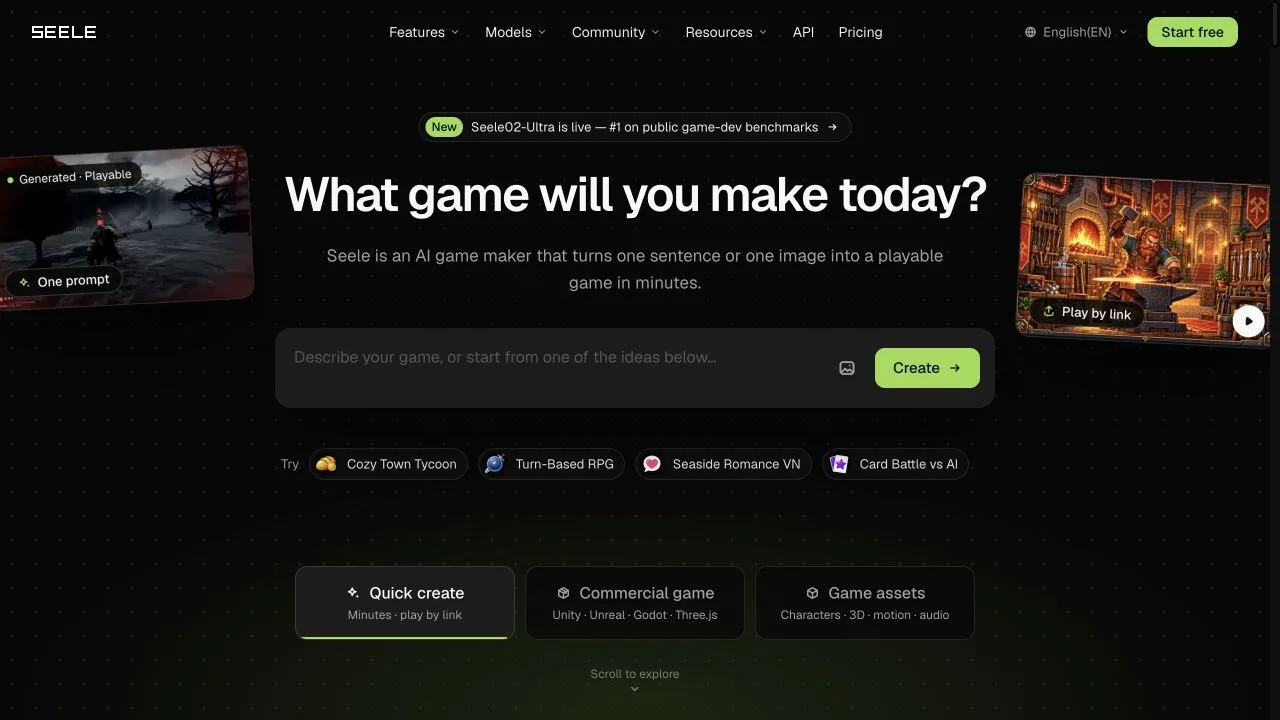
SEELE’s public workflow illustrates this direction. A creator can begin with a prompt or an image, generate a game-like experience and continue refining it through conversation. The emphasis on an editable, playable draft is relevant to education because learning activities improve through observation. A teacher can see which instruction is confusing, which choice is too difficult and which visual cue helps students understand the system. More information about the platform is available on the SEELE AI website.
Local knowledge should shape the tool
Technology alone cannot provide cultural context. An interactive lesson about agriculture, migration, public health or climate adaptation must reflect the language, history and priorities of the people who will use it. AI can help assemble scenes and interactions, but local educators and community members need to decide what is accurate, respectful and useful.
This is where a prototype-first approach can support better participation. A local organization can build a small scenario, invite feedback and adjust the language or sequence before publishing it widely. A community health worker can identify a misleading assumption. A student can point out that a map leaves out an important neighborhood. Because the first version is inexpensive to change, these voices can enter earlier in the process.
Examples beyond the classroom
Interactive learning can support many forms of public communication. A municipal team might create a simple simulation showing how waste moves through a city. A climate organization could let users compare household choices under different constraints. A museum could build a guided exploration that connects an object to the people and places behind it. A newsroom could experiment with a small interactive explainer before committing to a larger data project.
The value of these experiences is not their novelty. It is the way they invite people to understand relationships. A paragraph can describe a trade-off, while a simulation lets someone experience what changes when one variable moves. A map can show a boundary, while a navigable scene can reveal how that boundary affects daily life. Good design makes the connection clear and avoids turning complex issues into a game of guesswork.
The safeguards that make experimentation credible
Low-cost creation still requires high standards. Educational and public-interest projects should explain their sources, review generated text and check that visual material does not reinforce stereotypes. Designers should test on lower-end devices, provide readable text and avoid making essential information depend on fast animation or audio. If a project collects responses or usage data, the purpose and retention rules should be clear.
There is also a risk of mistaking speed for progress. A rapidly generated prototype can look impressive while teaching very little. Teams need a learning objective and a way to observe whether the objective is being met. The strongest test is often simple: after using the experience, can participants explain the issue more clearly, make a better-informed choice or ask a more precise question?
A practical model for organizations with limited resources
- Define the audience. State who will use the experience and what they should understand or do.
- Choose one interaction. Keep the first build focused on a single decision, movement pattern or discovery.
- Test with real users. Observe what people do before explaining what the creator intended.
- Revise with evidence. Change one confusing element at a time and compare the result.
- Decide what to scale. Add content only when the first interaction has proved useful.
Organizations can begin with a narrow pilot. Choose one audience, one question and one interaction. Build a short scene that works in a browser. Invite a small group of learners or community members to use it without a facilitator’s explanation. Collect comments in the participants’ own words, then revise the confusing parts. Only after the pilot demonstrates value should the team add more content, languages or advanced technology.
This sequence protects scarce resources while creating a path toward more ambitious work. It also gives funders and partners something concrete to evaluate. A playable prototype can show what a project is trying to accomplish, where local input is needed and which technical decisions remain open.
AI game tools will not replace teachers, journalists, civic groups or local creators. Their promise is more practical: they can make the first version of an interactive idea easier to build, share and question. In regions where creative and educational resources are unevenly distributed, that lower starting cost may help more communities participate in the design of digital knowledge. Organizations can explore the workflow through the SEELE AI game maker.
