



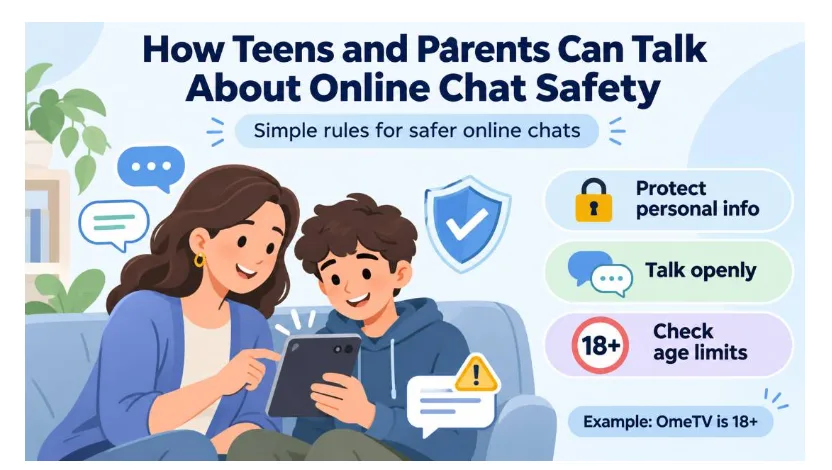
Online chatting has become a normal part of teenage life. Whether teenagers are messaging school friends, joining gaming communities, or exploring social media, much of their communication now happens through screens. OmeTV offers opportunities to make friends and share experiences, but they also introduce risks that parents should understand.
For many families, discussing online safety can be difficult. Parents want to protect their children, while teenagers want independence and privacy. Constantly checking messages or restricting every unfamiliar application can create frustration instead of cooperation. A better approach is to build trust through regular conversations and establish simple rules that help teenagers recognize unsafe situations.
Understanding online chat safety for teens is not about making children afraid of the internet. It is about helping them communicate responsibly and knowing when to ask for help.
Why Online Chat Safety Matters for Teenagers
Teenagers often communicate with people they have never met personally. This happens through online games, social media groups, discussion communities, and random video chat services. Although many interactions are harmless, identifying someone’s real age or intentions can be difficult.
A person claiming to be a fellow teenager might actually be an adult. Someone who appears friendly may gradually request personal information, photographs, or private conversations. Other concerns include cyberbullying, scams, inappropriate content, and unwanted attention.
Parents should explain these possibilities without assuming that every online friendship is dangerous. The goal is to help teenagers understand that building trust online requires caution, particularly when communicating with strangers.
How Parents Can Start Conversations About Online Safety
Teenagers are less likely to discuss their online experiences if they expect criticism or punishment. Parents can avoid this problem by approaching conversations with curiosity rather than suspicion.
Instead of demanding access to every message, ask which applications their friends use, what they enjoy about online communities, and whether they have encountered uncomfortable conversations. These questions encourage teenagers to share their experiences naturally.
Listening is just as important as giving advice. If a teenager mentions receiving inappropriate messages, parents should respond calmly and discuss what happened. An immediate angry reaction may discourage them from reporting similar experiences in the future.
Parents can also use everyday examples to explain risks. Discuss what someone should do if an online contact requests their address, offers gifts, or insists on keeping a friendship secret. Practical situations make safety advice easier to understand and remember.
Understanding Age Restrictions on Chat Platforms
Not every messaging or video chat service is designed for teenagers. Some applications allow younger users, while others specifically restrict access to adults.
What Is the Age Limit for OmeTV?
OmeTV is a random video chat platform that connects users with strangers. Because conversations are unpredictable, users may encounter unfamiliar adults or inappropriate behavior.
According to OmeTV’s official rules, the service is restricted to adults who meet the legal age of adulthood in their country. Minors are prohibited from using OmeTV, even with parental permission or supervision. In countries where adulthood begins at 18, this means users must be at least 18 years old.
Parents should understand that downloading an application does not necessarily mean a teenager is eligible to use it.
Other platforms have different requirements:
- Snapchat: Generally requires users to be at least 13, although regional restrictions may apply.
- Discord: Generally requires users to be at least 13, with higher minimum ages in certain countries.
- OmeTV: Restricted to adults under its official age policy.
Meeting the minimum age requirement does not guarantee complete safety. Families should also review privacy settings, messaging features, and available parental controls.
Six Simple Online Chat Safety Rules for Teens
Establishing clear expectations helps teenagers make better decisions without requiring constant supervision.
1. Keep Personal Information Private
Teenagers should avoid sharing their address, school name, phone number, passwords, or current location with strangers. Even ordinary photographs can reveal identifiable details about their surroundings.
2. Be Cautious About Online Friendships
People online may not always be who they claim to be. Teenagers should avoid arranging in-person meetings with unfamiliar online contacts without involving a trusted adult.
3. Think Before Sharing Photos
Photographs and videos can be saved or shared without permission. Teenagers should never feel pressured to send private or intimate images, regardless of how trustworthy someone appears.
4. Leave Uncomfortable Conversations
If someone asks inappropriate questions, makes threats, or repeatedly pressures them, teenagers should end the conversation. They do not need to explain why they are uncomfortable.
5. Use Privacy and Reporting Tools
Parents should help teenagers understand how to restrict unwanted messages, block suspicious accounts, and report harassment. Privacy settings should be reviewed whenever a new application is installed.
6. Follow Platform Age Requirements
Teenagers should never provide a false age to access restricted services. Parents can help them find age-appropriate platforms for communicating with friends.
What Parents Should Do If Their Teen Uses OmeTV
Discovering that a teenager has accessed an adult-only chat platform can be worrying. However, immediately confiscating their device may prevent an honest discussion about what happened.
Parents should first ask why they used the service, whether they spoke with strangers, and if anyone made them uncomfortable. Explain OmeTV’s age restrictions and why random video conversations create additional risks for minors.
Teenagers who do not meet the age requirement should stop using the platform. Parents can review device controls and discuss suitable alternatives. Most importantly, teenagers should understand that they can report uncomfortable experiences without automatically being blamed.
Recognizing Warning Signs of Unsafe Conversations
Some online interactions become concerning gradually. Someone might initially appear friendly before requesting personal photographs, insisting on secrecy, or becoming angry when messages are ignored.
Parents may notice changes in their teenager’s behavior, including anxiety after checking messages or reluctance to discuss a particular online friendship. These changes do not necessarily indicate danger, but they provide a reason to start a supportive conversation.
If harassment or threats occur, parents should help their teenager stop contact, report the account, and preserve appropriate evidence. Serious incidents should be reported to the relevant authorities.
Frequently Asked Questions
Is OmeTV safe for teenagers?
OmeTV is intended for adults and prohibits minors from accessing its service. Teenagers should use age-appropriate communication platforms instead.
Should parents monitor every online conversation?
Not necessarily. Monitoring should reflect the teenager’s age and circumstances. Open communication, agreed boundaries, and suitable parental controls can help balance privacy with safety.
What should teenagers do when strangers ask for personal information?
They should avoid sharing the information, end suspicious conversations, and inform a trusted adult if they feel pressured or threatened.
Conclusion
Online safety works best when parents and teenagers approach it together. Strict restrictions alone cannot prepare young people for every situation they may encounter online. Regular conversations, sensible boundaries, and an understanding of platform age requirements provide a stronger foundation.
By encouraging responsible communication and making it easier to ask for help, parents can support their teenagers in developing safer online habits without undermining their growing independence.
