



Choosing the Correct kWh Size: Avoid Over‑Buying or Coming Up Short for Your Home Needs
Picture this: You invest in a home battery storage system expecting to store your solar surplus and secure backup power for outages. Yet after installation, you discover the battery runs empty early each evening, or you spent far more money for capacity you will almost never use. Picking the wrong battery capacity is one of the most frequent disappointments for homeowners adding solar‑storage.
This practical buying guide helps you work out realistic storage requirements for apartments, townhouses and family homes. Whether you aim for higher solar self‑consumption, peak‑tariff savings or emergency outage resilience, Conow Home Energy Storage offers modular options to match very different household profiles. Many buyers only look at headline kWh figures and overlook power output, usable capacity and future energy demands — and that mistake leads to systems that never deliver on expectations.
Usable vs Nominal Battery Capacity: Do Not Trust Headline Numbers Alone
Manufacturers publish a nominal capacity value, but this is not the amount of energy you can actually use day‑to‑day. Usable capacity depends on Depth of Discharge (DoD), battery chemistry and built‑in safety buffers managed by the BMS. Modern LFP home batteries often allow 90 % usable DoD, meaning a 6 kWh nominal unit delivers roughly 5.4 kWh real‑world usable energy. Older lead‑acid systems may only permit 50 % DoD, drastically cutting effective storage volume.
Round‑trip efficiency also plays a role: energy is lost as heat during charging and discharging. Quality residential storage achieves between 88 %‑96 % round‑trip efficiency. Always compare usable capacity rather than marketing‑spec nominal values when evaluating competing home batteries.
The Two Core Metrics: Capacity (kWh) and Continuous Power (kW)
Capacity in kWh answers the question: how long can my devices run? Continuous power in kW answers: how many appliances can I run all at once? These two specs must always be assessed together. A large‑capacity battery with low continuous power cannot operate high‑wattage devices such as air‑conditioners or heat pumps, no matter how many kWh it holds.
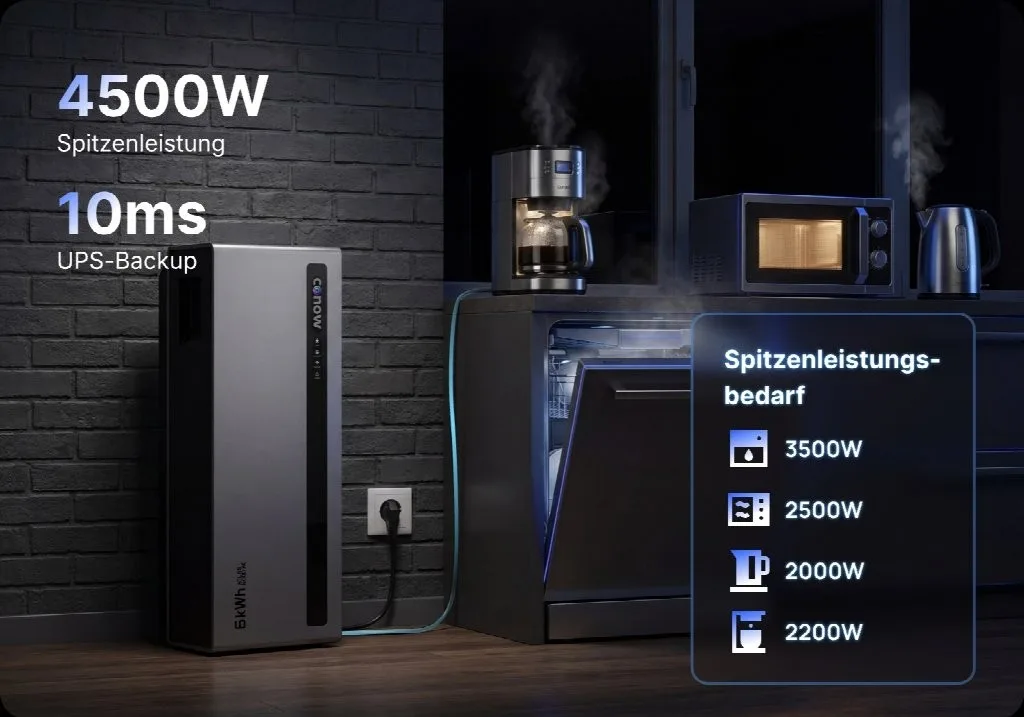
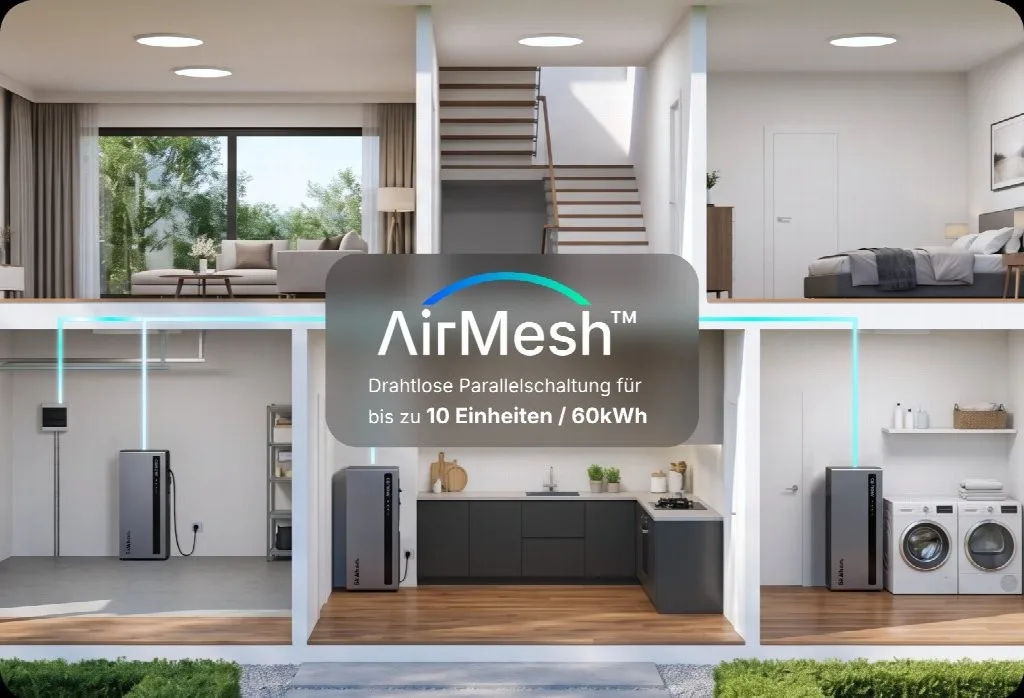
For example: An 8 kWh battery with only 2 kW continuous output cannot run a 3 kW heat pump, even though total stored energy seems substantial. Atlas 6000 AC Home Energy Storage combines 6028 Wh usable LFP‑battery capacity with 3000 W continuous output and 4500 W peak surge power. Thanks to AirMesh wireless parallel‑expansion, multiple units can link together to scale both total capacity and available power as household requirements grow.
Step 1: Define Your Primary Goal for Home Battery Storage
Your main objective shapes your entire capacity calculation. Different priorities produce completely different sizing results.
Maximise Solar Self‑Consumption and Peak‑Shaving
If your focus is consuming your own solar power in the evening and lowering peak‑time grid‑electricity costs: size your battery around your typical evening household energy draw and your daily solar surplus. You want to capture excess midday PV yield so you avoid buying expensive grid power after sunset. In this scenario you do not need huge multi‑day backup capacity.
Emergency Backup Power for Grid Blackouts
For outage resilience: calculate the daily energy consumption of only your critical loads: refrigerator, internet router, essential lighting, sump‑pump and medical devices. You do not need to size for every socket in the whole house. Most households only require 3‑8 kWh usable capacity to keep essential systems operational during short‑term blackouts. Larger homes aiming for extended whole‑house backup will require substantially higher capacity and high inverter power ratings.
Combined Goal: Self‑Consumption plus Limited Backup
This is the most common real‑world scenario for German households with existing rooftop solar. The battery primarily optimises solar self‑use day‑to‑day, while holding a reserved safety buffer for short power‑fail events. Modular systems work very well here: you start with a base capacity and add further battery units later if your consumption increases.
Step 2: Perform a Household Load Audit for Accurate Sizing
Never rely on generic online rule‑of‑thumb values alone. Every household’s energy fingerprint is unique.
- Gather your last 3‑6 months of electricity bills. Separate weekday‑weekend consumption and summer‑winter seasonal differences.
- Make a list of your essential devices: note each appliance’s wattage and estimated daily operating hours.
- Sum the watt‑hours to get your daily essential‑load energy requirement and your peak simultaneous power draw.
- Account for future additions: Will you install an EV‑charger, heat‑pump or more solar panels within the next few years? These add significant load and should factor into your system‑choice.
Smart home energy‑monitors simplify this audit by automatically logging real‑time consumption data, removing guesswork from your capacity planning.
Typical Capacity Guidance for Different Household Profiles
- Small apartment / 1‑2‑person household: Usable 2.5‑4 kWh. Focused on balcony‑PV surplus usage and small essential‑load backup.
- Average 3‑4‑person family home: Usable 5‑8 kWh. Good balance for solar self‑consumption plus short‑term critical‑load backup.
- Large family home / with heat pump or EV‑charger: Usable 10‑18 kWh. Requires modular expandable storage to handle higher evening‑consumption and larger peak‑loads.
- Extended whole‑house backup use‑case: Usable 18 kWh and upwards, paired with high‑power inverter hardware.
Modular systems give you major flexibility. Instead of buying one very large battery up‑front, you start with a realistic base‑size and add capacity step‑by‑step as your budget and energy‑needs evolve. Home Energy Storage for Solar Systems modular product ranges support this incremental planning approach for retrofits and new solar installations alike.
Common Mistakes When Selecting Battery Capacity
- Only comparing nominal kWh capacity and ignoring usable capacity, DoD and continuous power output.
- Oversizing for multi‑day backup when your real priority is purely solar self‑consumption, leading to poor return‑on‑investment.
- Undersizing and failing to plan for future loads such as EV‑charging or heat‑pump installations.
- Choosing non‑expandable fixed‑capacity batteries, locking you in when household energy‑demands increase.
- Forgetting seasonal differences: winter brings less solar generation and often higher household heating‑related consumption.
- Expecting a mid‑size battery to run every large appliance of the entire home during blackouts without pre‑selecting essential‑load circuits.
Conclusion
Selecting the correct home‑battery capacity is not simply about purchasing the largest available unit. It starts by defining your core objective: solar self‑consumption, emergency backup or a combination of both. Always distinguish between headline nominal capacity and real‑world usable capacity, and never overlook continuous power output alongside kWh‑figures. Complete a household load audit using your utility bills and appliance‑wattage data, and think ahead about future energy‑consuming devices you may add to your home.
Modular expandable storage systems avoid the risk of over‑investing upfront, letting you scale capacity gradually as your household evolves. If you are searching for a home‑battery matching your exact requirements, Conow delivers flexible home‑storage hardware including the retrofit‑ready Atlas 6000 AC Heimspeicher. The platform supports incremental capacity growth, intelligent AI‑driven energy‑management and reliable emergency backup for German households with existing solar installations.
FAQs
Q1: How many kWh home battery do I need for my solar system?
A: It depends on your evening consumption and your daily solar surplus. For most average family homes 5‑8 kWh usable capacity represents a good starting‑point for self‑consumption optimisation. If backup‑power is also required you must additionally calculate your critical‑device energy‑needs.
Q2: Can I upgrade my home‑battery capacity later if my energy‑needs grow?
A: Only with modular, parallel‑capable systems. Fixed single‑pack batteries cannot easily expand. Modular solutions allow adding extra battery‑units without replacing your existing hardware.
Q3: Is more kWh always better for a home‑storage system?
A: No. Oversized capacity you will rarely use raises your upfront costs and lengthens your pay‑back period. Match capacity to your real consumption patterns and primary goals instead of maximising specs.
Q4: What is the difference between usable and nominal battery‑capacity?
A: Nominal is the manufacturer’s total labelled capacity. Usable capacity is the real energy you can safely draw in daily‑operation after applying DoD‑safety‑buffers and accounting for system‑losses. Always use usable‑capacity for sizing‑calculations.
Q5: Can a 6 kWh home‑battery run my whole‑house during a power‑cut?
A: Typically not for full whole‑house operation. A 6 kWh‑class battery will reliably power your key critical loads: fridge, router, lighting and small devices. High‑power appliances like ovens, large air‑conditioners or heat‑pumps require significantly higher capacity and power‑ratings.
