



It usually happens at the worst possible time. The reach-in on the line reads 47°F an hour before dinner service, or the walk-in refuses to pull down overnight. Someone has to make a call quickly, and that call often comes down to one question: is this unit worth fixing, or is it time to buy a new one?
Decisions made under that kind of pressure tend to go wrong in one of two ways. Either a restaurant buys a new cooler it did not need, or it pays for a third major repair on a box that should have been retired years ago. A simple framework helps avoid both. Here is how experienced operators and technicians think it through.
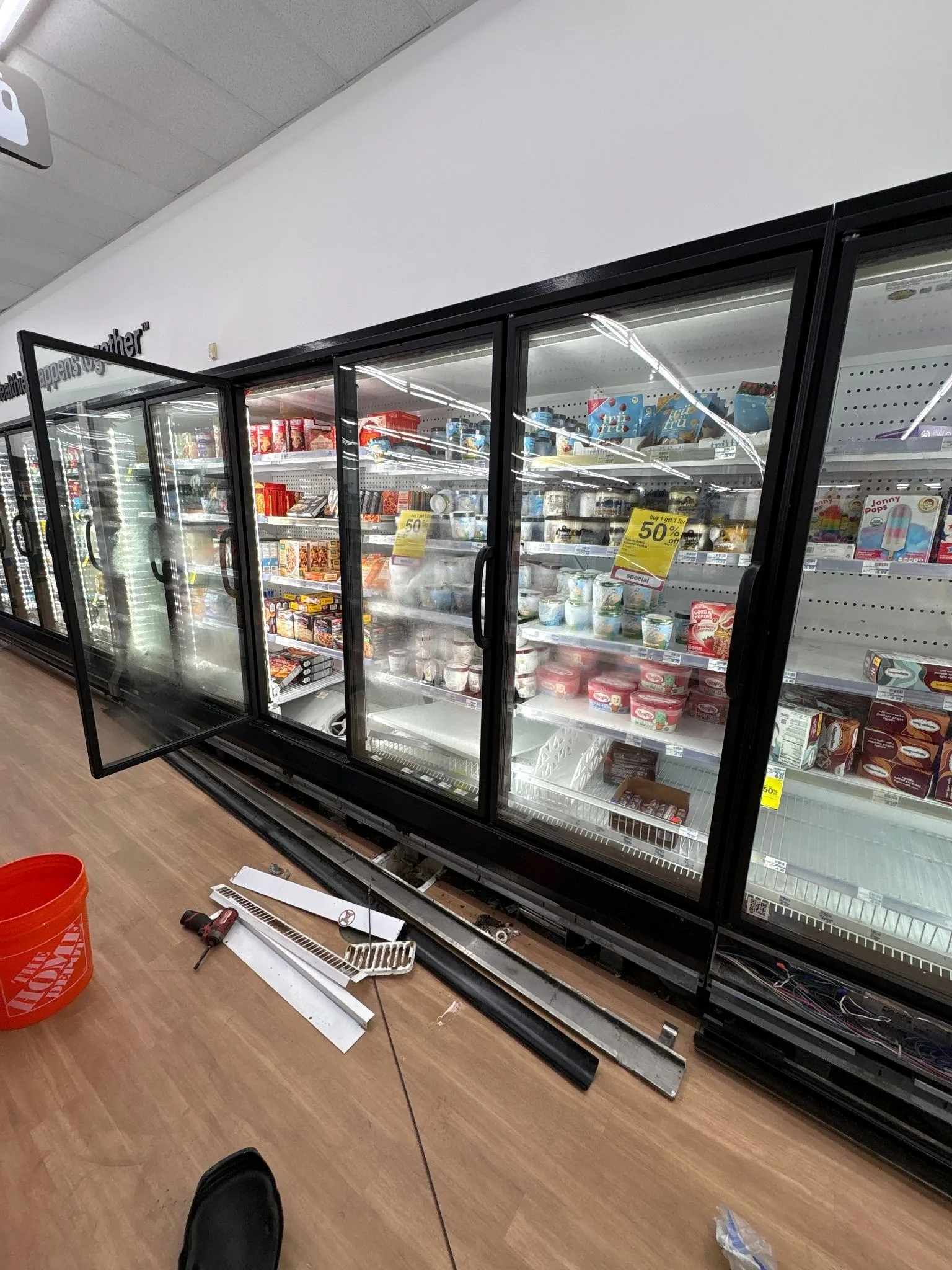
Start With What Actually Failed
Not all failures are equal. Before anyone talks about replacement, get a real diagnosis that names the failed component and explains why it failed.
Many of the most common problems are inexpensive. A torn door gasket, a failed evaporator fan motor, a faulty temperature controller, a frozen condensate drain, or a condenser coil packed with kitchen grease can all make a unit run warm. None of these is a reason to replace a refrigerator. Fixing them usually costs a small fraction of a new unit, and the box goes back to holding temperature.
The expensive failures live in the sealed system. A dead compressor, a refrigerant leak in the evaporator coil, or a restriction in the lines means opening the system, recovering the refrigerant, replacing parts, and recharging. This is where the repair-or-replace question becomes real.
It is just as important to ask why the part failed. A compressor that burned out because the condenser coil was never cleaned will fail again under the same conditions. The root cause matters as much as the part itself.
Run the Numbers Honestly
A common rule of thumb in the trade goes like this. If a repair costs more than about half the price of a comparable new unit, and the unit is already in the second half of its service life, replacement deserves a serious look. A well-maintained reach-in typically lasts somewhere between 10 and 15 years. A five-year-old unit with a failed fan motor is an easy repair. A fourteen-year-old unit facing its second compressor is a different story.
Still, the rule of thumb is a starting point, not an answer. The price tag on a new unit is rarely the full cost of replacing one.
The Hidden Costs of Replacing
Lead time comes first. A common reach-in model may be in stock locally, but specialty prep tables, undercounter units, and anything with custom dimensions can take weeks to arrive. The kitchen has to run without that capacity in the meantime.
Then there is fit. Kitchen lines are built around specific footprints and heights. A replacement model that is two inches wider or a little taller may not slide into the existing spot, which can mean moving shelving, reworking a prep line, or getting a new unit through a narrow back door.
Power is another surprise. Newer models do not always use the same plug configuration or electrical requirements as the unit they replace, and an electrician visit adds cost and delay.
Finally, the old unit cannot simply go to the curb. Its refrigerant has to be recovered by a certified technician before disposal, and someone has to haul it away.
The Hidden Costs of Keeping It
Older equipment usually costs more to run. Worn gaskets, tired compressors, and dirty coils all make a unit run longer to hold the same temperature. According to ENERGY STAR, certified commercial refrigerators and freezers are on average 20 percent more energy efficient than standard models. The agency estimates savings of roughly $40 a year for a solid-door refrigerator and more than $110 a year for a glass-door freezer.
Those numbers are useful, but they rarely justify replacing a healthy unit on their own. Energy savings work best as a tiebreaker when the repair math is already close.
The bigger hidden cost is repeat failure. Keep a simple service log for every unit: date, problem, part replaced, and cost. When the same refrigerator needs several significant repairs within a year or so, that pattern says more than any single invoice. Each breakdown also carries risk beyond the repair bill, including lost product, a scramble during service, and a unit that cannot hold 41°F or below when a health inspector checks it.
Refrigerant Has Changed the Math
Many commercial refrigerators in service today run on R-404A or R-134a. Under federal rules phasing down HFC refrigerants, new self-contained commercial refrigeration equipment has largely moved to low-GWP refrigerants, most often R-290, which is refined propane.
That does not make an older unit illegal or unrepairable. Existing equipment can still be serviced and recharged. But the shift has two practical effects. As HFC production is phased down, refrigerant for older systems may get more expensive over time, which matters most when the failure involves a leak. And if you buy a new R-290 unit, make sure whoever services it is equipped to work with flammable hydrocarbon refrigerants, since those systems call for specific procedures and tools.
Walk-In Coolers Are a Different Conversation
A walk-in is not one appliance. It is a set of components: insulated panels, a door, a condensing unit, and an evaporator. The panels themselves can last for decades if moisture has not gotten into the insulation.
When a walk-in stops cooling, the problem is almost always in the refrigeration system or the door, not the box. That means “replacing the walk-in” usually means replacing a condensing unit or an evaporator coil, which costs far less than a new box. Full replacement is worth discussing only when panels are waterlogged, the floor has failed, or the space needs to be rebuilt for other reasons.
Questions to Ask Before You Decide
Whoever diagnoses the unit should be able to answer these plainly:
- What exactly failed, and what caused it?
- What is the written price for the repair, and what warranty comes with it?
- What other components on this unit are showing wear?
- If I repair it now, what is the next failure I should expect?
- If I replace it, what will a new unit need in terms of space, power, and service?
A good technician will tell you when a repair is not worth it. If the only answer you get is “buy a new one,” without a clear diagnosis behind it, a second opinion is worth the call.
The Bottom Line
Most commercial refrigerator failures are repairable, and many are inexpensive. The units worth replacing are usually older ones with sealed-system failures, a history of repeat breakdowns, or a repair quote that approaches the cost of a new unit. Everything else deserves a proper diagnosis before anyone orders new equipment.
For restaurants, markets, and cafes in the Glendale area, A11 Appliance Repair handles commercial refrigerator repair for Glendale businesses, from reach-ins and prep tables to walk-in coolers, and provides a written estimate before any work begins. Whichever company you call, the questions above will help you make the decision on facts rather than on the panic of a warm cooler at 5 p.m.
