



Fruit packaging is a small part of a much larger supply chain, yet it touches several decisions at once. A grower wants the crop presented well. A packing team needs containers that work with its process. A distributor needs a workable carton arrangement. A retailer needs a pack that fits the display and communicates clearly to shoppers.
These priorities do not always point to the same container. A package chosen only for its stated capacity may prove awkward to fill or difficult to arrange inside an export carton. A practical purchasing approach connects the fruit, the packing operation, and the intended market before comparing supplier quotations.
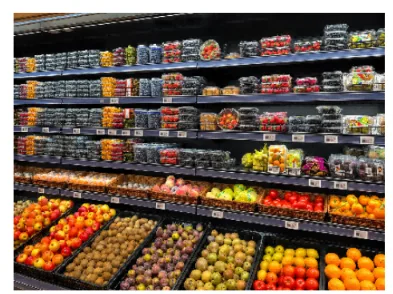
Packaged fruit displayed in a refrigerated produce section.
Define the fruit before defining the package
“Fruit container” covers very different requirements. Loose blueberries behave differently from a bunch of grapes, while apples and kiwifruit may be sold in formats that separate individual pieces. Fresh-cut fruit introduces another set of questions about product contact, lids, and handling. Treating these as one packaging problem makes a specification less useful.
A purchasing brief should identify the fruit variety, normal size range, target net weight or piece count, and presentation required by the buyer. Photographs of a representative packed sample help communicate details that a short product name cannot. An unusually tall grape bunch or a large berry grade can materially change the fit.
It is also worth distinguishing external dimensions from usable internal space. The former affects cartons and equipment; the latter affects how the fruit sits. Both belong in a serious comparison.
Use filling weight as a starting point
A nominal pack weight describes the intended quantity of fruit, not every aspect of the container. Two packs sold for the same weight may have different footprints, depths, lid profiles, and arrangements of openings. The best choice depends on how the actual crop occupies that space.
Trial filling should therefore use representative fruit rather than a convenient substitute. Observe the loading pattern, the space beneath the lid, and the way the pack handles when moved. If staff have to press fruit down to close a sample, the problem deserves attention before a large order is placed.
StlPak’s PET fruit container range is useful to include in that comparison, covering berry punnets, grape clamshells, whole-fruit formats, and fresh-cut options. Its range provides a starting point for matching different applications to existing shapes. It does not remove the need to confirm suitability with the buyer’s own crop and packing method.
Consider ventilation as part of the whole arrangement
Openings in a fruit container should be assessed alongside the carton, stacking arrangement, and handling conditions. A photograph of an empty pack cannot show how it will behave once filled, labeled, and placed among neighboring containers.
Check whether labels or carton walls cover the intended openings. Ask how the proposed pack will be positioned during the operation’s normal cooling and storage process. Different layouts deserve a practical review rather than a simple assumption that more visible holes always mean better performance.
Packaging should also be kept in perspective. It is one part of produce handling, not a substitute for appropriate temperature management or careful crop handling. Claims about additional shelf life require evidence under stated conditions, not just a description of a vented lid.
Bring the packing team into the decision
Procurement comparisons often focus on dimensions and unit price, but the people using the containers can identify other important differences. They see whether nested packs separate cleanly, whether the loading area is convenient, and whether closures are easy to check during routine work.
For a manual operation, a short trial with normal staff can reveal practical problems. For an automated operation, the equipment requirements need to be shared with the supplier and evaluated using appropriate samples. Small differences in geometry can matter, so visual resemblance to the current pack is not enough.
Agree on the version of the sample being evaluated. A change to material, weight, or structure after approval should be discussed rather than treated as an invisible substitution. An agreed specification gives both buyer and manufacturer a clearer reference for repeat orders.
Review the carton before approving the container
A retail pack is rarely shipped alone. Its footprint influences how many units fit inside a carton, how they are oriented, and how much room remains around them. Its height affects the completed carton and the way the load is assembled.
Pack a full carton with the intended containers and fruit. Check the arrangement, closing clearance, and handling method. Review carton dimensions with the logistics team, especially when several formats will share a shipment. A slightly cheaper container can be a poor purchasing decision if it creates an awkward or inefficient shipping arrangement.
This is an area where a manufacturer discussion becomes more productive when buyers provide actual constraints. Rather than asking for “the best fruit box,” share the carton size, required pack count, and equipment limits. Those details narrow the options much faster.
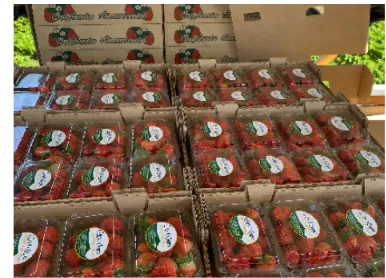
Strawberry clamshells arranged inside corrugated cartons.
Ask precise questions about PET and recycled content
Material discussions should remain specific to the proposed product. If recycled PET is requested, establish the desired content, available documentation, and requirements of the destination market. A general statement about a factory’s capabilities should not be treated as confirmation for every model or production order.
Appearance also deserves sample review. Buyers may have expectations about transparency and color that are difficult to express in an email. Comparing approved samples under the intended retail lighting is more useful than relying on edited product photographs.
Environmental language should follow the same discipline. Recycled content, recyclability, and the availability of local collection are separate questions. A concise, supportable material description is more credible than a broad claim that one package solves a business’s environmental responsibilities.
Compare the supply relationship as well as the sample
Once a suitable format has been identified, the commercial details need equal attention. Confirm the order quantity, carton packing, delivery terms, lead time, and arrangements for samples or changes. Buyers managing a seasonal crop should work backward from when packaging must be available at the packing site.
For discussions with StlPak, the most useful shortlist is a few relevant formats accompanied by a clear purchasing brief. That allows the conversation to focus on fit, material, quantities, and supply conditions instead of moving through an entire catalog without a decision.
The final choice should be understandable to everyone involved: procurement, production, quality, and logistics. An approved sample and a written specification help preserve that understanding after the first shipment.
Fruit packaging works best when it reflects the operation around it. Selecting a container through realistic filling, handling, and carton trials creates a stronger basis for purchasing than choosing by appearance or nominal weight alone. The result is a clearer specification and a more useful conversation with the manufacturer.
