



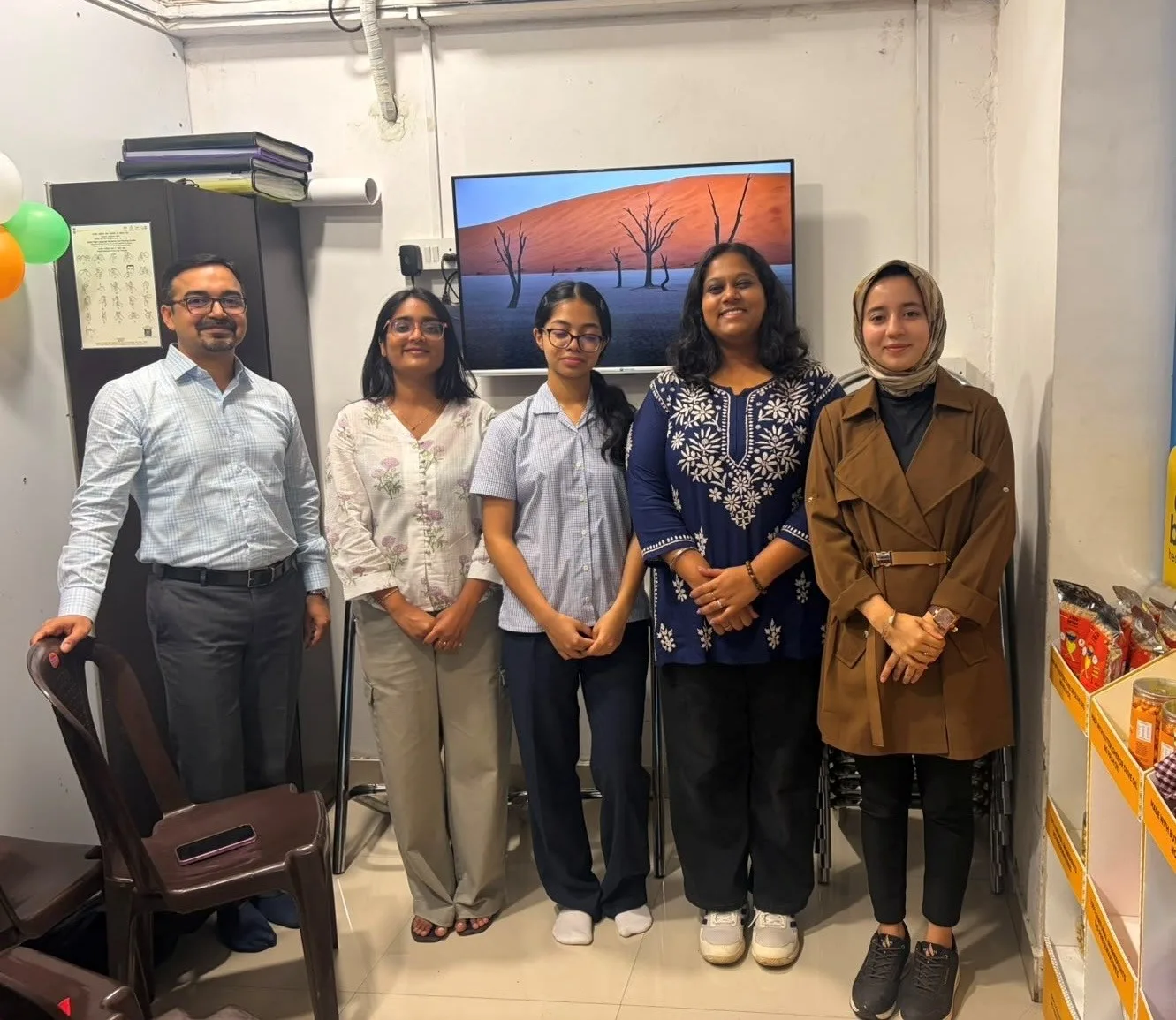
At just 16, Myra Jhawar is combining literature, technology and social purpose in a way that reaches beyond the classroom. A Grade 11 student at Dhirubhai Ambani International School, Mumbai, Myra published her first novel, “Journey of Unwoven Threads,” at 12 and has since received literary recognition. Yet the project that became especially personal to her began not with a writing ambition, but with her desire to help her younger brother.
A Personal Experience Became the Starting Point
Myra’s 12-year-old brother is autistic, and she grew up watching how much predictable routines could matter to him. Small changes in the day could become difficult: getting ready, brushing teeth, going to school, having dinner or preparing for bedtime. What may appear ordinary to many children could require additional preparation and reassurance for him.
Instead of simply observing those challenges, Myra decided to explore whether technology could make everyday routines easier to understand and follow. Her idea developed into a visual scheduler application designed around the principle that children can benefit when daily activities are presented through clear, simple and familiar visual cues.
“I didn’t build this to be a big app,” Myra says. “I built it because I watched my brother go still every time one thing ended and another began.” For her, the purpose was never to create technology for technology’s sake. It was to respond to a real problem she had seen at home.
From an Idea at Home to a Tool Designed With Families
Developing the idea was not straightforward. Existing options included picture boards, laminated cards and parent-managed routines. Digital alternatives could also be expensive or difficult for families to access. Myra therefore approached the project as a cross-platform solution, focusing on how the people who would actually use it could benefit from a simpler experience.
Her work with the Veruschka Foundation became an important part of that process. Rather than designing only from assumptions, she spoke with parents of children with similar needs and listened to their experiences. Those conversations helped her understand that a useful tool had to work in real homes and real care environments, not simply look effective in a demonstration.
Building for Real-World Use
The resulting approach focuses on visual scheduling and predictable routines. The objective is to give children a clearer understanding of what comes next while giving parents and caregivers another practical way to structure everyday activities. Myra has also been developing a second application aimed at caregivers, extending the idea beyond the child-facing experience.
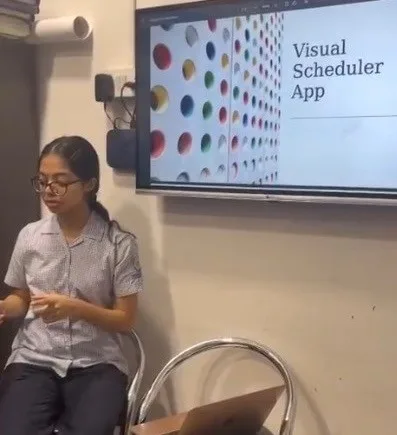
Myra presenting the Visual Scheduler App concept.
That second direction emerged after Myra spent more time inside special-needs centres. She noticed that teachers and centre heads were tracking children’s progress through memory and handwritten notes. The observation led her to think about a digital dashboard that could help caregivers organise information and follow a child’s progress more systematically.
Technology With a Human Purpose
What distinguishes Myra’s work is the reason behind it. The projects are not presented simply as technology products or school exercises. They grew from a personal experience and then developed through conversations with families and people working directly with children. That process has kept the focus on practical usefulness rather than novelty.
The response to her work has begun to extend beyond her immediate circle. Her projects have attracted interest from institutions and organisations working in the special-education space, while her journey demonstrates a combination of creativity, empathy and initiative for someone her age.
A Young Creator Thinking Beyond the Classroom
Myra’s story is also a reminder that innovation does not always begin inside a laboratory. Sometimes it begins with paying attention to a problem that other people have learned to live with. In her case, watching her brother navigate everyday transitions became the motivation to explore a more accessible way of communicating routines.
Her journey from a young author to a student developing digital tools for children and caregivers shows how personal experiences can become catalysts for meaningful ideas. As she continues refining her applications and exploring their use in educational and care settings, the larger ambition remains straightforward: build tools that make everyday life a little easier for families who need them.
At 16, Myra Jhawar is still at the beginning of her journey. But her work already reflects an important lesson about innovation—sometimes the most useful ideas start when someone notices a small difficulty, listens carefully to the people living with it, and decides to do something about it.
