



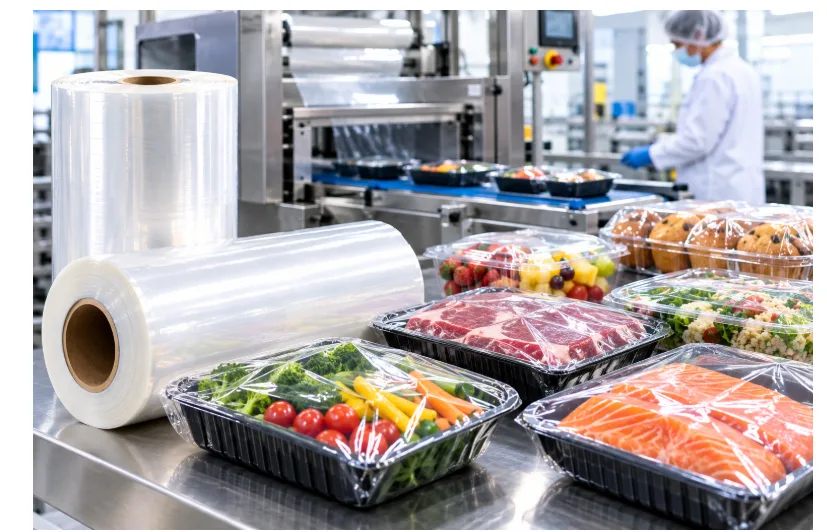
Food manufacturers face strict requirements for food-grade industrial shrink wrap to safeguard product safety and compliance. The right food-grade shrink wrap helps prevent contamination, supports high-speed line throughput, and can be selected to meet applicable federal and state requirements.
With demand across agriculture, seafood processing, baking, and meal-prep plants, producers must navigate certification requirements while maintaining production efficiency. Choosing sealing machine technology compatible with compliant films enhances both product protection and operational uptime.
Key certification requirements for food-grade films form the foundation of packaging compliance.
Key Certification Requirements for Food-Grade Films
Certification for food-grade films is essential if your operation handles industrial shrink wrap for food.
U.S. Food and Drug Administration (FDA) requirements address substances that may migrate from food-contact materials into packaged foods. Films such as PET, PP, PE, PA, and EVOH can provide barrier properties that help limit oxygen and moisture exposure while maintaining product visibility where required.
Compliance goes beyond raw materials. It can also involve puncture resistance, seal integrity during filling machine processes, and suitability for the heat generated by sealing machines or conveyors used in production environments.
Packaging material selection should also consider the intended product, storage conditions, processing temperatures, and required shelf life. These requirements help processors maintain product protection and operational consistency throughout production, warehousing, and distribution.
They support food safety and operational uptime when combined with appropriately specified food-grade shrink wrap solutions.
Evaluating Material Safety and Purity
Once you’ve identified certification requirements for food-grade films, the next step is evaluating material safety and purity to ensure compliance with applicable requirements.
- Chemical Composition Screening: Food-contact shrink wrap should be supported by appropriate documentation covering its material composition and intended use. Where specific substances are restricted or subject to regulatory requirements, suppliers should provide documentation demonstrating that the material is suitable for the intended application.
- Migration Testing Results: Film samples should demonstrate appropriate migration characteristics so packaging components do not transfer into food at unacceptable levels during processing or storage. Testing and supporting documentation should correspond to the intended food-contact application and applicable requirements.
- Allergen Control Statements: Manufacturers should provide relevant documentation concerning film materials and additives used with sealing machines on shared lines where allergen controls are part of the facility’s food safety program.
- Physical Purity Verification: Physical inspections can identify visible contaminants, including fiber fragments or dust particles, before packaging materials are integrated with filling machines at production facilities.
Meeting Regional Environmental Regulations
Meeting state-level environmental rules involves more than standard recycling practices. Depending on the jurisdiction, packaging producers and users may also need to account for Extended Producer Responsibility (EPR) requirements and applicable end-of-life handling obligations.
- Lifecycle Stewardship Requirements: Where EPR packaging requirements apply, producers may have responsibilities covering packaging materials through collection, recycling, recovery, or disposal. Requirements vary by state, so facilities should verify the obligations applicable to their operations.
- Pathways Through Producer Responsibility Organizations: Producer Responsibility Organizations (PROs) may help industries fulfill applicable packaging compliance obligations. These organizations can support responsibility plans, reporting, and programs related to sorting, recycling, recovery, or waste diversion.
- Impact on Operations Across Jurisdictions: If your operations span multiple jurisdictions, coordinated compliance helps reduce administrative gaps and interruptions in logistics flows between sites. Maintaining consistent reporting and documentation procedures can also simplify compliance management across multiple facilities.
Choosing Approved Vendors and Suppliers
Vendor selection plays a direct role in ensuring food-grade shrink wrap compliance, especially given strict operational demands on distribution centers and manufacturers.
- Certification Validity: Work with suppliers who provide current documentation verifying food-contact suitability for the intended application of films, inks, and other packaging materials where applicable.
- Reliable Product Sourcing: Prioritize vendors with established experience supplying compliant industrial equipment and packaging materials for production environments.
- Consistent Inventory Levels: Opt for partners maintaining sufficient inventory so your operation is less vulnerable to disruptions during sudden demand spikes or seasonal surges.
- Industry Expertise: Choose experienced providers like Technopack that deliver packaging equipment and solutions based on established experience serving industrial and food production operations nationwide. This approach helps facilities maintain appropriate material documentation while reducing avoidable risks throughout the production line.
Proper Storage and Handling Protocols
Choosing compliant materials is only part of the process. You also need strict storage and handling protocols to maintain food-grade shrink wrap compliance. Polyolefin shrink wrap is commonly used in food packaging applications where its material properties and documented suitability align with the requirements of the specific application.
When using a sealing machine or shrink tunnel, heat-related risks remain if safety procedures are ignored. Proper equipment operation, guarding, maintenance, and employee training are essential parts of a controlled production environment.
You should supervise heat guns until they cool, regularly inspect heating elements for wear, and verify that ventilation systems work correctly so fumes do not build up around your conveyor machines or other industrial equipment.
Personal protective gear such as gloves and other appropriate PPE should be available when staff handle films or materials that require additional protection. PPE selection should follow the material’s safety documentation, facility procedures, and applicable OSHA requirements.
Always store rolls of film in clean, dry areas away from direct sunlight and other conditions identified by the manufacturer as potentially damaging. Post clear labels listing relevant warnings or temperature requirements where staff can see them.
Best Practices for Labeling and Traceability
Maintaining labeling and traceability best practices for food-grade shrink wrap supports regulatory compliance and helps protect your operation from packaging and documentation issues. Applicable FDA requirements address materials used in food-contact packaging, including certain label materials, adhesives, and inks depending on their intended use.
- Label Materials Selection: Choose labels with facestock, adhesives, and inks appropriate for their intended food-contact or indirect-contact application. These components should withstand relevant temperature changes, such as freezing or refrigeration, while maintaining legibility throughout distribution.
- Print Quality Verification: Validate print quality at every production stage using visual inspection and, where applicable, barcode scanners. Labels applied during the packaging process should keep nutrition facts, lot codes, barcodes, or other required information clear and readable during transport.
- Compliance Documentation Maintenance: Keep supplier documentation showing that labels and related components are manufactured for their stated application and meet applicable requirements. This documentation provides supporting evidence during quality reviews and industrial facility audits.
Audit Preparation for Regulatory Inspections
Proper labeling and traceability streamline audit readiness, but inspection preparation for food-grade shrink wrap compliance goes further. Every packaging line operator should document relevant process settings for each piece of industrial equipment, such as a sealing machine or conveyor machine, and keep applicable logs available for review.
Inspectors may review cleaning schedules, supplier certifications, sanitation procedures, and maintenance histories related to machinery and packaging materials. Maintaining complete records gives plant personnel a clear way to demonstrate how equipment and materials are controlled.
Conduct internal walkthroughs using applicable regulatory and facility checklists before an actual inspection. Preparing your team with spot-check drills helps ensure real workflow conditions match documented procedures.
Consistent preparation reduces the need for last-minute document gathering when regulators or customers conduct an inspection or audit.
Achieving food-grade shrink-wrap compliance requires precision, reliable industrial equipment, and awareness of applicable regulations. Operators prioritize machinery such as sealing machines and conveyor machines designed to support controlled and consistent production.
Technopack supplies industrial packaging equipment with documentation and U.S.-based support to help plants maintain reliable operations. Service, parts, training, and equipment guidance support production teams from equipment selection through ongoing operation.
For processors seeking consistent results, streamlined throughput, and dependable inventory, Technopack supports packaging workflows from filling machine selection to final package integrity.
