



Healthcare organizations in the US manage hundreds or even thousands of financial transactions every day. From verifying insurance information to submitting claims, processing payments, and following up on outstanding balances, every stage of the revenue cycle requires accuracy, consistency, and timely action.
For years, many healthcare providers have relied on manual workflows to manage these activities. While manual processes may work for smaller organizations, growing patient volumes and increasingly complex payer requirements can make them difficult to maintain. As a result, more healthcare organizations are exploring automation to improve efficiency and reduce administrative workloads.
Comparing Revenue Cycle Management Software with manual workflows can help providers understand where technology can deliver the greatest operational benefits. The right approach can help healthcare teams manage repetitive tasks more efficiently while allowing staff to focus on complex cases that require human judgment.
What Are Manual Revenue Cycle Workflows?
Manual revenue cycle workflows depend heavily on employees to complete individual tasks. Staff may enter patient information, verify insurance eligibility, prepare claims, check claim statuses, post payments, and follow up on unpaid accounts.
These processes require experienced employees and careful oversight. However, as the number of manual steps increases, so does the possibility of delays, inconsistencies, and human errors.
When information has to be entered into multiple systems, employees may also spend significant time switching between applications and checking records. This can reduce productivity and make it harder to identify problems before they affect the revenue cycle.
What Is Revenue Cycle Management Software?
Revenue Cycle Management Software uses technology to automate and organize repetitive financial and administrative activities throughout the healthcare revenue cycle.
Instead of requiring employees to manually complete every step, software can manage routine workflows according to predefined rules while directing exceptions to the appropriate staff members.
A modern RCM Software solution can support activities such as:
- Insurance eligibility verification
- Claims processing
- Claims status tracking
- Payment workflows
- Denial management
- Patient balance follow-up
- Revenue cycle reporting
- Workflow monitoring
The goal is not to eliminate human involvement. Instead, automation allows healthcare employees to spend less time on repetitive administrative work and more time handling complex claims, exceptions, and decisions that require professional judgment.
Revenue Cycle Management Software vs. Manual Workflows: Key Differences
The biggest difference between manual workflows and RCM Software is how repetitive tasks are managed.
With manual processes, employees are responsible for completing and monitoring many individual steps. With software-based workflows, routine activities can be standardized and automated.
| Area | Manual Workflows | Revenue Cycle Management Software |
| Data Entry | Primarily handled by staff | Can automate repetitive processes |
| Claims Processing | Manual review and submission | Structured and automated workflows |
| Denial Management | Staff-driven investigation | Automated prioritization and tracking |
| Payment Processing | Manual posting and reconciliation | Streamlined payment workflows |
| Reporting | Spreadsheets and multiple systems | Centralized reporting and visibility |
| Scalability | Requires additional staff as volume grows | Designed to handle increasing volumes |
| Error Prevention | Depends heavily on manual review | Automated checks and standardized rules |
The right choice ultimately depends on the size, complexity, and operational requirements of the healthcare organization.
Efficiency and Administrative Workload
One of the biggest differences between manual workflows and automation is the amount of administrative effort required.
Manual processes often require employees to repeat the same actions for every patient, account, or claim. As patient and claim volumes increase, the administrative workload increases as well.
Revenue Cycle Management Software can reduce repetitive activities and help staff manage larger volumes more efficiently. Instead of spending most of their time completing routine tasks, employees can focus on exceptions and higher-value responsibilities.
For growing healthcare organizations, this can improve productivity without requiring administrative workload and staffing requirements to increase at the same rate as patient volume.
Accuracy and Consistency
Accuracy is critical throughout the healthcare revenue cycle. Incorrect information can contribute to claim issues, payment delays, rework, and additional administrative costs.
Manual processes depend heavily on individual employees entering and reviewing information correctly. Even experienced staff can make mistakes when handling large volumes of repetitive work.
RCM Software can create standardized workflows that apply the same rules consistently. Automated checks may also help identify missing or inconsistent information before it creates larger problems.
Human review remains important, particularly for complex cases. However, reducing unnecessary manual steps can help healthcare organizations improve process consistency.
Claims Processing and Management
Claims management is another area where manual workflows and Revenue Cycle Management Software can differ significantly.
With manual workflows, employees may need to review claims, identify potential issues, submit claims, monitor their status, and determine when follow-up is required. Managing each of these steps manually can become increasingly difficult as claim volumes grow.
Revenue cycle automation can organize these activities into structured workflows. Claims that meet established requirements can move through routine processes, while exceptions can be flagged for staff review.
This approach can reduce the amount of time employees spend manually monitoring individual claims while helping organizations manage higher claim volumes more efficiently.
Managing Denials More Efficiently
Denials can create substantial additional work for healthcare billing teams. Staff may need to determine why a claim was denied, investigate the issue, correct the information, resubmit the claim, and monitor it again.
Manual denial management can become especially challenging when organizations have a large number of outstanding claims.
An RCM Software platform can help organize denial cases and identify which claims require attention. Teams can prioritize cases based on factors such as urgency, claim value, denial reason, or required action.
Over time, organizations can also analyze recurring denial patterns. This can help identify common causes of denials and create opportunities to improve processes before similar issues occur again.
Payment Processing and Reconciliation
Payment posting and reconciliation are important components of revenue cycle management.
Manual payment workflows can require employees to enter payment information, match payments to accounts, identify discrepancies, and update financial records. These repetitive activities can consume significant amounts of staff time.
Revenue Cycle Management Software can streamline payment-related workflows and reduce repetitive administrative steps. Better-organized payment processes can also help financial teams gain clearer visibility into outstanding balances and current financial activity.
This can make it easier for organizations to identify discrepancies and maintain more consistent financial records.
Visibility Into Revenue Cycle Performance
Manual workflows can make it difficult for healthcare leaders to obtain a complete view of revenue cycle performance.
Information may be distributed across spreadsheets, emails, billing systems, payer portals, and other applications. As a result, identifying bottlenecks or recurring problems can take considerable time.
Modern RCM Software can provide more centralized visibility into financial workflows and operational performance. This can help healthcare organizations understand where delays are occurring and identify areas that require improvement.
Better visibility can support more informed decisions related to staffing, workflow design, payer relationships, collections, and overall financial performance.
Scalability and Growth
Manual workflows can become increasingly difficult to manage as healthcare organizations grow.
Higher patient volumes typically mean more claims, insurance interactions, payments, account follow-ups, and administrative tasks. Adding more employees may help manage the workload, but it can also increase administrative costs and create additional management requirements.
Automation provides another approach by reducing repetitive work and creating standardized workflows capable of handling larger volumes.
For organizations planning to expand, scalability should therefore be an important consideration when evaluating Revenue Cycle Management Software.
Cost and Resource Efficiency
The cost of manual revenue cycle management extends beyond employee salaries. Organizations may also incur costs associated with rework, delayed claims, missed follow-ups, inefficient processes, and preventable administrative errors.
Automation can help reduce the amount of time employees spend on repetitive activities. This does not necessarily mean reducing staff. Instead, healthcare organizations can redirect employee time toward activities that require greater expertise and decision-making.
When evaluating RCM Software, providers should consider the overall operational impact rather than looking only at the software’s upfront cost.
Choosing the Right Approach
Automation is not necessarily about replacing every manual process.
Some revenue cycle activities require human judgment, particularly when dealing with complex claims, unusual patient situations, payer disputes, or exceptions that do not follow standard workflows.
For many healthcare organizations, the most effective approach is a combination of technology and human expertise.
Revenue Cycle Management Software can handle routine and repetitive activities, while experienced staff can manage exceptions and decisions that require professional knowledge.
Healthcare organizations should evaluate their existing workflows and identify areas where manual processes create the greatest delays, costs, errors, or operational risks.
What to Look for in RCM Software
Healthcare providers considering automation should evaluate RCM Software based on their specific operational requirements.
Important factors to consider include:
- Integration with existing healthcare and billing systems
- Workflow automation capabilities
- Scalability
- Data security
- Reporting and analytics
- Ease of use
- Claims management capabilities
- Denial management functionality
- Payment workflow support
- Customization and workflow flexibility
- Vendor support
The best solution is not necessarily the one with the largest number of features. It should be a solution that fits the organization’s existing processes and can support its future growth.
Modernizing Revenue Cycle Operations
As healthcare organizations face increasing financial and administrative pressure, improving revenue cycle efficiency is becoming more important.
Technology can help providers reduce repetitive work, create more consistent processes, improve visibility, and build workflows that can scale with organizational growth.
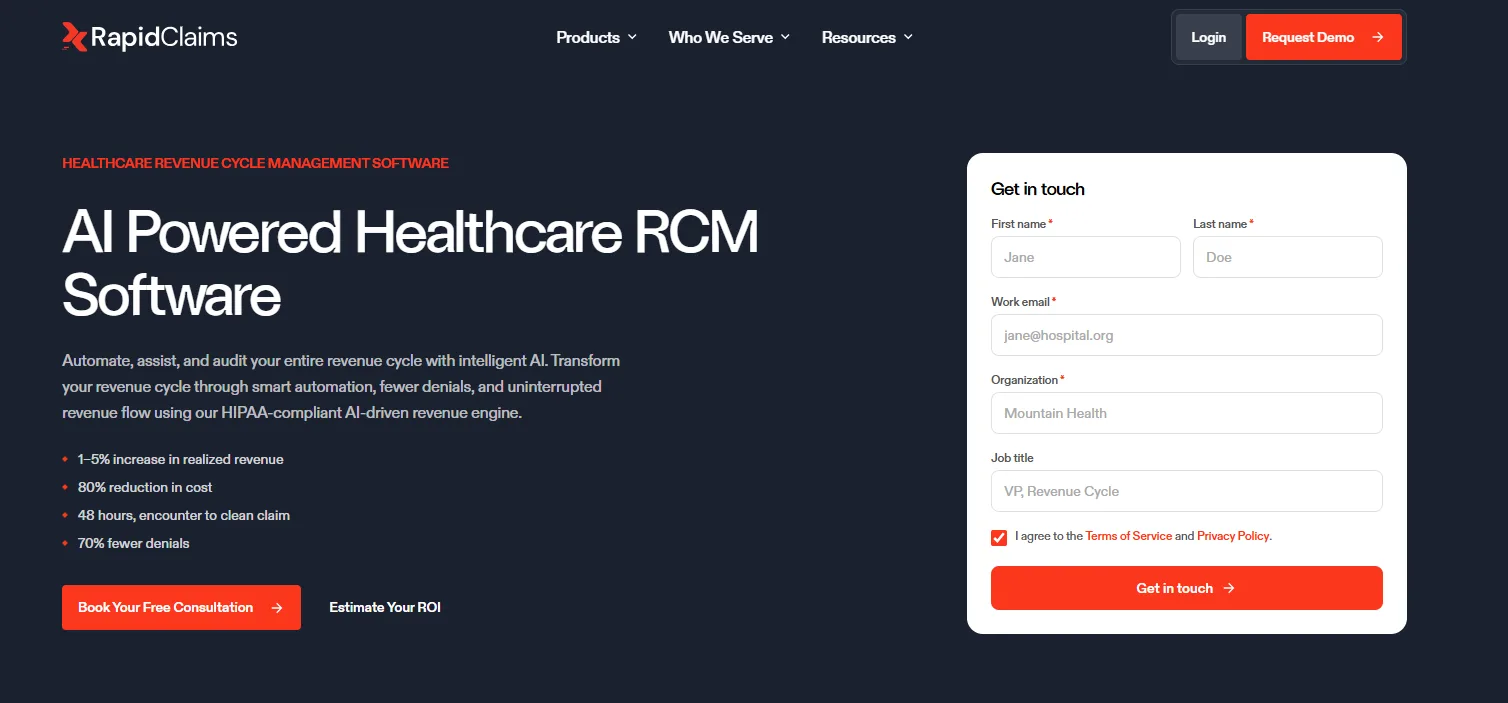
Organizations considering modern technology can explore RCM Software to determine whether it fits their operational requirements. RapidClaims is one option healthcare organizations can consider when evaluating ways to modernize their revenue cycle operations.
The right Revenue Cycle Management Software can help healthcare teams automate routine activities while keeping experienced professionals involved where human judgment matters most.
Final Thoughts
The comparison between manual workflows and Revenue Cycle Management Software is ultimately a comparison between labor-intensive processes and technology-supported operations.
Manual workflows can remain practical for organizations with limited volumes and relatively simple requirements. However, as patient volumes, claims, payer requirements, and administrative complexity increase, manual processes can become harder to manage efficiently.
For growing healthcare providers, automation can provide a practical way to reduce repetitive work, improve consistency, increase visibility, and support scalability.
The goal is not to replace healthcare professionals with technology. Instead, the goal is to give revenue cycle teams better tools so they can spend less time on repetitive administrative work and more time on tasks that require experience, judgment, and expertise.
