



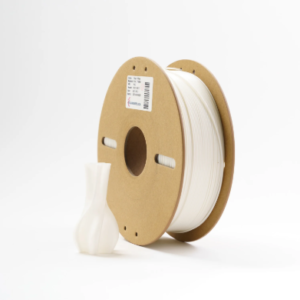
If you’re new to 3D printing, or you simply need a dependable material for everyday jobs, eSUN PLA-Basic is one of the easiest filaments to recommend. eSUN is a well-established name in the 3D printing materials industry, and PLA-Basic reflects the brand’s approach in a nutshell: printing should be smooth, predictable, and affordable, without cutting corners on quality.
This filament sits at the entry point of eSUN’s catalog, but “entry-level” doesn’t mean basic in a negative sense. It simply means the material has been engineered so that first-time users, students, and hobbyists on a budget can get clean, usable prints without hours of trial and error tuning their slicer.
What Is eSUN PLA-Basic?
PLA-Basic is a modified polylactic acid (PLA) filament developed specifically for low-cost, high-volume printing. Unlike raw, unmodified PLA, eSUN’s formulation is tuned for better flow and easier extrusion, which means less fiddling with temperature settings and fewer failed prints. It keeps the environmentally friendly profile PLA is known for – it’s made using starch-based raw materials from renewable plant resources – while adding the practical tweaks that make daily use less frustrating.
It’s designed to work well straight out of the box on the kind of printers most hobbyists already own, from budget Ender-style machines to newer high-speed printers, so you don’t need to invest in special hardware to get good results.
Key Features
- Easy to print: extrudes smoothly with minimal tuning, even for first-time users.
- Low odor: no irritating smell during printing, which makes it comfortable to use indoors or in a classroom setting.
- Resists stringing and warping: cleaner surfaces and fewer failed prints, especially on longer or more detailed models.
- Improved flow for faster printing: eSUN modified formulation raises the maximum volume flow rate to roughly 30 mm³/s on 0.4 mm nozzles under Bambu P1-series printing conditions, so it keeps up with modern high-speed printers.
- Vibrant color range: a wide palette of colors gives makers plenty of room to experiment.
- Reliable spool quality: tight diameter tolerance and vacuum-sealed, desiccant-protected packaging keep the material dry and consistent until you’re ready to print.
Typical Specifications
Exact figures can vary slightly by color and batch, but the following gives a realistic picture of what to expect from PLA-Basic on a standard FDM setup:
| Property | Typical Value |
| Filament diameter | 1.75 mm |
| Material base | Modified PLA |
| Recommended nozzle temperature | approx. 210–230°C |
| Recommended bed temperature | approx. 45–60°C (a heated bed is not strictly required) |
| Print speed | Standard speeds on most printers; up to high-speed profiles on compatible machines |
| Packaging | Vacuum-sealed bag with desiccant, 1 kg spool |
Recommended Print Settings
As a starting point, most users find good results printing PLA-Basic with a nozzle temperature between 210°C and 230°C and a bed temperature between 45°C and 60°C. Because PLA generally doesn’t require a heated enclosure, it’s a forgiving material for open-frame printers. Turning on Z-seam alignment, keeping cooling fans active for the majority of the print, and avoiding excessive retraction settings will help you get the cleanest possible surface finish. If you’re printing on a high-speed machine, PLA-Basic’s improved flow characteristics mean you can often push speeds higher than you would with ordinary PLA before quality starts to drop off.
Best Applications
PLA-Basic is a strong fit for prototypes, functional test parts, home organization items, decorative models, cosplay props, and classroom or maker-space projects where reliability and cost matter more than extreme mechanical strength. It’s also a sensible choice for anyone printing in bulk – batches of gifts, hobby parts, or teaching aids – since the low price per spool doesn’t come at the cost of print reliability.
Why Choose an eSUN Filament
eSUN has spent years developing 3D printing materials and is recognized for consistent manufacturing: tight diameter tolerances, careful winding so spools don’t tangle or overlap, and packaging that actively protects filament from moisture before it reaches your printer. PLA-Basic carries that same manufacturing discipline into an entry-level product, which is why it’s a popular recommendation for people buying their first few spools of filament. Beyond the material itself, eSUN also backs its products with a broad color catalog, published technical data sheets, and a track record built over many years of supplying both hobbyists and professional workshops, which adds a layer of confidence that lesser-known budget filaments often can’t match.
Printer Compatibility
One of the practical advantages of PLA-Basic is that it doesn’t demand anything unusual from your hardware. It works well on entry-level machines as well as more advanced setups, including:
- Bambu Lab P1P, P1S, X1, X1C, and A1 Mini
- Creality Ender 3 series, K1, and K1 Max
- Prusa MK3 and MK4
- AnkerMake M5
- Voron 2.4
- UltiMaker, FlashForge, MakerBot, and Raise3D printers
Because it doesn’t require an enclosure or unusual nozzle materials, it’s also a safe filament to hand to a beginner who is still learning the basics of their machine.
Troubleshooting Common Issues
Even an easy-print filament can run into the occasional hiccup, usually traced back to a handful of common causes. If prints aren’t sticking to the bed, double-check bed leveling and clean the surface with isopropyl alcohol before printing. If you notice fine stringing between parts of a model, try lowering the nozzle temperature by 5–10°C or increasing retraction slightly. Warping on larger, flat prints is usually solved with a brim, a slightly higher bed temperature, or shielding the printer from drafts. And if the filament feels brittle or prints look duller than expected, it’s worth checking that the spool has been stored properly, since PLA can slowly absorb moisture from the air if left unsealed for long periods.
Frequently Asked Questions
Is eSUN PLA-Basic good for beginners?
Yes. It’s specifically formulated to be forgiving – low odor, minimal warping, and easy extrusion make it one of the more approachable filaments for someone printing for the first time.
Do I need a heated bed to print PLA-Basic?
Not strictly. PLA generally adheres well to a variety of surfaces even without heat, though a bed temperature of around 45–60°C can further improve adhesion and reduce warping on larger prints.
How is PLA-Basic different from standard PLA or PLA+?
PLA-Basic is optimized for cost-effective, high-volume printing with improved flow and reduced stringing. PLA+ formulations from eSUN are generally aimed at higher toughness and strength, while PLA-Basic focuses on ease of use and value.
Can PLA-Basic be used on high-speed printers?
Yes. Its modified formulation supports higher volumetric flow rates, so it performs well on high-speed printers such as Bambu Lab P1-series machines, alongside more traditional desktop FDM printers.
How should I store unused PLA-Basic filament?
Keep it in its original vacuum-sealed bag with the desiccant pack when not in use, or transfer it to an airtight container with fresh desiccant, to prevent moisture absorption that can affect print quality.
What colors does eSUN PLA-Basic come in?
eSUN offers PLA-Basic in a wide range of colors, giving you plenty of options whether you’re printing functional parts or decorative pieces.
Final Thoughts
For everyday printing where reliability and price matter most, eSUN PLA-Basic is a hard filament to beat. It brings together low odor, minimal warping, and an easy learning curve, all backed by eSUN’s reputation for consistent spool quality.
If you’d like to try it for yourself, PLA-Basic is available to order directly, offering a convenient way to bring eSUN’s trusted print quality to your own printer.
The post eSUN PLA-Basic: An Affordable, Beginner-Friendly Filament for Everyday 3D Printing appeared first on PHIMDACAP.COM.
