



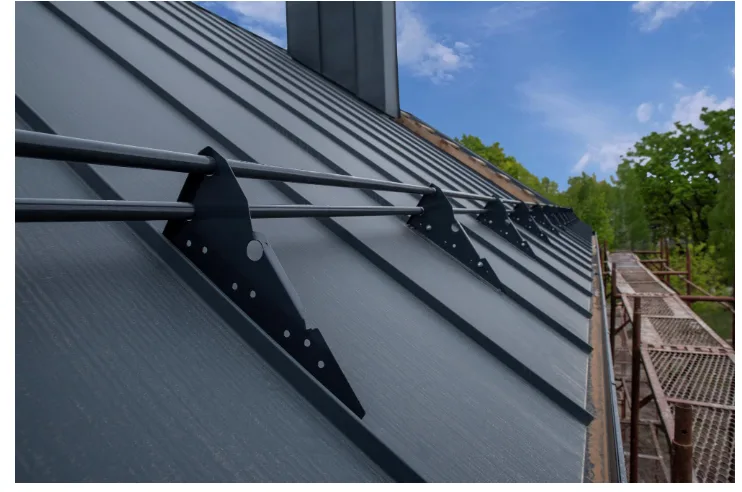
The initial quote for a metal roof can be surprising. It’s a significant investment, often two to three times the cost of architectural shingles. But the real financial risk isn’t the upfront price. The biggest risk is an improper installation that undermines the very reason you chose metal in the first place: its longevity. A poorly installed system can leak, rust prematurely, or suffer from “oil canning,” a visible waviness in the flat areas of the panels, turning a 50-year asset into a 10-year headache.
This is why the conversation around metal roofing is shifting. While its popularity is growing, now capturing about 18 percent of the residential roofing market according to Roofing magazine, homeowners are learning that the installer’s expertise is more critical than the material itself. The difference between a lifetime roof and a costly failure often comes down to tiny details: the type of fasteners used, the way flashing is integrated at transitions, and how the system is designed to handle thermal expansion and contraction. Exploring the full range of modern metal roofing for homes shows how sophisticated these systems have become, moving far beyond the simple corrugated panels of the past.
Quick answer: A metal roof’s true value is determined less by its advertised 50+ year lifespan and more by the quality of its installation. The contractor’s specific experience with metal systems, their understanding of material-specific challenges like thermal movement, and the details of their workmanship warranty are the most important factors to evaluate.
What’s inside
- What are the real differences between steel, aluminum, and copper?
- How does a standing seam system actually work?
- What questions should I ask about the underlayment?
- How can I verify a contractor’s experience with metal?
- What should a metal-specific workmanship warranty cover?
- Frequently Asked Questions About Metal Roofs
What are the real differences between steel, aluminum, and copper?
The primary differences are cost, corrosion resistance, and weight, which dictate which material is best suited for your specific climate and budget.
Steel is the most common material for a reason. It offers an excellent balance of durability and cost for most homeowners. Industry benchmarks often track the most-used brands for various home-related products (industry data tracked by Statista puts…). In fact, steel accounts for roughly 82 percent of the U.S. residential metal roofing market, according to Roofing magazine. Most residential steel panels are not raw steel; they are coated for protection. You will typically see “galvalume” (a zinc and aluminum alloy) or “galvanized” (a zinc coating) products. These coatings are critical for preventing rust and extending the roof’s service life.
Aluminum is the go-to choice for coastal regions or areas with high humidity. Unlike steel, aluminum does not rust. When exposed to oxygen, it instantly forms a hard, protective layer of aluminum oxide that prevents further corrosion. This makes it ideal for homes near salt spray. It is also significantly lighter than steel, which can sometimes reduce the structural load on your home. The trade-off is a higher material cost compared to coated steel.
❝ Ask an installer how material choice affects labor costs, not just material costs. Softer metals like aluminum and copper require more careful handling to avoid scratching or denting during installation. This can translate to a higher labor quote compared to a standard steel panel job. For context, the mean hourly wage for roofers was $26.85 in May 2023, according to the Bureau of Labor Statistics (BLS).
Copper and zinc are premium, “lifetime” materials. Their main appeal is aesthetic and their extreme longevity. Copper is famous for developing a distinctive blue-green patina over time, a look many architects specify for high-end projects. Both materials can last over 100 years with minimal maintenance. However, they come with a significant price tag, often several times that of steel, placing them in a category of architectural statement rather than a purely practical upgrade.
The residential market is the driving force behind metal roofing’s growth. Residential applications now represent an 84 percent share of the total metal roof square footage sold in the United States, as reported by Roofing magazine. This massive scale means there is a wide range of installer skill levels. Each of these metals, steel, aluminum, and copper, requires different tools, fasteners, and handling techniques. An installer who has only ever worked with steel may not have the expertise to properly detail a copper roof, where soldering skills might be essential. Your vetting process should focus on a contractor’s direct experience with the specific material you plan to use.
How can I verify a contractor’s experience with metal?
You verify their experience by asking for evidence of specialized training, looking at projects that are several years old, and scrutinizing their workmanship warranty for metal-specific coverage. General roofing experience is not a reliable substitute for dedicated metal roofing expertise. The tools, techniques, and understanding of material behavior are fundamentally different from those for asphalt shingles.
An installer’s portfolio should be your first point of inquiry, but you need to look deeper. Ask for addresses of local projects they completed more than five years ago. A brand new roof looks great, but one that has endured several years of temperature cycles, snow, and rain will reveal the quality of the installation. Look for signs of “oil canning” (visible waviness in the panels) or any loose flashing. Also, ask if they have a dedicated crew for metal. A company where the shingle crew occasionally installs a metal roof is a very different operation from one with a team that works with metal every day. This specialization is important given that roofing contractors employed 135,140 people in the U.S. in May 2023, according to the Bureau of Labor Statistics (BLS), highlighting the overall labor supply in the industry.
Use a structured approach to compare potential installers. The right questions can reveal a contractor’s true level of specialization.
| Vetting Area | Key Question to Ask | What to Look For |
| Crew Experience | “Is your metal roofing crew dedicated to metal, or do they also install other materials?” | A dedicated crew suggests specialized training and tools. It’s a sign of commitment to the craft. |
| Formal Training | “Are your installers certified by a manufacturer or a trade group like the MCA?” | Formal credentials, like the Metal Construction Association’s Certified Metal Panel Installer Program, show adherence to industry standards. |
| Warranty Details | “Does your workmanship warranty specifically cover issues like fastener failure or panel sealant?” | A generic warranty may not cover metal-specific problems. Get the details in writing. |
| Project History | “Can you provide addresses of local metal roofs you installed over 5 years ago?” | This allows you to see how their work holds up over time, not just right after completion. |
Finally, review the workmanship warranty carefully. This is separate from the manufacturer’s warranty, which only covers the integrity of the panels and their coating. The workmanship warranty covers the installation itself, which is where most failures occur. A strong, metal-specific warranty should explicitly mention things like leaks at flashing points, fastener pull-out, and sealant failure for a period of at least two to five years. If the warranty is a generic one-page document that doesn’t mention metal, it’s a red flag.
What separates a good metal roof installation from a great one?
The key difference is how the system manages thermal movement. Metal panels expand in the heat and contract in the cold. A great installation anticipates this movement and uses specific components and techniques to allow the roof to “breathe” without stressing the fasteners or creating leaks. A merely adequate installation may look fine on day one but can develop problems as seasonal temperature swings take their toll.
This process, known as thermal expansion and contraction, is the single most important physical force your roof must handle. A long steel panel can change in length by as much as half an inch or more between a cold winter night and a hot summer afternoon. If the panels are fastened down too rigidly, this movement creates immense stress. The fastener holes can become elongated, a failure mode known as “slotting.” This breaks the watertight seal, creating a potential entry point for water. In other cases, the stress can cause the panels to buckle or develop a wavy appearance called oil canning.
❝ When discussing your project, ask the contractor how their proposed system accommodates thermal movement. For standing seam roofs, they should describe a concealed clip system that allows panels to slide. For exposed fastener roofs, they should explain the role of the neoprene washers and the proper torque settings for the screws to avoid over-tightening.
There are two primary design philosophies for managing this movement:
- Floating Systems (Standing Seam): This is the superior method for long-term performance. In a standing seam roof, the panels are not screwed directly to the deck. Instead, they are held in place by clips. The clip is fastened to the roof, and the panel’s raised seam is locked over it. This creates a strong connection that still allows the panel to slide freely up and down as it expands and contracts. This is why standing seam systems are considered a true lifetime roof.
- Fixed Systems (Exposed Fastener): These systems, often seen on agricultural or commercial buildings, rely on screws driven through the face of the panel into the roof deck. Each screw has a neoprene washer to create a seal. This design restricts movement, relying on the slight flex in the panel and the washer’s compression. Over many years, UV exposure can cause these washers to dry out and crack, compromising the seal. This makes periodic inspection and maintenance more critical for exposed fastener systems.
A contractor’s deep understanding of these principles is a clear indicator of their expertise. It’s the invisible detail that ensures a 50-year material actually results in a 50-year roof.
Frequently Asked Questions About Metal Roofs
What is the biggest problem with metal roofs? The most significant issue is not the material itself but the quality of the installation. Failures almost always trace back to installer error, such as improper flashing details around chimneys and vents, or over-tightened fasteners that do not allow for thermal movement. A panel that is guaranteed for 50 years can fail in five if it is not installed with meticulous attention to these details.
Is it cheaper to put a metal roof on a house? Initially, no. The upfront cost of a metal roof is significantly higher than for architectural asphalt shingles. However, its total cost of ownership over the life of your home can be much lower. A properly installed metal roof can last 50 years or more, while you might need to replace an asphalt shingle roof two or even three times in that same period.
How much does a metal roof cost for a 2000 sq ft house? A precise figure is impossible without an inspection, as the final price depends on several key variables. These include the specific material (coated steel vs. aluminum), the panel profile (standing seam is more costly than exposed fastener), and the complexity of your roof’s geometry, such as the number of hips, valleys, and dormers. The cost of removing the old roof and the local labor market also play a major role.
How noisy is a metal roof during a rainstorm? The idea of a loud, drum-like noise is a common myth based on old installations on open-frame barns. Modern residential metal roofs are installed over a solid roof deck, often with a layer of sound-dampening underlayment. When combined with your attic insulation, a metal roof is typically no louder during a rainstorm than a shingle roof.
Can you walk on a metal roof without damaging it? Yes, but it requires care and proper technique. For standing seam panels, you should walk on the flat “pan” section and avoid stepping on the raised seams or ribs, which can cause them to deform. It is also best to wear soft-soled shoes to avoid scratching the panel’s finish and to ensure good traction.
Protecting Your Investment for the Long Haul
Choosing a metal roof is less about selecting a product and more about investing in a long-term building component. The material itself, whether steel or aluminum, has a proven lifespan measured in decades. But that potential is only realized when the installation method is as robust as the material. The most common point of failure is not a faulty panel, but a faulty technique that fails to account for the unique physical properties of metal.
Your final decision should hinge on one critical factor: the contractor’s demonstrated understanding of thermal movement. A team that can clearly explain their strategy for managing expansion and contraction is a team that understands the craft. This single detail separates a roof that merely looks good from one engineered to perform for half a century.
Ultimately, you are not just buying panels and screws. You are commissioning a complete roofing system. The right partner will focus on the intricate details of flashing, fastening, and sealing that ensure the system’s integrity. By prioritizing proven expertise over a simple price quote, you ensure your investment is built to last.
About the author
The team at Integrity Pro Roofing is a Denver-based contractor focused on commercial and residential roofing systems. They specialize in the installation and maintenance of metal and flat roofs for property owners throughout Colorado. With over a decade of experience, their work centers on providing detailed assessments and transparent project management, helping clients understand the technical considerations for long-term roof performance and durability against local weather conditions.
