



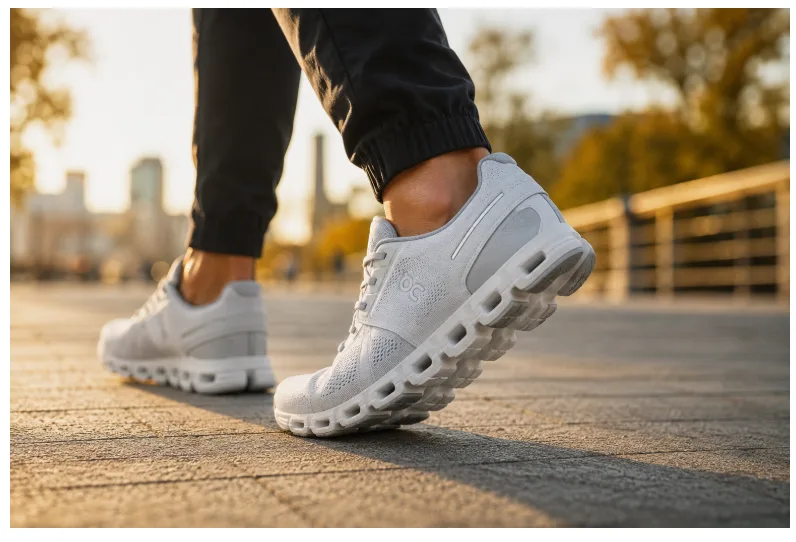
There’s a moment when you first lace up a pair of On Cloud shoes and step onto pavement where you genuinely stop and think something is different here. The feeling isn’t plush the way a memory foam slipper is plush. It’s more alive than that. Each step compresses, then bounces back, and the whole thing happens so quickly you start walking faster just to feel it again. That first impression is the CloudTec system at work, and it’s the reason these Swiss-made trainers have moved from niche running circles into everyday wardrobes all over the world.
How the CloudTec System Actually Works Under Your Foot
Most shoe brands build their cushioning from a flat slab of foam, usually EVA or TPU, cut to shape and glued beneath the insole. On took a different route entirely. The sole of every On Cloud shoe is made up of hollow rubber pods arranged in a grid, and each pod works independently from the others. When your heel lands, the pods nearest the contact point compress and absorb the impact. As your foot rolls forward to push off, those same pods snap back, returning energy to your stride. It sounds simple written down, but the execution took years of prototype testing in the Swiss Alps near Zurich before On was happy with how it performed on real terrain.
The Honest Thing Nobody Tells You Before Your First Pair
Here’s a detail you only pick up after actually wearing these shoes for a week: the CloudTec pods collect grit. Not enough to cause any damage, but if you run on gravel paths regularly, you will notice small stones sitting inside the hollow pods after your session. They pop right out with a quick tap on a hard surface or a poke from a finger, and they don’t affect performance at all. Still, it’s the kind of thing that surprises people who haven’t been warned. The trade-off is worth it because those same open pods are why the shoe breathes better and weighs less than competitors with sealed foam midsoles.
The Three Things to Know Before Choosing a Model
Picking the right On model gets easier once you narrow down what your days actually look like. Here’s a simple breakdown by activity.
- Running, especially longer distances: The Cloudmonster 2 carries the most stack height and the most bounce in the current lineup, which makes it brilliant for easy runs and long weekend miles. The Cloudflow 5 is lighter and faster, aimed at tempo sessions where you want responsiveness and not extra cushioning you don’t need. The Cloudboom Strike sits at the sharp end for race day.
- Everyday walking and lifestyle wear: The Cloud 5 and Cloudnova are the go-to choices here. Both carry the standard CloudTec cushioning, and both look quiet enough to wear with jeans without screaming “trainers.” Personally, I think the Cloud 5 All Black is the most versatile shoe On makes because it goes with almost anything and the minimal upper keeps it looking clean after heavy use.
- Hiking, trail, and wet weather: The Cloudhorizon Waterproof and Cloudaway 2 bring reinforced toe caps, grippy outsoles, and sealed membranes to rough ground. They are not heavy hiking boots, and that is exactly the point. You can find the full trail-ready range when you shop On Cloud on the official UK store, where running and hiking options sit side by side.
What On Cloud Gets Right for Men and Women
The men’s and women’s ranges share the same CloudTec foundation, but the sizing, colourways, and fits are distinct. Women’s models like the Cloud X 4 and Cloudpulse Pro prioritize training performance and lighter builds, while men’s options such as the Cloud 6 and Cloudeclipse push daily cushioning and structured support. Sizing runs broadly true to size across both ranges, though the toe box sits slightly snug in the running models compared to the lifestyle range. If you are between sizes, going half a step up is the safer move, especially for shoes you plan to wear with running socks. At On Cloud shoes, both ranges sit in one place with clean category navigation so you can filter by activity or gender without digging through the whole catalogue.
Why the Break-In Window Matters More Than People Expect
One limitation worth naming directly: Shoes do not feel soft from the very first step. New buyers sometimes return them after a single wear because they expected plush cushioning right out of the box. The CloudTec pods need two or three runs to work through their initial stiffness, after which the ride changes noticeably. By the fourth session, the shoe settles into a rhythm that matches your footstrike instead of fighting it. So if your first run feels firm, don’t write it off. Most people who push through that window end up reaching for these shoes before any other pair they own.
- The pods compress more naturally once the rubber loosens slightly after early use
- Lifestyle models break in faster than running models because the pods are smaller and more flexible from day one
- Wearing them for short walks first before a full run helps the midsole settle without any discomfort
- Thicker running socks speed up the break-in process by pressing the footbed into shape more quickly
- Cold weather slows the process down, so expect an extra run or two in winter before the pods feel fully active
On Cloud for Tennis and Court Play
The ROGER line, developed with input from Roger Federer himself, brought On into the tennis world with a different brief than the running shoes. Court play demands lateral stability during quick direction changes, and the Roger Pro 2 delivers that with a reinforced side wall and a Speedboard midsole plate that returns energy during side-to-side movement. It’s a specific shoe for a specific purpose, and it works well because On didn’t try to recycle a running sole. The Roger Clubhouse handles casual wear off the court, keeping the clean aesthetic without the extra lateral rigidity you only need during actual play. If you’ve ever worn a running shoe on a tennis court and felt your ankle roll on a sharp cut, you already understand why this distinction matters.
The Real Cost and What You Actually Get For It
On shoes are priced as premium footwear, and there is no point dressing that up. Most models land between $149 and $250 depending on the collection and any current promotions. That price reflects the Swiss engineering process, the quality of the materials in the upper mesh, and the durability of the CloudTec pods over several hundred miles of use. The pods do eventually soften, and most runners get between 400 and 500 miles before the cushioning noticeably drops off. For walkers and lifestyle wearers, expect around 12 to 18 months of daily use before the feel flattens. Rotating between two pairs extends that life considerably, and keeping them away from the washing machine preserves the pod structure far longer than a machine cycle would.
How On Cloud Shoes Have Changed Since the Beginning
The brand started in 2010 with a prototype built from a garden hose glued to a running sole, and that prototype became the CloudTec concept the whole company is built around. Since then, the midsole technology has evolved through several generations. Early CloudTec pods were smaller and stiffer. Newer generations, especially in the Cloudmonster and Cloudeclipse lines, carry larger pods with more surface area, which means more cushioning coverage across the entire foot rather than just the heel. The upper materials have moved from basic mesh to engineered knit constructions that reduce hot spots on longer wears and move moisture away from the foot more effectively. The brand tested each generation on actual Alpine trails before releasing it, which is why durability has stayed consistent even as cushioning and weight have improved.
Final Words
On Cloud shoes earn their reputation through one thing: they actually feel different to wear. Not just on the first step, but after hours on your feet when most shoes have stopped giving anything back. The CloudTec system is not a gimmick, and the Swiss engineering behind it shows up in how the shoes hold up over months of real use. They cost more than budget trainers, and they require a short break-in period, but both of those things are honest trade-offs for a shoe that performs across running, hiking, lifestyle wear, and court play. If you haven’t tried a pair yet, the only way to understand what the fuss is about is to put them on and walk a few hundred steps.
FAQs
Q: Are On Cloud shoes worth the price?
For most buyers, yes. The CloudTec cushioning genuinely outlasts cheaper foam alternatives, and the shoes hold up well past 400 miles of running use. If you are on your feet all day, the comfort difference is noticeable from the first week.
Q: Do On Cloud shoes work for flat feet?
Models like the Cloudflyer 5 and Cloudeclipse include structured support that works well for flat arches. For neutral feet, the Cloud 5 and Cloudflow 5 provide enough cushioning without overcorrecting your stride.
Q: Can I wear On Cloud shoes in the rain?
It depends on the model. Standard mesh uppers handle light drizzle but soak through in heavy rain. The Cloud 5 Waterproof, Cloud 6 Waterproof, and Cloudhorizon Waterproof use sealed membranes that block moisture while keeping the shoe breathable.
Q: How should I clean On Cloud shoes?
Wipe them with a damp cloth and mild soap, then air-dry away from direct heat. Avoid the washing machine because the heat and spin cycle can warp the CloudTec pods over time, which reduces the cushioning performance.
Q: Which On Cloud model is best for beginners?
The Cloud 5 is the easiest starting point. It’s the brand’s bestselling everyday shoe, runs true to size, and has a balanced CloudTec setup that works whether you’re walking, running lightly, or just wearing it all day.
