



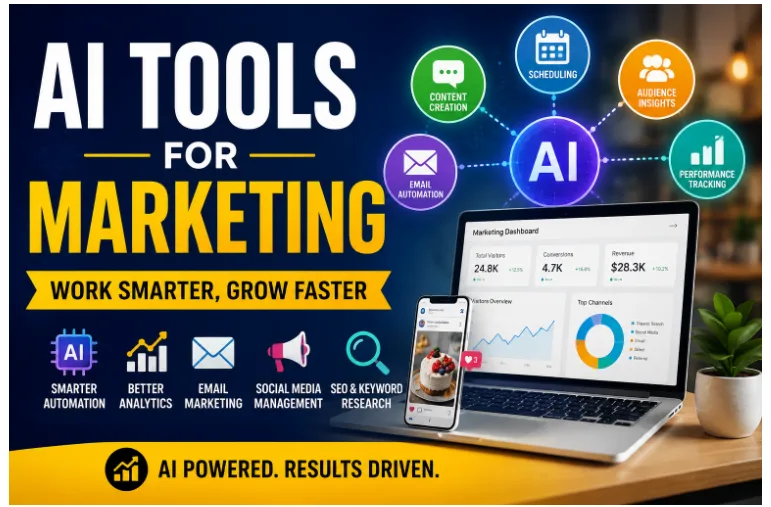
Shop owners once relied on flyers, cold calls, and rough guesses. Things look different now. Small brands chase attention on crowded screens, and speed matters. That shift pushed many people toward AI tools for marketing because manual work drains time fast.
A bakery owner in Lahore can schedule posts, answer buyers, and study customer habits from one dashboard. Ten years ago, that setup looked absurd. Now it feels ordinary. Some marketers still drown in clutter though. They grab every shiny platform and expect magic. Bad move.
Why businesses chase smarter systems
Most companies want fewer repetitive tasks. Nobody enjoys writing twenty captions before breakfast. That dull grind crushes momentum. Many firms use AI tools for marketing to handle routine jobs while workers focus on ideas and sales.
Data also plays a huge role. Old-school campaigns relied on gut instinct. Modern systems expose patterns hidden beneath clicks, searches, and customer actions. A clothing store may notice teenagers buying oversized hoodies after midnight. Strange detail, yet useful.
Another point deserves attention. Cheap traffic means nothing if visitors leave within seconds. Several AI tools for marketing track user behavior and reveal weak spots inside campaigns. One broken landing page can slaughter conversions.
Content creation feels less muddy
Writers often hit a wall halfway through a blog post. The cursor blinks. Brain fog arrives. Some platforms help users sketch outlines, titles, or rough drafts before the real editing starts. That explains why freelancers keep testing AI tools for marketing despite constant hype online.
Still, weak content remains weak content. Software cannot rescue lifeless ideas. Readers crave texture, honesty, and clear thoughts. Robotic wording sends people running.
Certain marketers also stuff articles with stiff phrases that sound manufactured in a factory basement. Those pages rarely hold attention. Human rhythm matters more than polished fluff.
Social media eats time quickly
Running several accounts feels chaotic. One platform wants short clips. Another pushes threads. A third rewards memes. Keeping pace becomes exhausting.
That mess explains the rise of AI tools for marketing in social media management. Users schedule posts, check engagement, and monitor trends from one place instead of juggling scattered tabs all day.
Timing shapes results too. A random post at 3 a.m. may vanish into digital dust. Analytics tools uncover better posting windows through audience activity. Tiny adjustments sometimes bring hefty gains.
Email campaigns still print money
People love declaring email dead. Funny claim. Brands continue earning serious revenue from mailing lists.
Modern campaigns rely on segmentation instead of blind blasting. Sports fans receive different offers than skincare buyers. Many firms depend on AI tools for marketing to group audiences according to clicks, purchases, or browsing habits.
Subject lines matter as well. Bland corporate wording kills curiosity. Sharp and natural phrasing performs better because readers react to messages that sound alive.
Search traffic brings steady visitors
Search engines still feed websites with valuable traffic. Businesses ignore optimization at their own risk. A gorgeous website means little when nobody finds it.
Many agencies lean on AI tools for marketing to uncover keyword gaps, broken links, and sluggish pages. Those details influence rankings more than people expect.
Competitor research also becomes easier. A local furniture seller may discover buyers searching for custom walnut desks rather than generic office tables. That nugget changes strategy.
Picking the right platform
Some entrepreneurs pile together twelve subscriptions and create a circus. Chaos spreads. Workers forget passwords, duplicate tasks, and waste money.
Smart teams choose tools with purpose. One handles analytics. Another manages emails. A third tracks customer behavior. Clean systems beat bloated setups every single time.
Plenty of startups test free versions first. Sensible approach. Expensive software can chew through a budget without delivering meaningful results. Several affordable AI tools for marketing already cover the basics for smaller companies.
Final thoughts
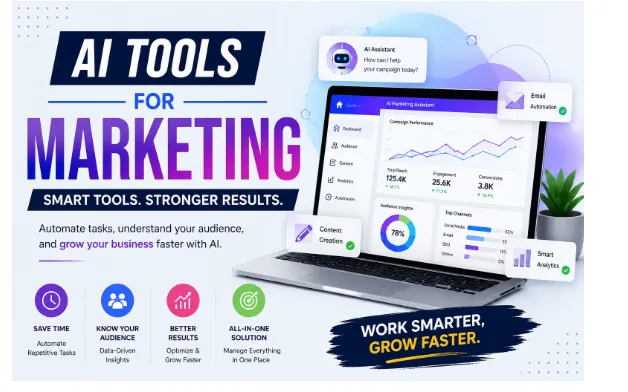
Technology keeps shifting the shape of online promotion. Businesses that adapt usually survive longer. Those that ignore change often fade into the background.
The strongest brands use tools with restraint instead of blind dependence. Sharp thinking still wins. Software simply removes friction. Many companies now treat AI tools for marketing as practical assistants rather than miracle machines.
FAQs
Are AI tools for marketing expensive?
Prices vary a lot. Some platforms cost nothing at the beginning, while premium systems charge monthly fees with extra features and larger usage limits.
Can beginners learn these tools quickly?
Yes. Most dashboards now include simple layouts, tutorials, and drag-and-drop features. Beginners usually learn the basics within a short period.
Do these platforms help small businesses?
Small companies benefit the most because they save time, track customer behavior, and organize campaigns without hiring huge teams.
