



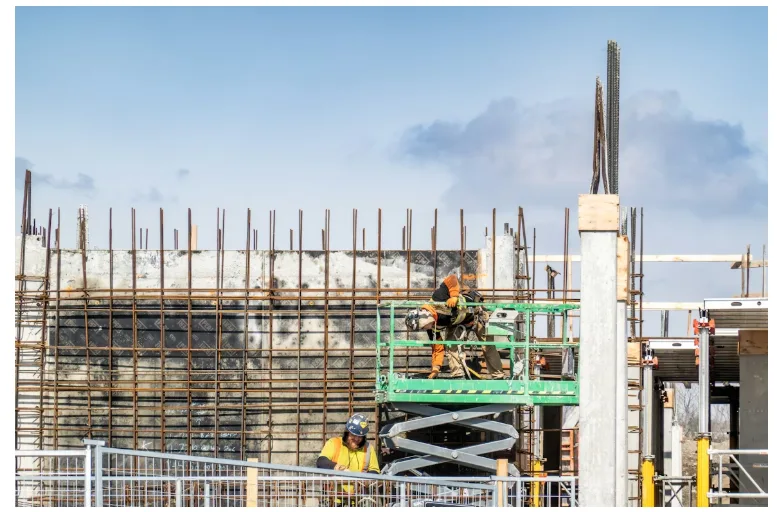
Mobile elevating work platforms are essential equipment for companies that need safe, flexible, and efficient access to elevated work areas. In many industries, working at height is part of daily operations. However, using ladders, temporary scaffolding, or unsafe manual methods can increase risk, slow down productivity, and make complex tasks more difficult. Mobile elevating work platforms, also known as MEWPs, are designed to solve these challenges by providing a stable, controlled, and movable working platform.
A mobile elevating work platform is not a single type of machine. It is a general category that includes different access solutions such as scissor lifts, articulating boom lifts, vertical mast lifts, tracked platforms, crawler lifts, and diesel-powered platforms. Each type is designed for different working conditions, height requirements, ground surfaces, and access needs. This is why mobile elevating work platforms are widely used across construction, manufacturing, logistics, facility management, retail, aviation, energy, and municipal services.
What Makes Mobile Elevating Work Platforms So Useful?
The main purpose of a MEWP is to lift workers, tools, and light materials to a required height safely. But its value goes beyond simple elevation. A good mobile elevating work platform also improves jobsite organization, reduces setup time, increases operator comfort, and helps teams complete work faster.
For example, a warehouse maintenance team may need to reach lighting systems, fire sprinklers, ventilation ducts, or high storage areas. A construction company may need access to facade elements, steel structures, exterior panels, or roof edges. A factory may need to perform machinery inspection or overhead installation without stopping production for long periods.
In all these cases, the right MEWP helps workers reach the work area with more control. Instead of building scaffolding for every task or relying on unsafe access methods, businesses can use a mobile platform that can be positioned, raised, lowered, and moved according to the job requirement.
Construction Sites
One of the most common usage areas for mobile elevating work platforms is construction. Modern construction sites require height access at many stages of the project. Workers may need to install facade panels, paint exterior surfaces, complete roofing details, mount steel structures, perform electrical installation, or work on mechanical systems.
In construction, every task has different access requirements. A scissor lift may be ideal for vertical installation work on flat ground, while an articulating boom lift may be better for reaching over obstacles. A diesel scissor lift may be preferred for outdoor and heavy-duty conditions, while a tracked platform may be useful on uneven surfaces.
This flexibility makes mobile elevating work platform solutions highly valuable for contractors. They reduce dependence on fixed scaffolding, improve mobility across the site, and support safer working practices at height.
Warehouses and Logistics Centers
Warehouses, distribution centers, and logistics facilities often have high ceilings, tall storage racks, conveyor systems, and large indoor spaces. Maintenance and installation work in these areas usually requires access to elevated points without disrupting daily operations.
Mobile elevating work platforms are used in warehouses for lighting maintenance, rack inspection, camera installation, sprinkler system checks, signage placement, electrical repairs, and inventory-related tasks. Compact electric scissor lifts and vertical mast lifts are especially useful in these environments because they can operate in narrow aisles and indoor spaces.
A vertical mast lift can be a strong option where space is limited and precise positioning is required. For larger indoor areas, electric scissor lifts provide a wider platform, allowing workers to carry tools and complete tasks more comfortably.
Manufacturing and Industrial Facilities
Manufacturing plants use MEWPs for many different operational needs. Industrial environments often include machinery, production lines, pipes, cable trays, overhead cranes, ventilation systems, and high structural elements. Reaching these areas safely can be difficult without the right equipment.
Mobile elevating work platforms allow maintenance teams to inspect machinery, repair electrical systems, install pipes, service HVAC units, and access elevated production areas. In many cases, they help reduce downtime because teams can move quickly from one work point to another.
For industrial facilities, choosing the right platform is especially important. The machine must match the available floor space, lifting capacity, working height, turning radius, and ground conditions. For sensitive indoor environments, electric platforms may be more suitable due to lower noise and zero-emission operation. For outdoor industrial areas, diesel or tracked models may provide better performance.
Facility Management and Building Maintenance
Shopping malls, hotels, hospitals, office buildings, universities, airports, and public buildings all require regular maintenance at height. These facilities need safe access for cleaning, inspection, repair, installation, and replacement tasks.
Mobile elevating work platforms are commonly used for ceiling maintenance, window cleaning, sign installation, lighting replacement, facade inspection, painting, and technical service operations. Since many of these environments are active public or commercial spaces, safety and operational control are extremely important.
Using a professional mobile elevating work platform helps facility teams complete tasks with less disruption. Instead of closing large areas for scaffolding installation, teams can use a compact and mobile machine to reach the required point and finish the job efficiently.
Retail Stores and Shopping Centers
Retail environments often require regular visual updates, lighting changes, decoration installation, sign replacement, and technical maintenance. In shopping centers and large stores, ceiling heights can be significant, and work often needs to be completed outside busy customer hours.
MEWPs provide a practical solution for these tasks. They allow workers to safely access high areas while carrying the necessary tools. Compact electric models are especially useful because they can move through indoor spaces without excessive noise or emissions.
For retail businesses, the main advantage is speed. A mobile platform can reduce preparation time and help maintenance teams complete tasks before the store opens or during low-traffic hours.
Airports and Transportation Facilities
Airports, train stations, bus terminals, and logistics hubs also use mobile elevating work platforms for technical maintenance and infrastructure work. These locations usually have large halls, high ceilings, signage systems, lighting networks, and mechanical equipment that require regular inspection.
MEWPs are used for lighting repair, camera installation, sign maintenance, ceiling inspection, ventilation work, and structural checks. In these environments, equipment reliability is critical because delays or unsafe operations can affect passenger flow and facility performance.
A well-selected aerial work platform helps maintenance teams work safely while maintaining operational continuity.
Municipal and Outdoor Maintenance
Municipalities and public service teams use mobile elevating work platforms for street lighting, park maintenance, road signage, public building repairs, tree trimming, and infrastructure work. Outdoor conditions can vary significantly, so the right machine must be selected according to ground type, working height, access distance, and terrain.
For flat urban surfaces, standard boom or scissor lifts may be enough. For uneven ground or more difficult access areas, tracked platforms can provide better stability and mobility. This is where tracked lift solutions can offer an advantage, especially in outdoor maintenance tasks where surface conditions are not ideal.
Energy, Electrical, and Installation Projects
Electrical contractors, solar energy companies, telecom installers, and mechanical installation teams frequently use MEWPs. These jobs often involve cables, panels, poles, lighting systems, control units, and overhead structures.
Mobile elevating work platforms support safer installation and maintenance by giving workers a controlled platform instead of unstable access methods. For electrical and installation projects, platform stability and precise positioning are especially important. Operators need to reach the work area accurately while maintaining enough room for tools and safe movement.
How to Choose the Right MEWP for the Job
The best mobile elevating work platform depends on the work environment and the task. Before choosing a machine, businesses should consider the required working height, platform capacity, horizontal outreach, indoor or outdoor use, floor conditions, machine dimensions, turning radius, power type, and safety features.
A scissor lift is usually suitable for vertical access on stable surfaces. An articulating boom lift is more suitable for reaching over obstacles. A vertical mast lift is useful in narrow indoor spaces. A diesel scissor lift can support demanding outdoor work. A tracked platform may be preferred for uneven or sensitive ground conditions.
Businesses should also consider service support, spare parts availability, operator training, warranty, and long-term maintenance requirements. Choosing the lowest-cost option may not always provide the best value. The right platform should improve safety, efficiency, and operational performance over time.
Mobile elevating work platforms are used wherever safe and efficient height access is required. From construction sites and factories to warehouses, shopping centers, airports, municipal services, and energy projects, MEWPs help workers complete elevated tasks with better control and productivity.
The main advantage of these platforms is that they offer the right access solution for different working conditions. Whether the job requires vertical lifting, compact indoor movement, rough terrain performance, or flexible outreach, there is a MEWP type designed for that need.
For businesses that want to improve safety, reduce downtime, and complete work at height more efficiently, mobile elevating work platforms from Platfon provide a practical and professional solution. With the right equipment selection, companies can create safer worksites, improve operational speed, and handle elevated tasks with greater confidence.
