



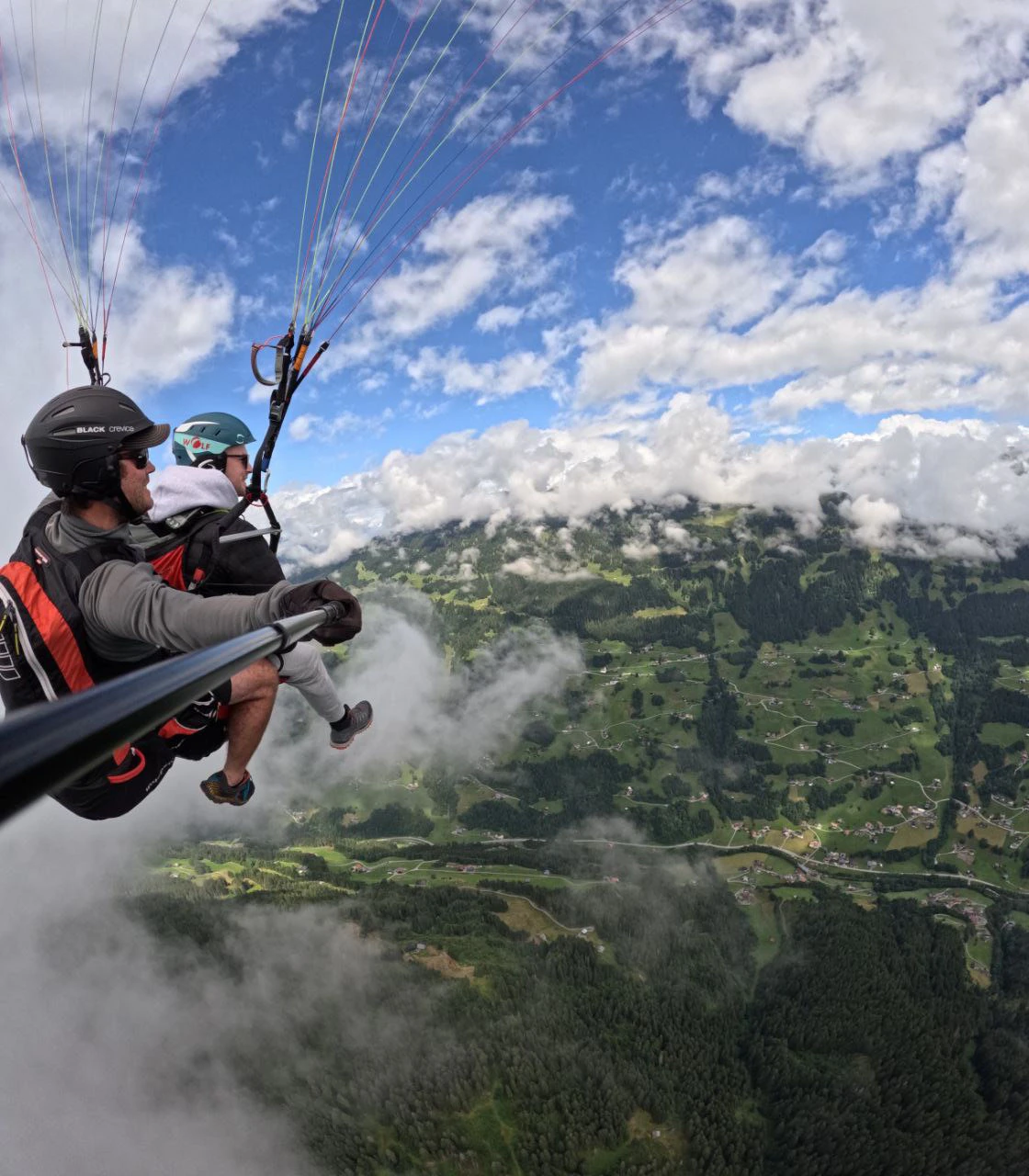
Wolf Paragliding Service (e.U.) operates from Feldkirch and treats tandem flying in Vorarlberg as a managed regional program rather than a single fixed takeoff. The service covers Montafon, Schnifis, and Lech am Arlberg, and it selects launch sites based on weather windows and lift access, not on a preset itinerary. The operational map and regional structure are published on the service page: tandem flug in Vorarlberg – Wolf Paragliding service e.U..
Each flight follows a clear tandem format: one pilot and one passenger under one wing. The pilot manages the start, routing, and landing decisions and retains the final go/no-go authority on the day. The website groups operations by areas and towns to support meeting-point planning, transfers, and timing windows. Meeting times are set to match lift opening hours and driving access to the landing field, while the passenger confirms weight range, suitable footwear, and, in winter, whether they will arrive and start on skis. These inputs affect harness setup and the start method before the launch sequence begins.
Routes are built around an agreed landing zone, and the team plans the return transfer either back to the start area or to a defined pickup point. When cloud base drops or wind direction shifts, the pilot can switch between Montafon, Schnifis, and Lech to remain within operational limits and local requirements. In that sense, location choice is a safety and logistics tool, while the flight process stays consistent.
Winter operations add a specific option: ski-based takeoffs, used only when snow cover, slope access, and local rules align with the plan. In Lech, Kriegerhorn serves as a winter start area, and guests arriving by ski can meet at the mountain-station level. In Montafon, winter planning often follows lift hours, visibility, and limited daylight, which makes timing more critical. The team aligns boots and binding setup with the chosen start method, because stance and initial steps influence control on the ramp.
Summer operations shift toward foot launches and, where needed, short hike segments, depending on site rules, cable-car operation, and wind direction. In Lech, Rüfikopf serves as a summer start area, and planning can include lift-ticket coordination and pickup timing. In Montafon, logistics commonly reference Schruns, Sankt Gallenkirch, and Gaschurn for arrival, transfer, and return routes. In Schnifis, the service works with the local launch-and-landing structure and sets meeting details according to the forecast and traffic conditions.
Contact and scheduling run via the website, and the brand documents these locations as part of its Vorarlberg coverage while keeping the same tandem workflow in winter and summer. Seasonal changes affect access and gear, not the core roles: the pilot leads the operational decision-making, and the passenger supports it with accurate inputs and acceptance of the day’s conditions.
