



Introduction
Industrial casting solutions are at the heart of modern manufacturing, delivering complex, high-strength parts used in everything from automotive engines and aerospace components to heavy machinery and industrial tools. Casting is one of the oldest manufacturing methods, yet it continues to evolve with technological advancements to meet today’s rigorous demands for precision, efficiency, and material performance.
This article explores the fundamentals of industrial casting, Custom Industrial Parts Manufacturer, the different casting methods, materials used, industry applications, advantages, and future trends that are shaping the sector.
What Is Industrial Casting?
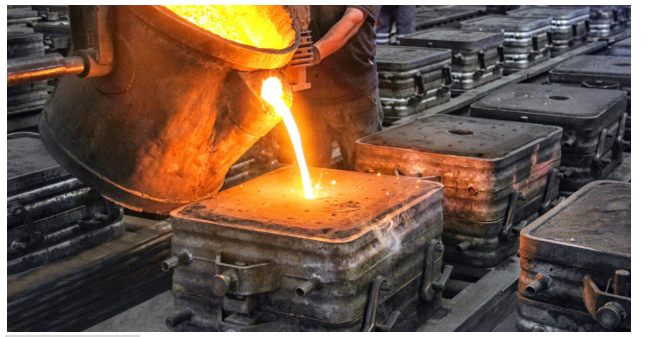
Industrial casting is a manufacturing process that involves pouring liquid material—usually molten metal—into a mold where it solidifies into a specific shape. Once cooled and hardened, the casting is removed from the mold and undergoes finishing processes such as machining, sanding, or coating to achieve the desired specifications.
Casting is ideal for producing complex shapes and components that would be difficult or costly to create through other methods like machining or welding.
Types of Casting Processes
Several casting methods are used depending on the material, complexity, volume, and precision required. The most common include:
1. Sand Casting
- Process: Uses sand-based molds formed around a pattern.
- Applications: Engine blocks, pipes, machine bases.
- Benefits: Low cost, versatile, ideal for large parts.
2. Die Casting
- Process: Molten metal is forced into steel molds under high pressure.
- Applications: Automotive components, consumer electronics housings.
- Benefits: High accuracy, excellent surface finish, suitable for mass production.
3. Investment Casting (Lost-Wax Casting)
- Process: A wax model is coated in ceramic to form a mold. The wax is melted away and molten metal is poured in.
- Applications: Aerospace parts, turbine blades, precision instruments.
- Benefits: High dimensional accuracy, intricate details.
4. Permanent Mold Casting
- Process: Uses reusable metal molds, often gravity-fed.
- Applications: Gear housings, automotive pistons.
- Benefits: Good surface finish, consistent quality, low porosity.
5. Centrifugal Casting
- Process: Molten metal is poured into a rotating mold, using centrifugal force to distribute the metal.
- Applications: Pipes, rings, cylinders.
- Benefits: Dense parts, minimal impurities, high strength.
6. Shell Mold Casting
- Process: Similar to sand casting but with a resin-coated sand shell.
- Applications: Complex shapes, small-to-medium parts.
- Benefits: Smooth surfaces, tighter tolerances.
Common Casting Materials
Casting solutions can work with a wide range of materials, depending on application requirements:
- Aluminum – Lightweight, corrosion-resistant, widely used in automotive and aerospace.
- Cast Iron – Excellent strength and vibration damping; ideal for engine blocks and heavy machinery.
- Steel – Tough and wear-resistant; used in structural and industrial components.
- Bronze and Brass – Corrosion-resistant and decorative; used in plumbing, marine, and art.
- Magnesium – Extremely lightweight; ideal for aerospace and electronics.
- Zinc – Good for die casting; low melting point, excellent for high-volume production.
Industrial Applications of Casting
Casting solutions are used across a multitude of industries to produce both functional and structural components:
1. Automotive Industry
- Engine blocks, transmission cases, brake calipers, wheels
- Casting ensures high strength and heat resistance in key parts.
2. Aerospace
- Precision turbine blades, aircraft structural parts
- Investment casting provides dimensional accuracy and minimal weight.
3. Construction and Heavy Machinery
- Excavator parts, hydraulic components, gears
- Castings offer durability and resistance to wear under heavy loads.
4. Energy Sector
- Wind turbine hubs, oil & gas valves, nuclear reactor parts
- Cast metals withstand extreme conditions and pressures.
5. Medical Equipment
- Surgical tools, orthopedic implants
- Investment casting ensures biocompatibility and precision.
6. Consumer Goods
- Appliance parts, electronic housings
- Die casting enables sleek finishes and uniformity.
Benefits of Industrial Casting Solutions
Industrial casting offers numerous advantages that make it a preferred choice for many manufacturing applications:
1. Complex Geometries
Casting can produce intricate shapes that would be difficult or impossible with machining alone.
2. Material Efficiency
Net-shape or near-net-shape production reduces material waste and machining time.
3. Cost-Effective for Mass Production
Especially in processes like die casting, where molds can be reused thousands of times.
4. Wide Range of Material Options
Allows manufacturers to choose materials based on strength, weight, corrosion resistance, or cost.
5. Scalability
Suitable for both small batch and large-volume manufacturing.
6. High Structural Integrity
Modern casting methods produce dense parts with minimal internal defects.
Challenges in Casting Manufacturing
Despite its advantages, casting comes with a few challenges that must be managed:
1. Initial Tooling Costs
Creating molds (especially for die and investment casting) can be expensive for short-run jobs.
2. Defects
Porosity, shrinkage, or inclusions can affect part quality if process parameters are not controlled.
3. Material Limitations
Some materials are difficult to cast due to high melting points or reactivity.
4. Environmental Concerns
Energy consumption and emissions from metal melting processes can be significant without proper controls.
Innovations in Casting Technology
Modern foundries and casting providers are investing in new technologies to improve performance, precision, and sustainability:
1. Simulation Software
Casting simulation tools like MAGMASOFT help engineers predict defects and optimize mold design before production.
2. 3D Printed Molds and Patterns
Additive manufacturing is being used to create complex patterns and molds faster and with greater design flexibility.
3. Automated Quality Control
X-ray inspection, 3D scanning, and AI-based analytics ensure high product quality and defect detection.
4. Green Foundries
Eco-friendly casting methods, like closed-loop cooling and low-emission furnaces, reduce the environmental footprint.
Choosing the Right Industrial Casting Partner
When outsourcing casting services, selecting the right provider is critical. Key considerations include:
- Technical Capabilities: Can they handle complex geometries and high-performance materials?
- Experience: Are they familiar with your industry’s standards and requirements?
- Quality Assurance: Do they follow ISO, ASTM, or other certification standards?
- Scalability: Can they meet your production demands—from prototyping to full-scale manufacturing?
- Support Services: Do they offer design consultation, machining, and finishing?
A reliable casting partner ensures quality, consistency, and on-time delivery—critical factors in competitive markets.
The Future of Industrial Casting
As technology advances, the future of industrial casting is focused on:
- Digital Twin Technology: Simulating entire casting processes to improve accuracy and reduce risk.
- Sustainable Practices: Closed-loop systems and recycled materials to meet environmental goals.
- Hybrid Manufacturing: Combining casting with CNC machining and 3D printing for advanced part creation.
- AI Integration: Optimizing process controls and predictive maintenance with machine learning.
Conclusion
Industrial Casting Solutions continue to be a cornerstone of manufacturing innovation. With their ability to deliver high-performance components, reduce waste, and scale production, casting methods have stood the test of time—adapting to new materials, precision needs, and sustainability goals.
Whether you need a one-off custom part or thousands of precision components, modern casting offers the efficiency, flexibility, and reliability to power progress across industries.
