



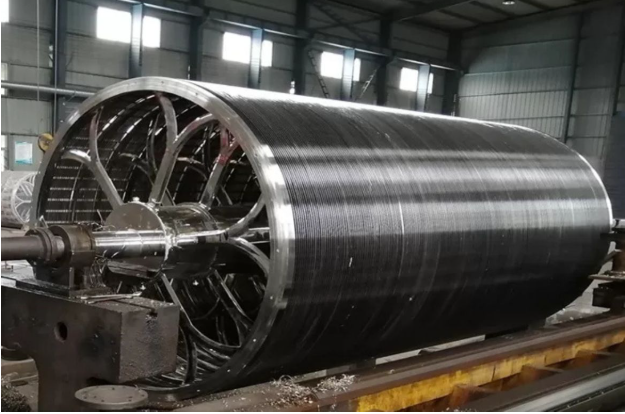
In the manufacturing of paper, the cylinder mould paper machine undergoes the most sophisticated processes. This machine represents a remarkable advancement for a range of industries from producing delicate stationery to industrial fabrics because it has the capability of making high quality textured paper of different grades. Whether one is a professional in the paper industry, an engineering undergraduate interested in industrial machines, or a mere enthusiast of papermaking, knowing how this device is operated would provide superb knowledge on modern machinery manufacturing.
This blog focuses on the cylinder mould paper machine with particular emphasis on its parts, working principle, advantages, uses, and expected innovations. You will gain a better understanding of today’s production of paper and the position of the machine as well as ways it differs fundamentally from other processes used in making paper.
For more in-depth information you should view from Leading cylinder mould paper machine Manufacturers in China – UDTECH
What is a Cylinder Mould Paper Machine?
The cylinder mould paper machine is a class of papermaking machinery which utilizes a rotating wire cylinder that is partially submerged in a vat of pulp. This design gives the cylinder paper machine the ability to produce unique continuous paper sheets having better smoothness and greater strength than those produced on Fourdrinier machines. Moreover, cylinder mould machines are more efficient in the production of specialty papers like watermarked papers, high-grade packages, and decorative papers.
This machine forms paper sheets or rolls from raw fiber pulp that has been converted into a semi-usable form through various processes. This type of machine is common in medium to small scale mills, recognized for producing high grade papers with low waste.View Leading cylinder mould paper machine Manufacturers in China – UDTECH for More Details
How Does a Cylinder Mould Work in Papermaking?
A paper pulp vat is what the cylinder mould functions with, and rotates slowly in it. The wire mesh covering the cylinder picks up a thin layer of the pulp during its rotation. The thin layer is then moved onto a carrier or felt, where it is on its way to becoming a paper sheet. The cylinder has water drainage mechanisms that enable excess flow out, which results in a fibrous mat that is processed to a final paper product.
For the production of multi-layered paper, this process is especially ideal since it can combine various types of pulp along with different vats into one cohesive sheet. For instance, the outer layers o a sheet could utilize bleached fibers for smooth surfaces while the inner layers could be recycled materials to be cost effective and strong.
Key Parts of a Cylinder Mould Paper Machine
The cylinder mould paper machine contains several critical components that, each, have a unique individual function towards the paper formation process:
- Cylinder Mold: The mold is a wire-mesh-covered cylinder that rotates in the vat to pick up paper pulp and creates the first fibrous layer.
- Vat: A paper machine component that holds the paper pulp in which the paper’s cylinder mould is immersed.
- Suction Rollers: Devices that assist in the dewatering of the paper sheet and its consolidation.
- Felt: A type of cloth used to carry away the still-wet paper from the cylinder for drying and additional processing.
- Press Section: A device that compresses the paper sheet to encourage compliance, extract surplus moisture, and add thickness.
- Dryer Section: The final element of the drying stage, in which steam-heated rollers or dryers dry the paper completely.
Which Variety of Paper Could Be Made With The Use Of This Machine?
Specialty Cylinder mould paper machines are specially built to produce an array of specialized papers. Some of the most known products are as follows:
- Fine Art Paper: Sheets of fine texture paper suitable for watercolor, sketching and print arts.
- Security Paper: Watermarked papers for certificates and banknotes are included.
- Handmade-Like Paper: Papers with the look and feel of a traditional handmade product.
- Corrugated Mediums: Grades of paper used for the manufacture of cardboard and other types of packaging.
How Does a Cylinder Mould Paper Machine Differ From Other Papermaking Machines?
The main difference rests on the process of paper making and its qualities. The core difference between a Fourdrinier machine and a Fourdrinier is that the Fourdrinier method creates paper using a continuous belt while the cylinder mould constructs layered paper by depositing pulp into a rotating cylinder. This method produces stronger and textured papers due to the way the fibers are orientated during formation.
Moreover, the cylinder mould is more preferable for making specialty papers with lower production speeds, multi-layered sheets, or smaller batch sizes. Nonetheless, it is also less optimal for mass-produced grades of paper, such as standard office or copy paper, because of lower production speed relative to efficiency of Fourdrinier machines.
Advantages of Using a Cylinder Mould Over a Fourdrinier Machine
Increased Artistic Value: Cylinder mould machines are ideal for artistic and ornamental application as papers with distinct textures can be produced.
Versatile Sheet Formation: These machines have great versatility as they can easily produce composite paper grades due to the ability to form multilayer sheets.
Reduced Mechanic Complexity: Cylinder mould machines have less moving parts, which reduces maintenance and chances of equipment failure.
Customizable Production: Such machines are appropriate for customization or small scale production as they offer flexibility which is not provided by large machines.
Limitations of a Cylinder Mould Paper Machine
As much as these machines are beneficial, the cylinder mould machine does have a few weaknesses:
Lower Speed: These machines are not as efficient when compared to the modern Fourdrinier machines due to these machines being slower.
Higher Labor Costs: These machines are slower than others and thus they require skilled workers making the overall labor cost more expensive.
Limited Output Volume: Slower working combined with smaller vat size means that these machines can not produce a lot of paper over a time period.
How is the Quality of Paper Sheets Ensured?
Quality control in the process cylinder mould paper making involves several steps:
Monitoring Fiber Consistency: Each batch must be checked for quality and the operators check the pulp composition closely to ensure that the fiber quality is consistent.
Water Drainage Checks: An adjustment to the drainage can eliminate problems such as uneven thickness and weak spots.
Sheet Inspection: The final sheet of paper is subject to regular visual checks, and pin holes along with other tears or cut surfaces are checked with specialized tools.
What Industries Utilize Cylinder Mould Paper Machines?
A cylinder mould paper machine is used in a wide array of industries such as:
- Fine Arts: Where textured paper of art grade quality that is archival is produced.
- Packaging: Where strong multi-layered packaging material is made.
- Stationery: Crafting custom notebooks, envelopes, and letterhead.
- Security Products: Creating watermark papers for highly sensitive uses.
Current Developments in Cylinder Mould Paper Machines
As technology moves forward, digitization has been integrated into the design of cylinder mould machines: sensors have been fitted to detect pulp and water flow, therefore monitoring the quality of the paper in real time. These machines are also characterized by the sustainable designs feature, which allows the use of more recycled fibers and eco-friendly materials. There have also been efficiency boosts through improved systems for drying, along with the addition of automation features. These changes ensure the machines operate at faster speeds while using less energy.
Investment in technology for cylinder mould paper machines is still needed. Niche and specialty paper manufacturers highly depend on these machines to make specialty papers. The use of high-quality textured paper can be put towards a wide variety of uses. While the production speed of these machines does not compare with that of the Fourdrinier machines, their precision, flexibility, and relatively low price in comparison to other modern machines makes their use in papermaking still important.
For those seeking to venture into the world of customized or high-grade paper production, investment in cylinder mould technology is certainly a step to consider.
