



Abstract
The article examines the role of modern QA approaches in the development of digital products and analyzes the key business effects that arise due to high-quality testing. It is shown that QA engineering has ceased to be an auxiliary function and has turned into a strategic product-management tool. Special attention is given to multiplatform testing, medical IT systems, HIPAA/FDA requirements, as well as quality metrics and digital operations.
Introduction
The efficiency of digital products directly depends on the quality of testing processes. The modern market requires not just software, but systems that are resistant to multiplatform operation, secure, compliant with regulatory standards, and convenient for users. The growth in the number of mobile services, telemedicine platforms, and e-commerce solutions has led to QA becoming part of the product-development strategy. Companies expect engineers not only to test, but also to take initiatives related to improving user experience, reducing risks, and optimizing defect costs.
- The growth of the importance of QA in digital product development
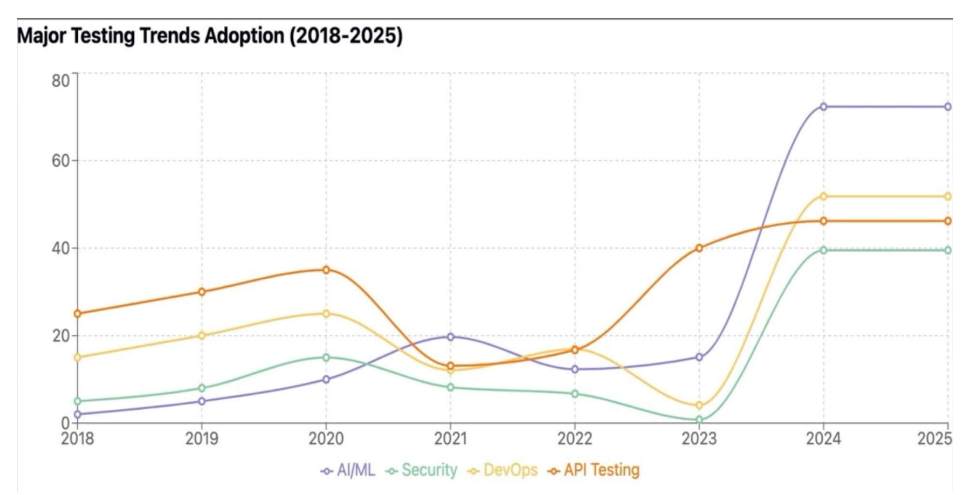
Statistics show a stable increase in the share of tasks related to quality in the total volume of product development. If in 2020 QA accounted for about 22% of engineering processes, then by 2025 this share reaches 35%. Such growth is associated with the complication of products, the increase in the number of devices and platforms, as well as the need to comply with international security and data-protection requirements. - Multiplatform testing as a mandatory standard
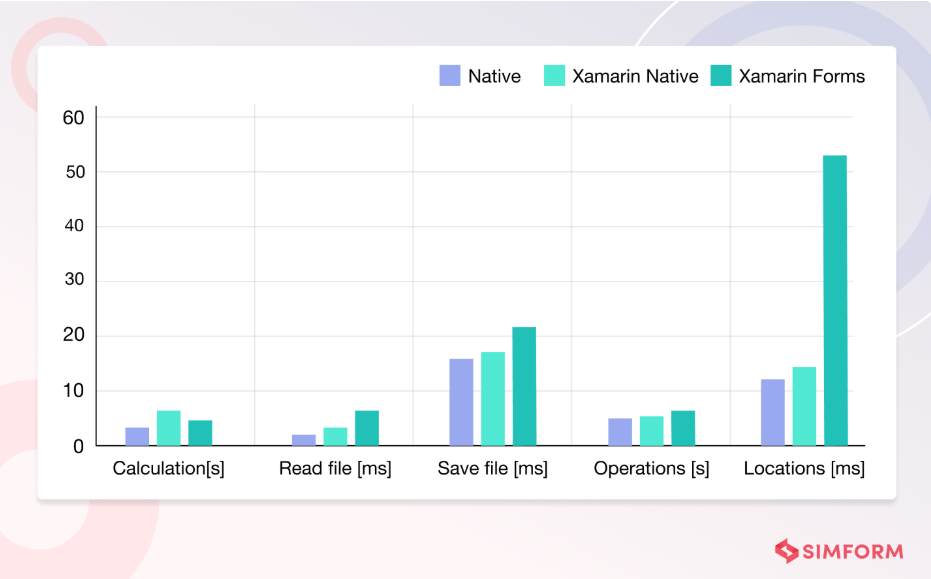
Mobile applications, web platforms, smart devices, medical equipment — all of this requires a comprehensive approach to testing. Multiplatform nature creates new risks: differences in UI rendering, network delays, hardware limitations, SDK conflicts.
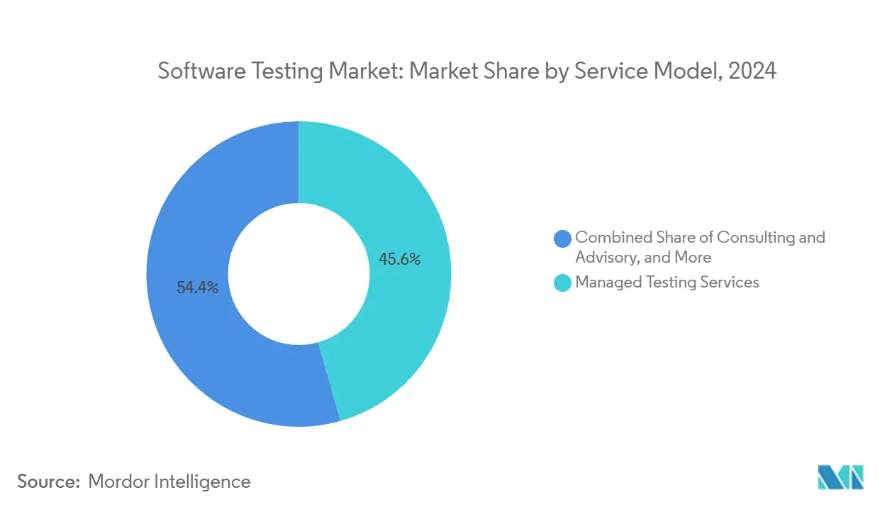
The most common defects include:
– differences in API handling on different operating systems,
– instability of media functions,
– incorrect UI scaling,
– library incompatibility.
For business, this means the need to implement automated tests, work on real devices, and use hybrid QA teams.
- Testing medical software: HIPAA/FDA requirements
Medical products are one of the most complex categories of digital systems.
Here, not only functionality and UX are important, but also compliance with strict industry standards.
The requirements include:
– access control to data,
– logging of user actions,
– encryption of transactions,
– audit of changes,
– reproducibility of test scenarios.
For large American companies, HIPAA/FDA compliance is mandatory, and the quality of QA affects not only the operability of the product but also legal risks. - Regression testing as a tool for product stability
Most commercial products are updated weekly or monthly.
The high release pace requires systematic regression testing.
The cost of fixing defects after release is on average 6–8 times higher than at the testing stage.
Therefore, regression automation becomes a priority for product teams seeking to reduce costs and accelerate time-to-market.
- The role of QA in strategic product management
Modern QA participates in feature planning, risk analysis, priority definition, and the formation of the product roadmap.
It becomes a connecting link between engineering, design, and business.
The impact of QA is reflected in key metrics:
– increase in release stability (up to +35%),
– reduction in the number of critical incidents (up to –42%),
– growth of user satisfaction,
– improvement of customer retention.
This approach contributes to strengthening trust in the product and increasing the competitiveness of companies.
- Training specialists and forming the QA community
The growth in demand for specialists stimulates the development of educational initiatives: online courses, communities, practical labs.
The international market needs engineers capable of working according to Western quality standards.
Educational communities form a new generation of QA engineers capable of working in distributed teams and ensuring that product solutions comply with global standards.
Conclusion
QA engineering is becoming a key element of the digital economy.
It combines technical skills, analytical thinking, and a product-oriented approach.
Multiplatform testing, HIPAA/FDA standards, risk-oriented analytics, and automation make it possible to create products capable of withstanding competition in the global market.
A high level of quality becomes a strategic advantage, and the role of QA becomes the foundation for the sustainable development of digital products.
Sources:
- Statista. QA and Product Quality Indicators, 2025.
- McKinsey Digital Quality Review, 2024.
- Healthcare IT Analytics, HIPAA/FDA Compliance, 2025.
- Global App Quality Index, 2024.
- DevEconomics. Software Failure Cost Study, 2024.
- IT Workforce & Education Report, 2025.
