



Hearing tests are crucial for diagnosing hearing loss and determining appropriate treatments. With advancements in technology, online hearing tests have emerged as a convenient alternative to traditional in-clinic assessments. However, many wonder if these online tests are as accurate as their clinical counterparts. Let’s explore the key differences, delve into the testing processes, and evaluate the reliability of their results.
Differences Between Online Hearing Tests and In-Clinic Hearing Tests
In-clinic hearing tests utilize medical-grade equipment that undergoes regular calibration and maintenance to ensure precision and reliability. These audiometers are specifically designed for clinical use, providing highly accurate measurements under controlled conditions. Online hearing tests, on the other hand, are validated through software calibration processes. Over the years, significant advancements in technology have greatly improved the accuracy of online hearing tests, making them a more reliable option for preliminary screenings.
From a procedural perspective, the steps involved in online and in-clinic hearing tests are fundamentally similar. However, the testing equipment differs, with clinics using professional-grade audiometers and online tests relying on personal devices like headphones or speakers. For users, online hearing tests offer the advantage of convenience and cost-effectiveness, allowing them to complete a free hearing test without leaving their homes.
Are Online Hearing Test Results as Accurate as In-Clinic Tests?
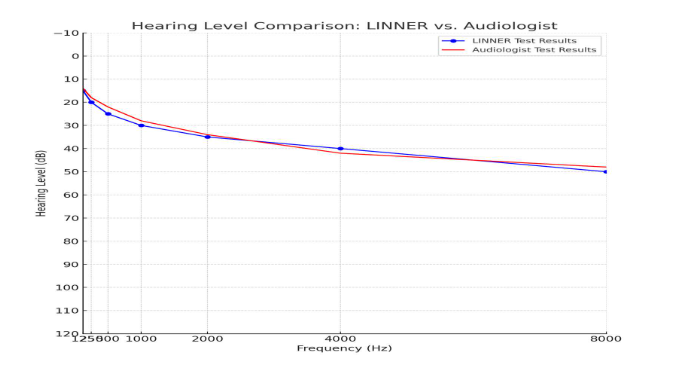
To evaluate the accuracy of online hearing tests compared to in-clinic assessments, a study was conducted involving 100 participants with varying degrees of hearing loss. The distribution included 40% with mild hearing loss, 30% with moderate hearing loss, 20% with severe hearing loss, and 10% with profound hearing loss.
The results showed that online hearing tests demonstrated high accuracy levels across all categories, with mild and moderate hearing loss showing the highest accuracy rates. For these groups, the online tests achieved an accuracy of over 98%. For severe and profound hearing loss, the accuracy was slightly lower, at approximately 88%.
Overall, the findings revealed that online hearing tests can achieve accuracy rates exceeding 90% when compared to in-clinic tests, especially when conducted under optimal conditions with high-quality equipment. This underscores the significant advancements in online hearing test technology, making them a reliable preliminary screening tool.
That said, studies have shown that when conducted under optimal conditions—such as using high-quality headphones in a quiet environment—online hearing tests can produce results that closely align with clinical assessments, particularly for basic screenings. Some online platforms have incorporated sophisticated algorithms to enhance accuracy, further bridging the gap between the two methods.
Conclusion
Online hearing tests are a valuable tool for initial hearing screenings, offering accessibility and convenience. However, their accuracy can be influenced by environmental factors, equipment quality, and the lack of professional oversight. While they may provide a good indication of hearing health, online tests should not replace comprehensive in-clinic assessments, especially for individuals experiencing noticeable hearing difficulties. For precise diagnosis and treatment, consulting an audiologist in a clinical setting remains the gold standard.
