



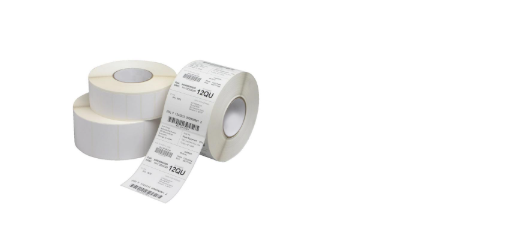
An industry such as shipping, inventory management, retail and even healthcare cannot function properly without custom thermal labels. Imagine a world where your labels are not just functional, but also smart and efficient. Custom thermal label design gives these labels the extra edge they need to be more than just standard.
For those active in shipping or just branding, custom thermal labels are everlasting and easy to use. With designing custom thermal labels, there’s always a focus on their ergonomics, while aiming for stellar performance and pleasing design sense. This article aims at detailing the process of how to make custom thermal labels specifically meant for your business to be efficient and recognizable.
The Basics of Custom Thermal Labels
– What Are Custom Thermal Labels and How Do They Work?
A set of labels designed to work with thermal printers, most custom made applications use custom thermal labels. Instead of regular cloth or paper, these printers make use of heat in order to print the required image onto the label surface. The technique is quite economical and doesn’t require a lot of upkeep. Since thermal printing doesn’t involve ink or toner physically, the chance of the label getting smeared is considerably reduced.
– Why Use Custom Thermal Labels When There Are Other Options Available?
Custom thermal labels are unique because they are easy to read and quite pleasant to look at as well. They do not smear, nor do they fade, making them perfect for tough surroundings such as shipping retail and warehouses. Their performance is of a good standard even in demanding weather, and the best part about these labels is that they are versatile in their functions.
– Comparing Custom Thermal Labels to Standard Labels
The hybrid nature of custom thermal labels enables them to have a scope for design, unlike standard labels, which often struggle in that area. Custom thermal labels can be designed for a particular order, which makes them a lot more useful for specialized purposes. They are far more superior in terms of usability with various industries as compared to generic labels, which struggle to be effective.
Types of Custom Thermal Labels
– Direct Thermal Labels
A direct thermal label is best for short periods of usage as it directly uses heat to print on a surface. These labels are shipping labels, receipts, and temporary tags, but exposure to heat or light will severely damage these labels by causing them to fade.
– Thermal Transfer Custom Labels
These custom labels are more durable and are better suited for industries that use a lot of outdoor equipment and equipment that is stored for a long time. Creating barcode labels this way is far more effective and even lasts a long time.
– Custom Thermal Labels’ Specifics
Some examples of custom thermal labels include waterproof labels, tamper-clear and RFID-integrated labels. They are critical to industries with specialized high-performance label needs, such as logistics.
– Finding The Right Match For Custom Thermal Label
Understanding the application helps determine the best custom thermal labels. Consider several factors, including cost and the environment in which the label will be used. Selecting the means for correcting labeling materials and the adhesive labels will be critical.
What are the Key Features of a Custom Thermal Label?
1. Readability
Visibility is the primary aim of every label. Use conventional fonts, providing larger sizes with emphasis on key text. Good colour contrast should always be maintained.
2. Understand the Visuals of the Labels
Branding relies on design. Integrate your logo or add your brand’s color to the equipment. Imagine a minimalist style that is void of any complexities. In particular, quality labels boost brand awareness via retail channels.
3. Streamlined and Scannable Label
When designed properly, the label becomes more usable. Place product and barcodes related information in proximity to each other. Lots of white-space is also avoidable to eliminate the issue during scanning.
4. Barcode & QR Code Placement
Most barcodes and QR codes are overlooked because of their design. They need to be positioned on the labels high enough to be readable. A thorough test of functionality should then be conducted before the end of the design processing.
5. Compatibility Of The Materials
It is always important for one to remember the material definitely impacts durability and print quality. Ensure the materials are friendly to the intended living conditions. For perishables, moisture-proofed papers may work. While for long stretching usage, it is best to adopt a scratch stigmatized polycarbonate.
Steps to Custom Thermal Labels’ Development
Step 1: Define the Goal
Initially, always start by stating the goal of the label in a proper manner. For example, is the label going to be used for shipping, marketing or regulations? Determining the role is very important as it gives direction to the whole process of label design.
Step 2: Refer to Compliance of the Label
Itemize all the components which need to go to the label. These shall include any text, logos, size, and barcodes. Consider what materials and adhesive will be needed to complete these projects depending on what the ideal use of the label might be.
Step 3: Pick a Label Creator
To make labels, consider familiar software such as Adobe Illustrator or BarTender applications. There are other producers that will sponsor you in label design.
Step 4: Draft the Design
Make all required free text, graphics and barcodes fitting into a frame. Experiment with the size and position of fonts and change things up. It is ideal to keep a minimalistic look, so the code stays clean and easily readable.
Step 5: Evaluate the Label
In order to see how the design would actually work, answer the most important question, which is how would the printed sample be in terms of design ideas? From which everything that needs to be in the sample should have some aspect that is easy to read or even scannable. Also, evaluate how the label stays under different conditions, such as extreme heat or moisture.
Step 6: Execute the Plan and Make
After all the conditioning is complete, ensure to lock the design into one final decision. Using a well-known label manufacturer is arguably the best way, as that would ensure that the labels produced will meet the standards that have been set. It is important for the pre-press stage of the producing process to guarantee better-than-average quality of the inscribed transfer.
Industry-Specific Custom Thermal Label Design Considerations
– Retail Custom Thermal Labels
In retail custom, thermal labels, branding and price are very fundamental elements. It is advisable to enhance the scope for color differentiation. Make sure the barcodes are adequately placed to facilitate easier scanning for customers during checkout.
– Logistics Custom Thermal Labels
Most importantly, for shipping and inventory, durability of the labels is a key feature which is required. It is best if the labels can be enclosed in stronger wraps, as they are likely to go through wear and tear. Use strong adhesive glues together with bold barcode on the labels for easy scanning along the processes.
– Healthcare Custom Thermal Labels
Permit me to comment that healthcare thermal labels are of use in a very regulated industry. Tamper clear features and intelligible text are to be included. Medical labels as used need to be FDA compliant and must be accurate.
– Food and Beverage Custom Thermal Labels
Most importantly, food labels should be designed in a manner such that they can resist moisture and even heat. For yaw labels, the use of FDA approved materials is key. Also, the wording should be well conspicuous in order to be appropriate for perishable goods.
Future Trends in Custom Thermal Label Design
– Sustainable Custom Thermal Labels
There is an increasing interest in eco-friendly labels. Getting labels that are biodegradable, as well as those that can easily be recycled, is becoming common. This is great for businesses whose focus is sustainability.
– Smart Custom Thermal Labels
RFID and NFC are now being placed within the labels. These smart labels increase the possibilities of tracking items and collection of relevant data.
– Personalized Custom Thermal Labels
With the advanced technology of printing, personalized labels are now becoming common. This is a great addition to many as it focuses on the clients’ experience when doing e-commerce.
Final Thoughts
Custom thermal labels are a need for a lot of businesses as they are functional, durable, and designed to fulfill certain requirements. They focus on clarity and organized layout with suitable materials as per the requirement, ranging from retail to logistics and healthcare. Custom thermal labels have proven to be an efficient means of communicating and promoting a brand. Would recommend starting the designing process for custom thermal labels right away.
FAQs
- Why do direct thermal or thermal transfer labels differ in their price?
Thermal transfer labels, although expensive in the beginning, are good in the long run, as they outlast direct thermal labels.
- How do I choose the right material for my labels?
For goods that are kept outside, anti scratch materials are recommended while moisture resistant materials can be used in refrigerated goods.
- Does it matter whether the label printing printer is compatible?
Yes, it matters. With custom ink printed labels, it is required to have a complimentary printer to a direct thermal or thermal transfer label.
- How do I determine if my custom thermal label will fade outdoors?
Yes, thermal transfer labels are not only anti-fading but are also incredibly resilient when used outdoors.
- How do I know if my custom labels come with fitting barcodes or QR codes?
It is quite simple, just ensure the barcodes or QR codes are right according to scan requirements to avoid any issue.
