



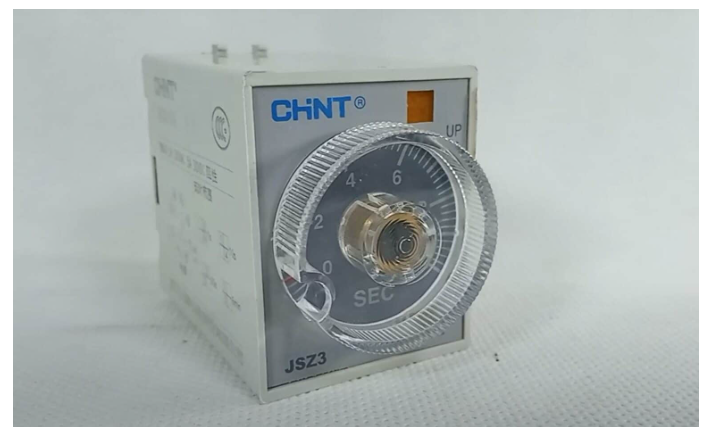
Automation has upset enterprises, from manufacturing to energy the board, by improving efficiency, precision, and wellbeing. Perhaps the most basic part driving these progressions is the time delay relay. Time delay relays assume a fundamental part in automation systems, giving exact control over the planning of electrical cycles. In a period where even a brief moment can have an effect, time delay relays guarantee that machines, systems, and tasks run as expected and proficiently. In this article, we will investigate what time delay relays are, the way they work, their benefits, applications, and why they are crucial in accomplishing precision control in automation.
1. What Are Time Delay Relays?
A time delay relay is an electromechanical gadget used to control the planning of a circuit’s activity. In straightforward terms, a relay presents a delay prior to enacting or deactivating a circuit. The delay can be set to a particular time, contingent upon the application, and can go from milliseconds to hours. The relay capabilities by controlling the span of the electrical heartbeat prior to turning the circuit on or off.
At the core of the time delay relay is its time-setting system. It utilizes a blend of mechanical and electronic parts to delay the activity of the relay. The critical parts of a time delay relay incorporate the loop, contacts, and a timing component, like a capacitor or resistor. At the point when the relay is initiated, the curl produces an attractive field, making the contacts close or open after a preset delay.
There are a few kinds of time delay relays, each intended to fill various needs in automation systems. The two most normal sorts are ON-delay and OFF-delay relays. An ON-delay relay starts the circuit after the set time delay, while an OFF-delay relay saves the circuit dynamic for a set time frame prior to switching off.
2. The Operating Principle of Time Delay Relays
Understanding the meaning of time delay relays requires understanding how they capability in automation systems. The relay works by controlling the planning of electrical circuits because of changes in conditions or data sources. At the point when an info signal is gotten, the relay will either delay the activity of turning the circuit on or off, depending upon the sort of relay utilized.
In an ON-delay relay, the delay happens before the relay’s contacts close and actuate the circuit. For example, in an engine control application, the relay might delay the enactment of an engine by a couple of moments to permit different systems to drive up first. This guarantees that the engine turns over with perfect timing, staying away from likely harm or functional shortcomings.
3. Benefits of Time Delay Relays in Automation Systems
The utilization of time delay relays in automation systems offers a few key benefits that pursue them as a favored decision for some industries. These benefits include:
- Upgraded Precision and Reliability: Time delay relays give exact control over electrical circuits, guaranteeing that cycles happen precisely when they ought to. This diminishes the probability of functional slip-ups and guarantees that systems run dependably, even in complex conditions.
- Protection of Equipment: Many automated systems are sensitive and require cautious taking care of. Time delay relays safeguard touchy equipment by forestalling unexpected power floods, keeping parts from being overloaded or harmed by inordinate current.
- Energy Efficiency: By controlling the planning of equipment activity, time delay relays assist with diminishing energy consumption. For instance, they can guarantee that engines and other equipment are not running pointlessly, in this manner bringing down functional expenses.
- Broadened Equipment Life expectancy: Time delay relays can decrease mileage on machinery by guaranteeing that systems are fueled all over bit by bit. This expands the life expectancy of engines, blowers, and other equipment, saving money on expensive repairs and substitutions.
- Further developed Safety: In safety-basic applications, time delay relays give an additional layer of protection by guaranteeing that systems don’t actuate too soon or past the point of no return. This can forestall mishaps and diminish the gamble of harm to staff and equipment.
In an OFF-delay relay, the delay happens after the relay’s contacts open and deactivate the circuit. This can be valuable in applications where systems need to keep running for a set period after the underlying sign is eliminated. For instance, in a central air system, an OFF-delay relay can guarantee that a fan keeps running for a couple of moments after the indoor regulator switches off to disperse heat and safeguard the gear.
The working principle of time delay relays makes them imperative in systems where exact timing is critical. They take into account better synchronization of activities, diminishing the gamble of hardware harm, functional failures, and safety risks.
4. The Significance of Time Delay Relays in Precision Control
Precision control is at the center of each and every automation system. In industries where tasks should be executed at specific times, time delay relays guarantee that cycles happen in a controlled, exact way. Without these relays, systems could become unpredictable, prompting expensive errors or hardware failure.
In industrial automation, exact control of timing can forestall issues, for example, machinery breakdown, electrical floods, and functional irregularities. Time delay relays assist with keeping away from these issues by guaranteeing that systems work in the right grouping, with the right delays between activities. This exact timing is fundamental for the protected and effective activity of machinery, production lines, and safety systems.
For instance, in a manufacturing plant, time delay relays can be utilized to delay the beginning of a sequential construction system until all systems are controlled and prepared. Additionally, in power circulation, time delay relays can forestall overloading by controlling the planning of electrical switches, guaranteeing that systems don’t actuate excessively fast or with exorbitant burden.
Additionally, time delay relays are vital in processes that require successive activities. By presenting a controlled delay, these relays guarantee that the right advances are executed all put together, functional efficiency and limiting the gamble of human error.
Normal Applications of Time Delay Relays in Automation
The flexibility of time delay relays makes them reasonable for an extensive variety of automation applications. Probably the most well-known utilizes include:
- Motor Control: Time delay relays are habitually utilized in motor control systems to delay the enactment of motors or guarantee that motors are switched off after a set period. This forestalls electrical floods and guarantees that motors turn over and stop in a controlled way.
- HVAC/Central air Systems: Time delay relays are utilized to manage the activity of fans, blowers, and different parts in warming, ventilation, and air shaping (air molding) systems. For example, they can guarantee that a fan keeps running for a couple of moments after the system stop to remove remaining intensity.
- Lighting Control: In industrial and business settings, time delay relays can be utilized to control lighting systems, guaranteeing that lights are switched off after a set period to save energy and further develop efficiency.
- Power Distribution: Time delay relays are additionally fundamental in power distribution systems, where they assist with dealing with the planning of electrical switches and safeguard circuits from overloads or short circuits.
- Alarm Systems: Time delay relays are in many cases utilized in alarm systems to present a delay prior to setting off an alarm, they are limited to guarantee deceptions.
7. Picking the Perfect Opportunity Delay Relay for Your Automation Needs
Choosing the ideal opportunity delay relay for a particular application is basic to accomplishing ideal performance. While picking a time delay relay, a few variables should be thought of:
- Time Delay Reach: Various applications call for various time delays. It’s fundamental to pick a relay with the fitting delay reach to match the particular timing needs of the system.
- Voltage and Current Ratings: Guarantee that the relay is appraised for the voltage and current levels in your system. Overloading a relay can prompt failure and harm to your equipment.
- type of Relay: Depending on the application, you might require an ON-delay relay, OFF-delay relay, or other particular sorts. Pick a relay that suits the functional requirements of your system.
- Environmental Circumstances: Consider factors like temperature, mugginess, and openness to chemicals while choosing a time delay relay. The relay ought to have the option to endure the states of the climate where it will work.
By cautiously assessing these variables, you can guarantee that the time delay relay chosen will work really and give the precision control expected to your automation system.
8. Troubleshooting Time Delay Relays: Normal Issues and Arrangements
While time delay relays are exceptionally dependable, issues can sporadically emerge. A few normal issues include:
- Wrong Timing: In the event that the relay isn’t giving the right delay, it could be because of an issue with the time-setting component or outer factors like voltage vacillations. Troubleshooting this requires checking the time delay setting and it is appropriately calibrated to guarantee that the relay.
- Relay Failure: Over the long run, relays can break down or become harmed. Standard testing and maintenance are fundamental to forestall relay failure. Assuming the relay is failing, it might be supplanted.
- Flawed Contacts: In the event that the relay’s contacts are not working accurately, it can prompt unfortunate system performance. Cleaning or supplanting the contacts might be vital.
Customary maintenance and troubleshooting can expand the existence of time delay relays and guarantee their progress with adequacy in automation systems.
Final words
Time delay relays are a vital part of present day automation systems. They give exact control over timing, safeguard equipment, upgrade security, and further develop energy efficiency. Whether in manufacturing, air conditioning systems, or power distribution, time delay relays guarantee that automation processes are executed with precision and reliability. As automation keeps on developing, the job of time delay relays in guaranteeing smooth, synchronized activities will just turn out to be more basic. By understanding their capability and benefits, industries can outfit the maximum capacity of time delay relays to streamline their systems and accomplish more noteworthy efficiency.
