



Outside of Netflix, Amazon, and Disney+, we cling to gaming, music, and meal-kit perks.

Two seismic forces combined in the spring of 2020 and caused us all to reevaluate our choices: the COVID-19 pandemic… and the last decade’s slow, inevitable march toward the disappearance of ownership. We no longer own records; we subscribe to Spotify or Apple Music. We don’t purchase DVDs; we pay Netflix, Disney, or Amazon a monthly fee and save some shelf space. Google Stadia would like you to stream games in exchange for a recurring payment. Apple will let you take the same approach to your phone, and it’s not hard to imagine a future where you skip having a car in the garage and instead pay regularly for access to an autonomous chariot that only shows up when you need it. (We can all agree to blame Adobe, which shifted from Creative Suite to Creative Cloud seven years ago this month.)
While there’s never a bad time to assess your monthly subscriptions and trim the fat (read: that magazine your parents once gifted you but… wait, I pay how much annually for Sports Illustrated now?!), entering the third month of sheltering at home feels like an apt moment to potentially save a few bucks. At the same time, comfort of any kind now comes at a premium, and maybe watching your dog rip into a Bark Box will genuinely make you feel better.
There’s a service for almost everything these days (like martial arts films? Try Hi-Yah!), and some feel almost mandatory (a TV/film service like Netflix or Disney+, music streaming from Spotify or Apple). So beyond the obvious, what services remain worth clinging to at the moment?
Docs for the curious streamer
I’m a big ol’ documentary nerd—so although in theory I subscribe to CuriosityStream ($12/year introductory offer) for the kids, and they do watch it pretty frequently, I’m the biggest consumer in the house by far. The quality of the documentaries varies, but there are tons of them, and these films rotate through the service on a regular basis.
On the top end, you’ll get plenty of nature documentaries voiced over by Sir David Attenborough and their equivalents in space, science, and history. You’ll also get stuff produced by outfits you never heard of, featuring interviews with academics who clearly have no idea what to do with a camera pointed at them. (Even these titles have a charm of their own.) On the bottom end, there are some heavy-on-the-animation shorts that aren’t all that great—but they’re the exceptions, not the rule.
If you’re into British television—particularly older British television—Acorn (~$6/month) is also a good niche buy. My parents watch far more of Acorn than I do, but they absolutely swear by it.
—Jim Salter, Technology Reporter

The subscription sound
Ever since my last few years of undergrad, live music has been a staple of my life. I’d travel from Syracuse to every neighboring campus with decent concert bookers and make the trek to New York City a few times a year. And from there, I ended up living (and regularly reviewing concerts) in San Francisco, New Orleans, and Austin. I’ve probably averaged at least one concert a month since 2007, if not a little more. So when SXSW was canceled, losing the chance to see six, seven, eight different bands a day stung.
All of the subscriptions that have been keeping me sane ever since then do it sonically. Music discovery in 2020 remains a hellish experience—a lot of music presses have been slashed or shuttered, music blogs have sputtered, and most digital services seem happy to rely on algorithms that surface more of what you already know and do so in puzzling ways (what do Hurray for the Riff Raff and Angel Olsen have in common, Spotify? Just that they’re acts with women singers?). So although radio isn’t perfect in a post-WOXY world, I find Sirius XM ($8.25/month for the first year) offers enough variety and enough of a human touch to keep pace with my curiosity. Its app can be a bit frustrating—why can I only get the last two episodes of Carles’ short-form audio think pieces on Hipster Runoff Blog Radio?—but if I’m not driving much these days, it’s nice to get that same thoughtfully curated mix on demand at home, too.
To that end, I’d also shout out a “subscription” (or membership, donation, whatever) to local radio. New Orleans’ community radio station, WWOZ, just dug into its archives to put together two weeks of past Jazz Fest performances, including rare and historic sets like Ella Fitzgerald dueting with Stevie Wonder in 1977 or Bruce Springsteen at the first fest post-Katrina. And in Austin, contributing to KUTX comes with the added benefit of supporting the NPR affiliate’s news arm, KUT. Because if I’m stuck home with no SXSW, I’d like to stay on top of how this virus plays out in my neighborhood.



Passing time with Xbox Game Pass
About a year ago, I picked up an Xbox One S on sale to check off some of the games I’ve missed as a PS4 and Switch owner. I promptly bought some Xbox Live Gold codes and took advantage of that crazy $1 Game Pass Ultimate workaround, and after all this time, virtually everything I play on the console comes from that Game Pass subscription. (Without the workaround, it costs $10 a month, or $15 with Live Gold packed in.)
This isn’t a huge surprise, since Microsoft clearly sees the service as the backbone of how it’ll deliver games going forward. Still, I’ve been surprised at how the service hasn’t just wound up a repository for Microsoft’s own games. I had a good enough time with first-party titles like Gears 5 and Forza Horizon 4, but during the quarantine, the sub has helped me check out a few hits I’ve missed—stuff like NieR: Automata, which is nuts in the best ways, and Yakuza 0, which is both incredibly excessive and endearing. There’s a solid selection of smaller-scale games, too: recently I tried out the clever Outer Wilds and Untitled Goose Game, the latter of which is the rare example of a genuine video game comedy. Much like Netflix, subscribing to a library has naturally pushed me toward content I wouldn’t have given a shot otherwise.
I wouldn’t recommend Game Pass to people who spend months with one game at a time, and in general, I’d say the PS4 and Switch have more must-play games. All the above third-party games are separately available elsewhere, after all. But I’m someone who tends to juggle several games at once, and I’ve found genuine value out of Xbox’s service as a result.
—Jeff Dunn, Commerce Editor
Meal kit, meal fit
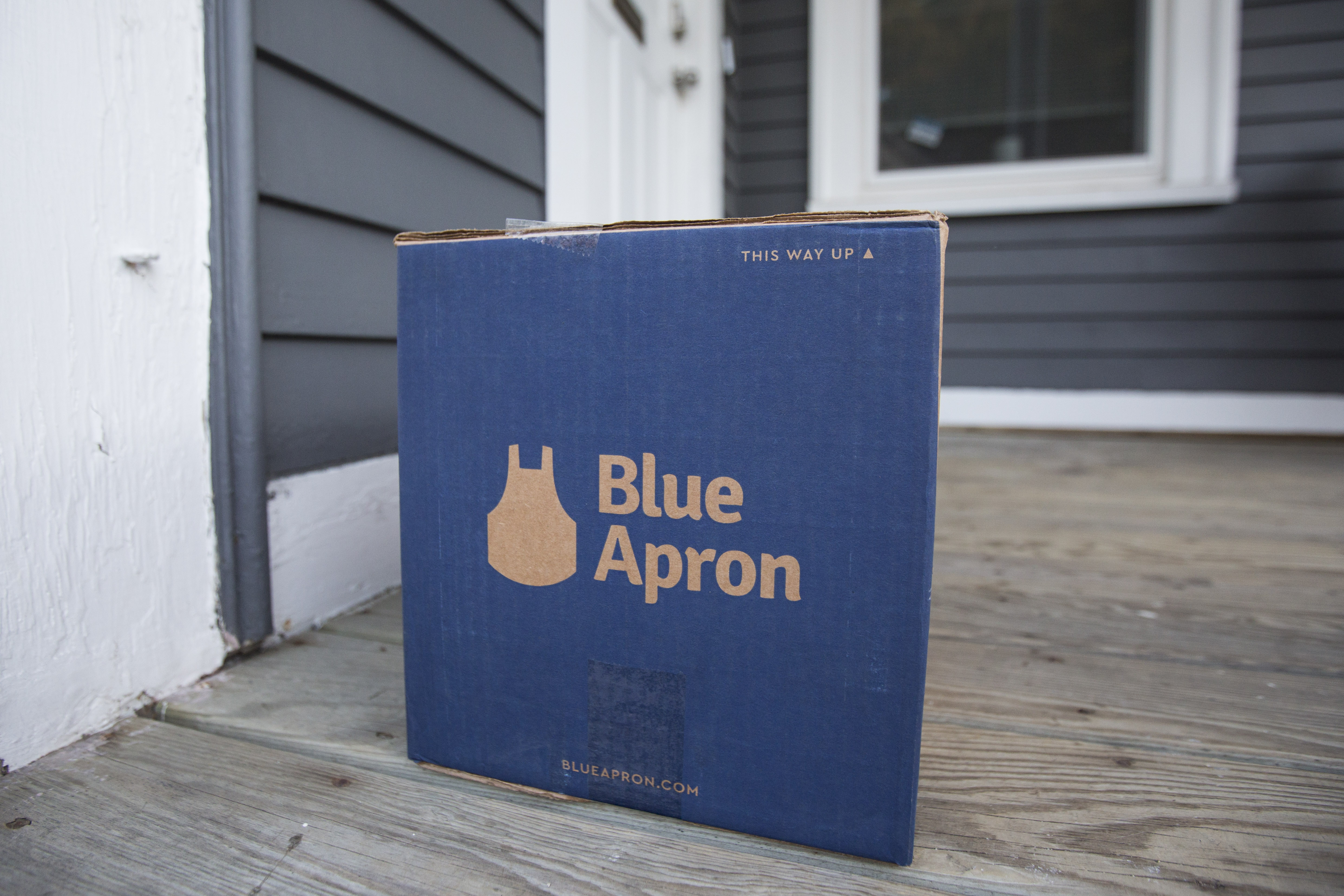
Our many (many!) streaming-service subscriptions are definitely keeping us sane as we “social distance safer at home.” But I’m most grateful for our Blue Apron meal-kit delivery subscription (~$47/week and up), since it takes so much pressure off the need to go grocery shopping and plan menus as the weeks drag on. And on. (My husband does the cooking; I do the cleanup. We both think we have the best part of the arrangement.)
There’s no shortage of such services, of course—heck, even Whole Foods now sells meal-preparation kits—and we’ve only sampled a couple of those alternatives. But we’ve been very impressed with the variety of dishes Blue Apron has on offer and the surprisingly creative recipes. Mexican-spiced salmon and cilantro sauce over quinoa, shishito peppers, and orange? Yes please. Ditto for the fig and goat cheese Beyond Burgers with roasted carrot sticks in lieu of French fries. (Blue Apron’s beef burgers are tasty, too.) There’s always some unique blend of ingredients and spices that sounds like it would never, in a million years, make for an appetizing dish. Somehow it always works (with only one “meh” exception from our experience). And with some ingredients occasionally out of stock because of the pandemic, the Blue Apron kitchen has had to get even more creative with last-minute substitutions.
Beyond Blue Apron, because all the gyms are closed indefinitely, I’m equally grateful for our iFit subscription ($15/month). We can work off all those yummy meals with online spin classes and virtual bike rides through gorgeous exotic locations in Morocco, the Pacific Northwest, Norway, New Zealand, and more. It’s not like we’re going to be doing much real travel any time soon, so at least we get to experience it virtually.
—Jennifer Ouellette, Senior Writer

Calling an audible with Audible
I just checked my membership profile and learned that I have had an annual subscription with Audible (~$15/month and up) since November 2005. During that time, I have listened to more than 300 books, many of which I would have never been exposed to had I not listened to them during a commute, while running, or while doing chores around the house.
Audible’s website, which essentially allows a user to buy audiobooks for less than $10 under various subscription plans, has opened many new worlds to me. I fell in love with Game of Thrones long before the television show thanks to the stylings of voice actor Roy Dotrice. I listened to the entire Charles Dickens catalog. I enjoyed Ron Chernow’s Hamilton before it became a runaway Broadway hit.
In recent years, as I began to listen to more podcasts, my time for books diminished. I cut back my annual subscription from 24 books on Audible a year to 12. And so it went… until the onset of COVID-19. The New York Times’ The Daily podcast became a lot less fun to listen to when it became constantly about the virus. That’s understandable, it’s news—but I needed a break and couldn’t do COVID-19 24 hours a day. So I have found myself returning to Audible and some of my favorite science fiction series that I listened to years ago—things like The Vorkosigan Saga by Lois McMaster Bujold or The First Law world by Joe Abercrombie. I’m attracted to the nostalgia of these books, and there’s a comfort in their familiarity. As it turns out, Audible is exactly the escape I need between my ears when the world outside is turning to madness, whether that’s because of a mess at home or a mess in the pandemic sense.
Contact Information:
ARS STAFF
Tags:
, Wire, United States, English
Contact Information:
ARS STAFF
