Silicon-germanium alloy glows, may be future CPU optical communication laser.
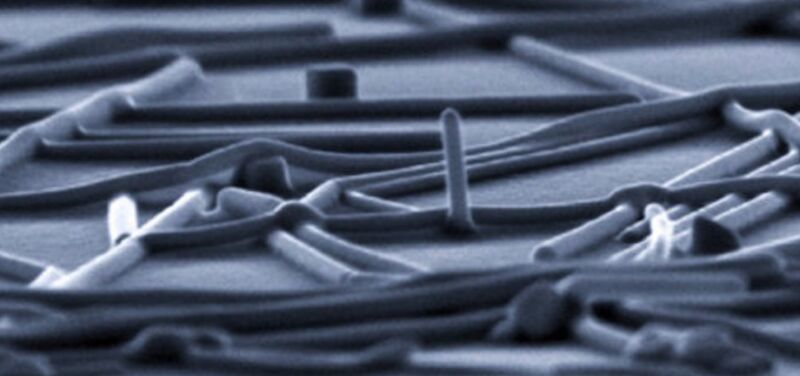
The key term in integrated circuits is integrated. The ability of fabrication facilities to integrate things sets limits on what processes are available and what materials can be safely used. As soon as you suggest a different material or process, the whole chain is broken, and anybody suggesting such a thing should expect people questioning your suitability for your current position. “Compatibility” is why you will not find laser-powered integrated circuits in your laptop.
The ability to make lasers using integrated-circuit-compatible materials, however, may have gotten a boost, with a demonstration of glowing (but not yet lasing) silicon.
The amount of light is low compared to mature laser diode technology but still bright compared to what was available before. The shining silicon seems to reveal a viable route to putting all the required elements for optical communications on a silicon chip. This means that communication with peripherals like memory, hard drives, and more can be faster. It also means that things like on-chip clock synchronization is easier to organize. But, for all that to happen, the researchers’ dimly glowing wire has to burn its way onto the fab’s list of acceptable materials.
Contact Information:
CHRIS LEE



