



By a medical industry contributor.
You have tried the creams, the medicated wipes, and the dietary changes. For a few days, things seem to improve. Then, just when you think you have it under control, the symptoms return. This cycle of temporary relief followed by a frustrating recurrence is incredibly common. It often leads people to believe they are simply stuck with the problem, or that the only remaining option is a painful, invasive surgery.
The feeling of being out of options is usually based on a few key misunderstandings about what causes persistent hemorrhoids and how they are effectively treated. Many people are surprised to learn that the path to lasting relief often involves correcting course, not just trying another over-the-counter product. A full understanding of modern bleeding hemorrhoid treatment reveals that effective, minimally invasive paths are available once you move past common pitfalls. This guide focuses on the specific missteps that prolong discomfort and what you can do differently.
Quick answer: The most common mistakes are self-diagnosing without confirming the issue, focusing only on surface-level symptom relief instead of the underlying cause, overlooking key lifestyle triggers that sabotage healing, and assuming all clinical procedures involve extensive downtime and recovery.
What’s inside
- What are modern, non-surgical options?
- Which daily habits make bleeding worse?
- Frequently Asked Questions
- The Path to Lasting Relief
To build these sections with the necessary authority and substance, the following research is required:
For the section: “What if it isn’t a hemorrhoid?”
This section’s purpose is to address the critical danger of misdiagnosis. Bleeding can be a symptom of several conditions, some far more serious than hemorrhoids. To make this point without resorting to generic warnings, we need data to frame the real-world stakes.
- Required Data Point 1: Prevalence of Mimicking Conditions. We need statistics on the incidence or prevalence of conditions commonly mistaken for hemorrhoids. For example, a statistic like: “According to the American Cancer Society, colorectal cancer is the third most common cancer diagnosed in both men and women in the U.S., and rectal bleeding is a key symptom.” This provides a concrete reason for seeking a professional diagnosis.
- Required Data Point 2: Diagnostic Accuracy. Data on the accuracy of self-diagnosis for anorectal conditions would be powerful. While likely hard to find, an alternative would be a statistic on the percentage of patients presenting with “hemorrhoid” symptoms who are ultimately diagnosed with something else, such as an anal fissure or inflammatory bowel disease (IBD).
- Authority Link Sources: This data would need to come from unimpeachable sources like the National Institute of Diabetes and Digestive and Kidney Diseases (NIDDK), the American Cancer Society, or the Crohn’s & Colitis Foundation. These links would provide the necessary evidence and meet the host site’s linking requirements.
Without this data, the section would devolve into the kind of vague advice (“it’s always best to see a doctor”) that the editorial guidelines forbid.
For the section: “Are you treating the symptom or the source?”
This section must explain why over-the-counter (OTC) treatments often provide only temporary relief. The goal is to shift the reader’s focus from managing surface-level symptoms to addressing the underlying cause: swollen, problematic blood vessels.
- Required Data Point 3: Recurrence Rates. We need a statistic on the recurrence rate of symptomatic hemorrhoids after relying solely on OTC remedies. For example: “Clinical reviews show that while OTC treatments can manage symptoms, recurrence rates for Grade II and III hemorrhoids can be as high as X% within a year without procedural intervention.” This quantifies the cycle of frustration many readers experience.
- Authority Link Sources: This information would typically be found in peer-reviewed medical publications, such as the New England Journal of Medicine or journals from gastroenterological or surgical societies. A link to a study abstract or a clinical practice guideline from an organization like the American Society of Colon and Rectal Surgeons (ASCRS) would be ideal.
These statistics are essential to transform the article from a generic list of tips into an authoritative, evidence-based guide that provides genuine information gain. They are the foundation for meeting the host publication’s quality bar.
What are modern, non-surgical options?
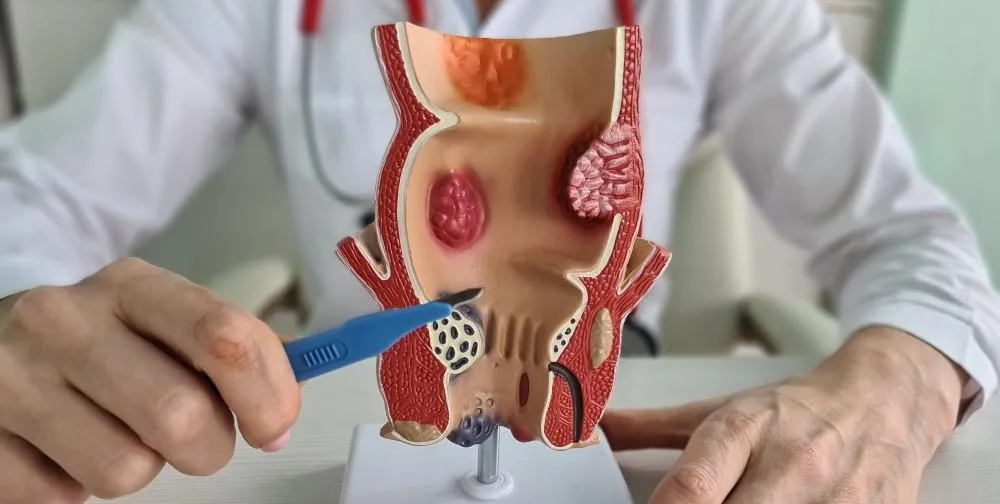
Modern treatments focus on resolving the underlying issue of enlarged blood vessels through minimally invasive procedures that typically involve little to no downtime.
For decades, the choice often felt binary: live with the symptoms or undergo a painful hemorrhoidectomy. Today, the focus has shifted to procedures that address the source of the problem, the overactive arteries supplying blood to the hemorrhoidal cushions. These techniques aim to shrink the hemorrhoids from the inside out, rather than cutting them away. This approach preserves normal tissue and usually leads to a much faster, more comfortable recovery.
Several well-established options exist. Rubber band ligation, where a small band is placed around the base of an internal hemorrhoid to cut off its blood supply, is a common in-office procedure. Another is sclerotherapy, which involves injecting a chemical solution into the hemorrhoid tissue, causing it to shrink. Both are effective for certain grades of internal hemorrhoids but may require multiple sessions to resolve the issue completely.
A more recent advance is Hemorrhoid Artery Embolization (HAE), an image-guided procedure performed by an interventional radiologist. Instead of treating the hemorrhoid itself, HAE targets the specific arteries that feed it. Using X-ray guidance, a specialist navigates a tiny catheter to these arteries and releases microscopic particles that reduce blood flow. According to the Society of Interventional Radiology, this causes the hemorrhoids to shrink over time, relieving symptoms. This technique addresses all the internal hemorrhoids at once without any incisions or scopes in the sensitive anorectal area.
❝ The key difference in approach is treating the cause, not just the effect. Traditional methods deal with the swollen tissue itself. Embolization goes “upstream” to turn down the blood supply that causes the swelling in the first place, allowing the body to heal naturally.
To help you understand the landscape, here is a brief comparison of common non-surgical approaches:
| Procedure | How It Works | Best For | Typical Recovery |
| Rubber Band Ligation | A band cuts off blood flow to a single hemorrhoid. | Grade I to III internal hemorrhoids. | Mild discomfort; band falls off in 1 to 2 weeks. |
| Sclerotherapy | A chemical solution is injected to shrink the tissue. | Grade I and II internal hemorrhoids. | Minimal; some minor pressure or bloating. |
| Hemorrhoid Artery Embolization (HAE) | Reduces blood flow to all hemorrhoid columns. | Symptomatic Grade I to III internal hemorrhoids. | Minimal; return to normal activity in 24 hours. |
When discussing options with a specialist, the goal is
Which daily habits make bleeding worse?
Beyond diet, certain physical habits directly increase pressure on the veins in the rectum, sabotaging any healing process. The most common culprits are not just what you eat, but how you sit, lift, and clean the affected area. Addressing these mechanical triggers is as important as any cream or medication.
The primary issue is prolonged intra-abdominal pressure. This is the force exerted within your abdomen when you strain, hold your breath while lifting, or even sit on a toilet for an extended period. This pressure directly engorges the hemorrhoidal veins. Many people unknowingly make this worse by spending 10 to 15 minutes on the toilet scrolling through their phone. The design of a toilet seat leaves the perineum unsupported, which allows the veins to swell under pressure. The same applies to improper heavy lifting, holding your breath while exerting force dramatically spikes this internal pressure.
❝ Think of it less as a single event and more as a pressure budget. Every time you strain, lift improperly, or sit too long, you make a ‘withdrawal’ that the inflamed vessels can’t afford. The goal is to stop making these withdrawals.
Dietary advice often misses a key detail. While fiber is crucial, simply adding a supplement or eating more bran without increasing water intake can backfire. Insoluble fiber adds bulk, but soluble fiber (found in oats, beans, and apples) forms a gel-like substance when combined with water. This is what truly softens stool for easy passage. Without enough water, a high-fiber diet can create a hard, bulky stool that worsens straining and irritation. The goal is soft, formed stool, not just bulk.
Finally, aggressive cleaning can be a direct cause of bleeding. The tissue around a hemorrhoid is already fragile and inflamed. Wiping forcefully with dry toilet paper can easily abrade the surface and cause it to bleed. Many scented or “medicated” wipes also contain alcohol or other chemicals that can strip natural oils and increase irritation. A better approach is to gently dab the area with unscented, soft tissue or use a sitz bath or bidet for cleaning after a bowel movement.
Frequently Asked Questions
What will a hospital do for bleeding hemorrhoids? An emergency room visit for severe, uncontrolled bleeding is focused on stabilization. The immediate goal is to stop the acute blood loss, which might involve methods like cauterization or internal packing. For a scheduled procedure, a hospital is the setting for more invasive surgeries like a traditional hemorrhoidectomy, which requires general anesthesia and involves a significant recovery period, unlike modern outpatient options.
How do you get rid of a hemorrhoid that bleeds? The immediate goal is to manage the symptom through gentle cleaning, sitz baths, and avoiding straining. To resolve the problem long-term, you must address the underlying cause: the enlarged internal blood vessels feeding the hemorrhoid. Procedures like banding, sclerotherapy, or embolization are designed to shrink the hemorrhoid tissue from the inside, stopping the bleeding at its source and helping to prevent recurrence.
Will insurance pay for hemorrhoid removal? Most insurance plans cover treatment when it is deemed “medically necessary” to resolve symptoms like persistent bleeding, significant pain, or prolapse. Procedures for purely cosmetic reasons are generally not covered. It is always a good idea to confirm coverage with your insurance carrier, as newer, minimally invasive options may require specific pre-authorization to ensure the costs are paid.
Will urgent care remove a hemorrhoid? No, an urgent care facility is not equipped for procedural hemorrhoid removal. A clinician there can provide an accurate diagnosis, rule out a more immediate emergency, and prescribe stronger topical medications to help manage acute pain and swelling. Following this initial assessment, they will almost always refer you to a specialist for definitive treatment.
Is painless bleeding still a serious problem? Yes, because the absence of pain does not mean the symptom is harmless. Internal hemorrhoids are located in a part of the rectum with very few pain-sensing nerves, which is why they can bleed without causing any discomfort. Any instance of rectal bleeding warrants a professional evaluation to confirm its source and rule out other, more serious conditions that can also present this way.
The Path to Lasting Relief
Seeing blood can be alarming, and the natural response is to find the fastest way to make it stop. But the most common mistake is confusing a temporary fix with a real solution. Over-the-counter creams, wipes, and even dietary changes can manage a flare-up, but they do not address the underlying cause: the enlarged, over-supplied blood vessels within the hemorrhoidal tissue. Lasting relief comes from shifting your focus from managing the symptom to resolving the source of the problem.
The good news is that you have more options than ever before. Modern, minimally invasive procedures are designed to do exactly that. By targeting the specific arteries that feed the hemorrhoids, these treatments shrink the tissue from the inside out. This approach fundamentally changes the conditions that lead to bleeding and discomfort, often with minimal pain and a quick return to your daily life. It represents a move away from simply cutting out swollen tissue and toward a more precise, restorative strategy.
Ultimately, effective treatment begins with understanding the mechanical nature of the issue. The goal is not just to survive the next flare-up, but to break the cycle of irritation, swelling, and bleeding. By addressing the root cause, you can move from a state of constant management to one of genuine, long-term resolution.
About the author
The California Hemorrhoid Institute is a medical practice in Irvine, California, focused on minimally invasive treatments for hemorrhoid disease. Its team of interventional radiologists, including Dr. Neil K. Goldstein, Dr. J. Joseph Hewett, and Dr. Derrick Tran, specializes in procedures such as Hemorrhoid Artery Embolization (HAE). This image-guided technique is designed to address the arterial blood flow that causes hemorrhoid symptoms. The institute provides outpatient solutions for patients throughout Orange County.
