



For women approaching authentic Bavarian traditional wear in 2026, understanding female traditional german clothing categories helps ensure your selection matches specific occasion needs across various contexts from casual festival attendance through elevated ceremonial occasions. The female traditional German clothing category encompasses more variation than most first-time buyers appreciate — length variations, size ranges from petite through plus size, style categories from strict traditional through contemporary interpretations, material choices from accessible cotton through premium silk, and specific regional variations reflecting particular Bavarian and Alpine heritage collectively serve diverse buyer profiles when properly understood.
The 2026 market offers substantial category maturation with quality construction available across all price tiers, size ranges, and style categories. Buyers of all body types, budget levels, and aesthetic preferences can find authentic construction matching their specific needs. Whether shopping single-event Oktoberfest attendance or building multi-year Bavarian heritage wardrobe, the diverse category serves many buyer profiles.
Understanding the Complete Female German Clothing Category
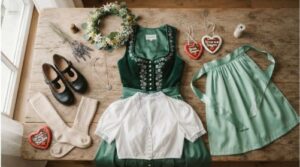
Female traditional German clothing extends beyond just dirndl though dirndl represents the foundational category. Complete category includes dirndl in various length variations (mini, midi, long), coordinating Dirndlbluse blouse in various styles (round, square, heart, Carmen necklines), appropriate stockings coordinating with skirt length, traditional Bavarian footwear (Mary Janes, quality flats, or ankle boots), coordinating jewelry (Edelweiss pendants, heart pendants), and optional headwear (small hats, flower crowns).
Beyond dirndl specifically, complete female traditional German clothing includes traditional Bavarian aprons worn over regular clothing for casual heritage acknowledgment, traditional Bavarian blouses worn with modern skirts or trousers, traditional wool cardigans and heritage-styled outerwear providing autumn and winter transitional pieces, and specific regional traditional wear reflecting particular Alpine heritage.
Formal ceremonial variations for Bavarian weddings, formal religious ceremonies, and elevated cultural events include specific formal dirndl construction with premium materials and elaborate detailing, formal Dirndlbluse variations with elegant lace and premium cotton, and complete ceremonial ensemble development matching elevated occasion character.
Size Range Considerations
Contemporary female traditional German clothing comes in comprehensive size ranges from petite through plus sizes. Standard sizing from XS through XL represents the most common range, with substantial selection across all quality tiers. Buyers within this range typically find extensive options across style categories, price tiers, and specific regional variations.
Petite sizing designed for wearers under 5’4″ typically features adjusted proportions accommodating shorter torso and leg proportions. Quality petite dirndl construction maintains authentic character within petite-appropriate proportions rather than simply scaling down standard sizing. Selection in petite range may be more limited than standard sizing but sufficient for finding appropriate options.
Plus sizing extending through XXL, 3X, and larger sizes has expanded substantially in recent years, with quality retailers now offering comprehensive plus size selection. Extended plus sizing maintains authentic construction across all size ranges rather than treating larger sizes as afterthought. Quality plus size dirndl features appropriate proportional adjustments accommodating diverse body types.
Tall sizing designed for wearers over 5’9″ features extended length proportions accommodating longer torso and leg proportions. Selection in tall range is typically more limited than standard sizing, though quality retailers increasingly offer specific tall options.
Understanding Liederhosen and Search Terminology
Understanding liederhosen as another common misspelling of traditional Bavarian lederhosen helps clarify search terminology. The variant spelling “liederhosen” appears in search patterns as unintentional misspelling of “lederhosen” — the actual traditional term. Quality retailers accommodate various spelling variants in their content while consistently delivering authentic traditional lederhosen products.
Traditional lederhosen represents men’s foundational Bavarian piece complementing women’s dirndl in couples’ Bavarian attendance. Understanding the relationship between authentic men’s lederhosen and women’s dirndl helps couples coordinate ensembles appropriately for Oktoberfest and various Bavarian cultural events. Color coordination between the dirndl bodice and men’s shirt worn under lederhosen creates visual harmony across couple photographs.
Formality level coordination between partners’ ensembles ensures matched character for specific occasions. Formal Bavarian events call for formal configurations across both partners; casual festival attendance accommodates more casual configurations. Regional coordination for couples with specific Bavarian family heritage may include matching regional traditions across both partners’ ensembles.
Length Categories for Different Contexts
Female traditional German clothing dirndl comes in three primary length categories. Mini dirndl reaching above the knee (typically 48 to 60 centimeters skirt length) suits casual festival attendance, younger wearers, and contexts where contemporary Bavarian styling matches atmosphere.
Midi dirndl reaching just below the knee (approximately 70 centimeters) represents the classic traditional length worn by majority of Bavarian heritage wearers. This length balances traditional elegance with practical wearability, working across most contexts from casual festival through formal ceremonial. Midi represents safest first-purchase choice for buyers wanting universal appropriateness.
Long dirndl reaching approximately ankle-length (typically 90 centimeters or longer) provides most elegant traditional configuration for formal contexts including elegant evening celebrations, formal Bavarian ceremony contexts, and specific traditional occasions requiring maximum formality. Long dirndl reads as substantially more formal than shorter alternatives.
Style Variations Within Authentic Construction
Classic traditional configurations feature strict heritage character with specific detailing reflecting regional Bavarian traditions. These pieces read as authentically traditional and work across various Bavarian cultural events, particularly suiting formal traditional occasions where strict heritage character matters.
Contemporary interpretations reimagine traditional aesthetics for modern wearers while maintaining authentic construction principles. Modern dirndl features updated color palettes, refined silhouettes, and adjusted proportions suited to contemporary preferences. These pieces work particularly well for younger wearers, modern aesthetic preferences, and casual festival contexts.
Elegant formal variations feature elevated construction with premium materials, sophisticated detailing, and refined character suited to Bavarian weddings, formal ceremonies, and elegant evening events. These pieces read as substantially more formal than standard festival configurations.
Regional variations reflecting specific Bavarian area traditions including Miesbacher, Tegernseer, Werdenfelser, Berchtesgadener, and other specific regional traditions provide authentic heritage connection for buyers with specific family regional heritage or preferring particular regional aesthetic character.
Materials Across Quality Tiers
Cotton represents the most common and practical material for female traditional German clothing, providing comfortable breathability, appropriate weight for authentic drape, easier care than premium materials, and accessible pricing across all size ranges. Quality cotton dirndl serves most Bavarian cultural contexts appropriately from casual festival through moderate formality events.
Cotton-linen blends offer premium alternatives providing enhanced cooling properties, refined tactile experience, and elegant character. These blends suit warm-weather festival attendance particularly well and provide slightly elevated character over pure cotton alternatives while maintaining accessible pricing.
Wool dirndl construction serves cool-weather Bavarian events particularly well, providing substantial warmth and heritage character suited to autumn Oktoberfest attendance, Christmas markets, winter cultural events, and specific traditional occasions requiring seasonal appropriateness.
Silk dirndl construction represents premium options for elevated formal contexts including Bavarian weddings, formal cultural ceremonies, and elegant evening events. Silk provides sophisticated character exceeding what cotton or wool deliver but requires professional cleaning rather than home washing.
Where Different Selections Belong
Standard midi dirndl in accessible-tier cotton works at Munich Oktoberfest, American regional celebrations, casual Bavarian cultural events, family gatherings, and general Bavarian tourist experiences. This versatile selection serves most first-time purchase needs across common occasion contexts.
Formal traditional or premium construction works at Bavarian weddings, formal cultural ceremonies, elegant evening events, and specific traditional occasions requiring elevated wear. Buyers attending formal occasions benefit from having appropriate formal pieces rather than trying to elevate standard festival pieces.
Regional traditional pieces work at specifically regional heritage events, family gatherings emphasizing particular ancestral connections, and cultural events celebrating specific Bavarian regional traditions. These pieces carry meaningful heritage connection for buyers with specific family regional heritage.
Modern interpretations work at contemporary Bavarian cultural events, urban Bavarian-themed gatherings, and specific younger-generation cultural contexts where updated aesthetic character matches atmosphere.
Practical Sizing Guidance
Getting sizing right represents the single most important practical decision affecting purchase success. Careful measurement of bust at fullest point, waist at natural waist (typically 1 to 2 inches above where jeans sit), and hip at fullest point provides essential measurements. Quality retailers provide detailed size charts translating these measurements into specific sizing systems.
Not all retailers offer consistent sizing across their ranges. Verifying specific sizing before purchasing prevents fit disappointment, particularly for buyers with sizing outside standard mid-range where variation across retailers becomes more pronounced. Following provided sizing guidance rather than assuming standard clothing sizing translates directly ensures better fit outcomes.
Length selection depends on wearer height and personal preferences. Petite wearers often benefit from shorter length proportions that flatter smaller frames. Taller wearers can wear longer configurations showing to advantage across their taller proportions. Personal preferences influence selection alongside proportional considerations.
Care and Multi-Generational Preservation
Quality female traditional German clothing construction lasts 15 to 30 years or more with proper care. Cotton and cotton-blend accommodate careful home washing with cool water and appropriate detergent. Wool requires professional cleaning. Silk requires similar careful handling.
Storage between wearings preserves construction. Hanging on appropriate hangers, cedar storage against moth damage, and climate-controlled conditions maintain construction across years. Multi-generational family use represents part of quality female traditional German clothing value.
Traditional Bavarian families often maintain multi-generational dirndl pieces passed down through successive generations, creating meaningful family heritage that connects grandmothers to granddaughters through shared traditional dress. Well-cared quality construction supports this multi-generational transmission.
Frequently Asked Questions
What size range should I look for as a plus-size buyer? Quality retailers offer plus sizing through 3X and larger. Verify specific size availability before purchasing.
Which length is safest for first purchase? Midi (below knee) works across most contexts and body types.
Can I find quality dirndl at accessible prices? Yes. $150 to $300 delivers strong entry-level authentic construction.
Should I coordinate with my partner’s lederhosen or liederhosen configuration? Yes. Color coordination creates visual harmony across couple photographs.
What material is most versatile? Quality cotton. Provides authentic character with practical wearability across multiple contexts.
How long does a quality dirndl last? 15 to 30 years or more with proper care. Quality construction becomes multi-generational family heritage.
For women shopping female traditional german clothing in 2026, understanding the complete category across sizes, styles, materials, and price tiers helps ensure your selection delivers appropriate value for your specific needs. Quality authentic construction available across petite through plus sizes, from accessible cotton through premium silk, from strict traditional through contemporary interpretations, serves diverse buyer profiles when properly understood. Whether shopping for single-event festival attendance, building multi-year Bavarian heritage wardrobe, or coordinating with your partner’s liederhosen or lederhosen ensemble, careful selection combined with proper ensemble coordination, appropriate sizing, and quality construction creates female traditional German clothing configurations that photograph beautifully and support genuine Bavarian cultural engagement across the annual calendar.
The post Female Traditional German Clothing 2026: Complete Buyer’s Guide appeared first on PHIMDACAP.COM.
