



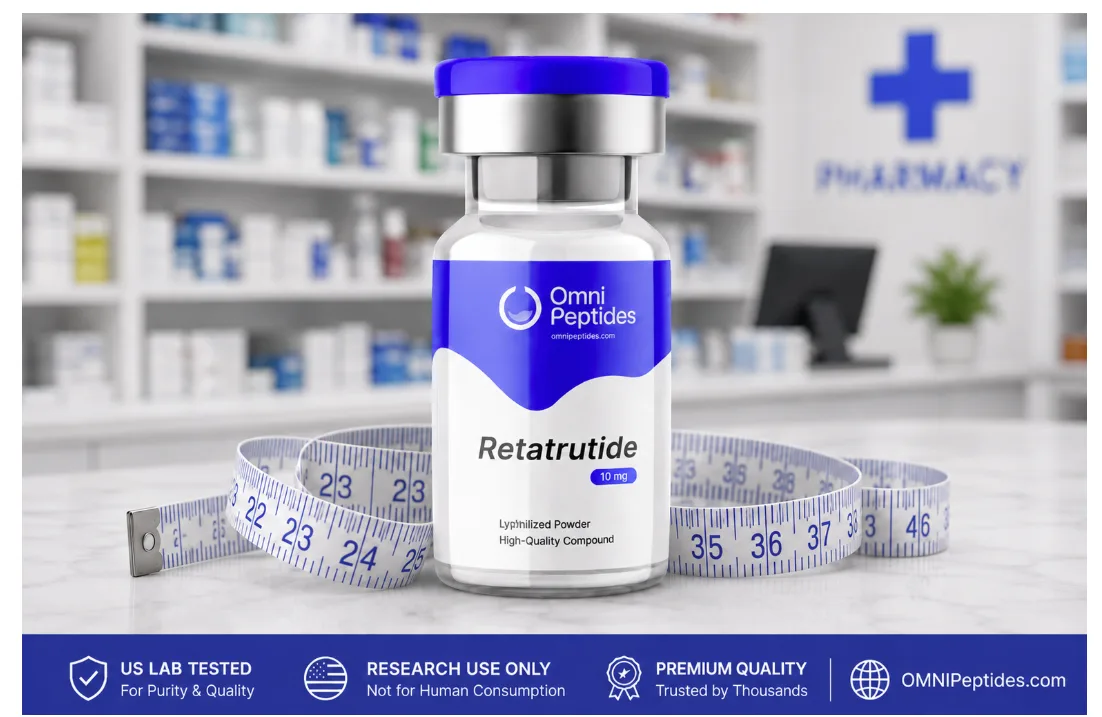
As interest in Retatrutide continues to grow, so does the number of suppliers offering research-grade peptides. However, not all suppliers provide the same level of quality, transparency, or documentation.
Choosing a trustworthy Retatrutide supplier involves more than finding the lowest price. Researchers should look for factors such as third-party testing, batch-specific Certificates of Analysis (COAs), transparent product information, and consistent quality practices. This guide explains what to look for when evaluating a supplier and why these standards matter for reliable research.
What Is Retatrutide?
Retatrutide is an investigational peptide currently being studied for its potential role in metabolic and obesity-related research. Unlike earlier therapies that target a single pathway, Retatrutide activates three hormone receptors involved in regulating appetite, energy balance, and glucose metabolism: glucagon-like peptide-1 (GLP-1), glucose-dependent insulinotropic polypeptide (GIP), and glucagon receptors. This unique mechanism has made it a growing area of interest among researchers.
While early clinical studies have shown promising results, Retatrutide is still under investigation, and research is ongoing to better understand its safety, effectiveness, and long-term outcomes. As with any investigational peptide, the quality and consistency of the research material are important. Working with a supplier that provides transparent documentation, batch-specific testing, and reliable quality control can help support more consistent and reproducible research.
Why Supplier Quality Matters
The quality of Retatrutide used in research can have a direct impact on the reliability of study results. Because Retatrutide is still an investigational peptide, researchers need confidence that the materials they receive are accurately identified, well documented, and consistent from batch to batch. Incomplete documentation or unexpected variations can make it more difficult to reproduce findings or compare results across different studies (International Council for Harmonisation [ICH], 2000).
That’s why it’s important to choose a supplier that values transparency. Clear product specifications, batch-specific Certificates of Analysis (COAs), and accessible quality documentation give researchers a better understanding of the materials they’re working with and help support consistent laboratory practices (ICH, 2000).
Supplier quality also extends beyond the product itself. Companies that clearly label their products for research use, follow established quality management practices, and communicate responsibly demonstrate a stronger commitment to scientific integrity. The U.S. Food and Drug Administration (FDA) also emphasizes the importance of quality systems and current good manufacturing practices to help ensure products are consistently produced and appropriately controlled (FDA, 2023).

Characteristics of a Trustworthy Retatrutide Supplier
Transparent Product Information
A trustworthy Retatrutide supplier should provide clear product specifications, storage recommendations, batch information, and research-use labeling. When available, batch-specific details and purity information help researchers evaluate product quality before purchasing. The International Council for Harmonisation (ICH, 2000) identifies proper documentation and traceability as key components of quality management.
Third-Party Testing and Certificates of Analysis (COAs)
Independent testing provides additional assurance that a product has been evaluated using recognized analytical methods. A batch-specific Certificate of Analysis (COA) should include details such as the batch number, testing methods, identity, and purity. Researchers should also look for analytical techniques such as high-performance liquid chromatography (HPLC) and mass spectrometry (MS), which are widely used to characterize peptides (United States Pharmacopeia [USP], 2024).
Quality Manufacturing Standards
Reliable suppliers maintain consistent manufacturing and quality control practices to support product consistency and traceability. This includes documenting production processes, implementing quality assurance measures, and following established quality management systems. These practices help ensure products are consistently produced and appropriately controlled.
Clear Research-Only Positioning
Reputable suppliers clearly state that Retatrutide is intended for research use and avoid unsupported claims about safety or therapeutic benefits. Since Retatrutide remains investigational, product information should accurately reflect its current research status. The FDA has emphasized the importance of truthful marketing for unapproved products.
Responsive Customer Support
Reliable customer support is another sign of a trustworthy supplier. Researchers should be able to request Certificates of Analysis (COAs), ask questions about product specifications, and receive clear information about storage, shipping, and ordering policies. Combined with transparent documentation and quality practices, responsive support helps researchers make informed purchasing decisions.
Questions to Ask Before Choosing a Retatrutide Supplier
Before purchasing Retatrutide for research purposes, it is helpful to evaluate potential suppliers using a consistent set of criteria. Asking the right questions can help researchers identify companies that prioritize quality, transparency, and responsible business practices.
Is a current Certificate of Analysis (COA) available?
A batch-specific COA demonstrates that the product has undergone analytical testing and provides information about important quality attributes, such as identity and purity. Researchers should verify that the COA corresponds to the specific batch they intend to purchase.
Does the supplier provide complete product information?
Product listings should include clear specifications, storage recommendations, batch information when available, and labeling that identifies the material for research use. Transparent documentation allows researchers to make informed purchasing decisions and compare products more effectively.
How does the supplier ensure product quality?
Look for information about manufacturing practices, quality control procedures, and analytical testing. Suppliers that openly describe their quality assurance processes demonstrate a greater commitment to consistency and accountability (International Council for Harmonisation [ICH], 2000).
Does the supplier make evidence-based claims?
Reputable suppliers describe their products accurately and avoid exaggerated claims or promises that are not supported by scientific evidence. Since Retatrutide is still under investigation, trustworthy suppliers present balanced information that reflects its current research status rather than portraying it as an approved therapy.
Is customer support accessible and knowledgeable?
A reliable supplier should be able to answer questions about product documentation, testing, storage, and ordering procedures. Prompt, accurate responses can be an indicator of a company’s commitment to transparency and customer service.
By asking these questions before placing an order, researchers can better assess whether a supplier follows quality-focused practices and provides the documentation needed to support reliable laboratory research.
Choosing a Supplier With Confidence
Choosing a trustworthy Retatrutide supplier involves more than comparing prices. Researchers should look for suppliers that prioritize transparency, quality verification, and batch-level traceability. Features such as independent laboratory testing, accessible Certificates of Analysis (COAs), and consistent manufacturing practices help support confidence in research materials.
Omni Peptides is one example of a supplier that emphasizes these quality standards. Every documented batch is supported by 99%+ verified purity, batch-level COA access, and independent third-party testing to reinforce consistency and transparency. The company also provides batch-level traceability and secure U.S. fulfillment with protected packaging and dependable shipping, giving researchers access to the documentation they need before placing an order.
A little research upfront can go a long way in finding a supplier that consistently provides well-documented, research-grade materials.
