



Every family knows the scene: a knocked-over juice glass, muddy paw prints across the living room floor, or a toddler skidding across a slippery hallway. Area rugs are meant to bring warmth and character to your home, but for busy families, the wrong choice can quickly become a source of frustration rather than comfort. Between stubborn stains, fraying edges, and safety hazards, finding a rug that actually works for real family life can feel overwhelming.
The good news is that today’s market offers more family-friendly options than ever before — you no longer have to sacrifice style for practicality. This guide is designed to walk you through everything you need to know to make a confident, informed decision. We’ll explore how to assess your home’s unique needs, which materials and construction methods hold up best under daily wear, how smart design choices can keep your space looking fresh longer, and why safety features like non-slip backings are non-negotiable in a family home. By the end, you’ll have a clear, step-by-step framework for choosing area rugs that look beautiful and stand up to the demands of family living.
Understanding Your Family’s Lifestyle and Space Requirements
Before browsing rug options, take an honest look at how your family actually lives. A household with two working adults and older teenagers has very different needs than one with toddlers, a dog, and a constant stream of weekend guests. The way your family moves through your home — where people gather, eat, play, or simply pass through — should drive every decision you make about area rugs. Skipping this assessment is how families end up with beautiful rugs that look worn and dingy within months.
Start by walking through each room and noting how it gets used throughout the day. A living room that doubles as a homework station and movie-night hangout needs a much tougher rug than a formal sitting room that rarely sees foot traffic. Similarly, the area just inside your front door will take far more punishment than the rug under a bedroom reading chair. Once you understand the demands each space places on a rug, you can match materials and construction to those specific conditions rather than guessing.
Your family’s composition matters just as much as room usage. Homes with young children need rugs that can survive spilled snacks and art projects. Pet owners must account for claws, accidents, and shedding. Even the ages of family members play a role — elderly relatives or toddlers learning to walk need rugs with reliable grip and cushioning underfoot. Thinking through these dynamics before you shop will save you from costly mistakes and help you find area rugs that genuinely serve your household.
Identifying High-Traffic Zones in Your Home
The rooms that see the most daily action — living rooms, hallways, entryways, and kitchen dining areas — are where rug durability matters most. These zones absorb constant foot traffic, dirt tracked in from outside, and the general wear that comes from family life in motion. Placing a delicate or loosely woven rug in any of these spots is a recipe for premature deterioration. Prioritize tight, dense constructions and resilient materials in these areas, and save more decorative or delicate options for lower-traffic spaces like bedrooms or home offices.
Considering the Needs of Children and Pets
Children and pets are the ultimate stress test for any rug. Kids drop food, drag toys across fibers, and occasionally spill entire cups of juice without a second thought. Pets bring in outdoor debris, shed fur, and can scratch or chew at rug edges. For these reasons, easy-to-clean surfaces and stain-resistant constructions should move to the top of your priority list. Low-pile or flatweave rugs tend to be far more forgiving than plush options, and rugs with built-in moisture barriers can mean the difference between a quick wipe-down and a full replacement.
Essential Features of Durable and Stain-Resistant Rugs
Once you understand how your family uses each space, the next step is knowing what to look for in the rug itself. Not all rugs are built equally, and the differences in material, construction, and finish can mean years of attractive use versus months of frustration. Durable rugs share a few common traits: tight fiber density, resilient materials that bounce back under repeated foot traffic, and construction methods that resist fraying and unraveling at edges. Stain-resistant rugs add another layer of protection through either inherent fiber properties or applied treatments that cause liquids to bead on the surface rather than soak in. Understanding these features before you shop helps you cut through marketing language and focus on what genuinely matters for a busy household. The goal is to find a rug that holds its structure and appearance under daily punishment while remaining easy enough to clean that maintenance doesn’t become a second job. Pile height is another underrated factor — lower pile heights trap less dirt, dry faster after spills, and generally withstand heavy use far better than thick, plush alternatives. When durability and stain-resistance work together in a single rug, you get a product that earns its place in a family home rather than just filling floor space.
Material Choices for Long-Lasting Durability
Wool remains one of the most naturally durable rug materials available, offering excellent resilience and a natural resistance to soiling thanks to its lanolin content. However, wool requires more careful cleaning and carries a higher price point. Synthetic fibers like polypropylene (olefin) and nylon are often the smarter choice for family homes — polypropylene is inherently stain-resistant, moisture-repellent, and holds up exceptionally well in high-traffic areas, while nylon offers superior abrasion resistance and recovers well from crushing underfoot. Brands like Lahome have built their family-focused collections around these synthetic constructions, recognizing that real households need rugs engineered for daily punishment without sacrificing visual appeal. Blended constructions that combine wool’s aesthetic appeal with synthetic durability can offer a practical middle ground for families who want warmth without sacrificing toughness.
Technologies and Treatments for Easy Cleaning
Many modern rugs come treated with stain-resistant coatings such as Scotchgard or proprietary brand treatments that create a protective barrier across the fiber surface. These treatments cause spills to bead up rather than immediately penetrating the fibers, giving you a window to blot and clean before a stain sets. Some rugs are constructed with solution-dyed fibers, meaning the color is locked into the fiber at a molecular level rather than applied on top — this makes them significantly more resistant to fading and bleach-based cleaners. For ongoing maintenance, vacuuming regularly and addressing spills immediately with a clean cloth and mild detergent will extend the life of any rug considerably.
Selecting Stylish Designs That Complement Family Living Spaces
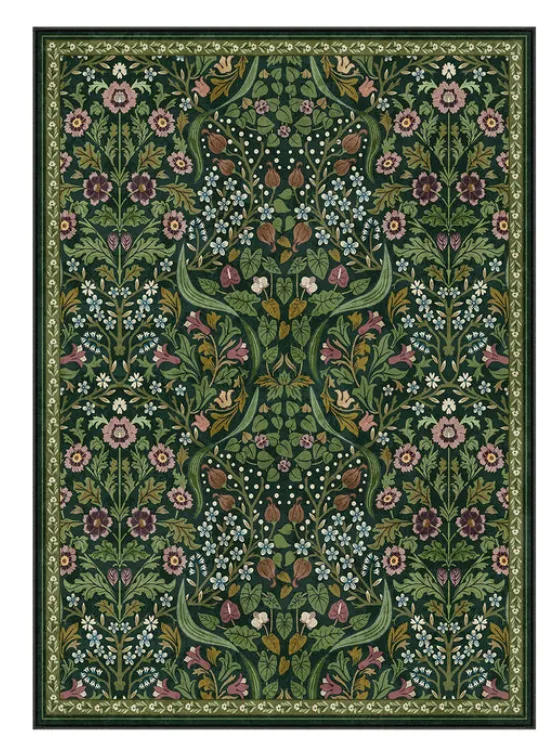
Durability and stain-resistance are non-negotiable for family homes, but a rug that looks like it belongs in a hospital waiting room isn’t doing your space any favors. The encouraging reality is that the design choices that work hardest to hide wear and tear also happen to be genuinely attractive. Today’s rug market has moved well beyond the beige-or-brown dilemma, offering families rich textures, bold geometrics, and layered patterns that look intentional rather than merely practical. The key is learning to use design as a strategic tool — selecting colors, patterns, and textures that work with your family’s lifestyle rather than against it. A well-chosen rug should anchor a room visually while quietly absorbing the evidence of daily life. Current trends favor organic patterns, distressed vintage aesthetics, and earthy tonal palettes, all of which naturally camouflage the kind of irregular marks and light soiling that accumulate in busy households. Textured weaves like cut-and-loop constructions or hand-knotted styles add visual depth that draws the eye away from minor imperfections. When style and practicality align in a single rug, you stop treating your floor covering as a liability and start appreciating it as a genuine design asset.
Color and Pattern Strategies for Hiding Wear and Tear
Solid light-colored rugs are essentially a highlight reel for every crumb and footprint — a beautiful choice in theory, but a maintenance nightmare in practice. For family spaces, mid-toned and multi-colored patterns are your best allies. A rug with a mix of warm browns, grays, and creams in a geometric or abstract pattern will absorb visual noise from spills and dirt far more effectively than any single-color option. Distressed or vintage-style rugs are particularly forgiving because their deliberately irregular appearance means new marks blend naturally into the existing design. Textured weaves add another layer of camouflage, breaking up light reflection so minor staining becomes nearly invisible under normal room lighting.
Integrating Rugs with Overall Home Aesthetics
A rug that survives family life but clashes with your furniture defeats half its purpose. Start by identifying the dominant colors in your room — upholstery, wall color, and wood tones — and use the rug to either echo those tones for a cohesive look or introduce a complementary accent color for visual interest. In open-plan spaces, rugs help define distinct zones, so scale matters as much as color. A rug that’s too small looks disconnected; one that fits the furniture grouping properly grounds the entire room. Prioritize rugs with enough visual complexity to remain interesting over time, ensuring that practicality and personal style reinforce rather than compete with each other.
Safety First: Why Non-Slip Rugs Are Crucial for Family Homes
A beautiful, durable rug that slides across the floor the moment someone steps on it isn’t just an annoyance — it’s a genuine hazard. Slips and falls are among the most common household accidents, and unsecured rugs are a leading contributor, particularly for toddlers still developing their balance and elderly family members whose stability may already be compromised. Non-slip rugs or properly anchored rugs aren’t a luxury feature; they’re a baseline safety requirement for any home with children, older adults, or pets that move quickly through living spaces. Beyond preventing falls, a secured rug also maintains its position under furniture, preventing the gradual creep that leaves corners curling and edges exposed as tripping hazards. When evaluating any area rug for a family home, the question of how it will stay in place on your specific floor type — whether hardwood, tile, or low-pile carpet — deserves as much attention as color or material. The good news is that modern non-slip solutions are affordable, widely available, and easy to implement without professional help.
Types of Non-Slip Backings and Padding Options
Rugs come with several backing options that affect grip and stability. Natural rubber backings offer the strongest hold on hard floors without damaging surfaces, while latex backings provide similar grip at a lower cost but can degrade faster and occasionally discolor certain floor finishes over time. Felt pads topped with a rubber layer give you the dual benefit of cushioning underfoot and reliable traction, making them an excellent choice for hardwood or tile floors. When shopping, check whether a rug includes a backing or requires a separate pad purchased to fit your specific floor type.
Installation Tips for Maximum Safety
On hard floors, place a rug pad cut slightly smaller than the rug itself — about an inch shorter on each side — so the pad stays hidden while gripping both the floor and the rug backing simultaneously. On carpeted surfaces, choose a pad with a waffle or spiked texture designed specifically to anchor rugs to carpet pile. For high-traffic doorways and hallways where rugs tend to bunch, double-sided carpet tape applied along the edges adds an extra layer of security. Check rug corners and edges monthly, as these areas loosen first, and reposition or replace pads when grip begins to diminish.
Step-by-Step Guide to Choosing the Perfect Area Rug
Armed with a solid understanding of materials, design, and safety, you’re ready to move from research to action. The gap between knowing what makes a great family rug and actually bringing the right one home comes down to a clear, structured process. Rushing this stage — or skipping straight to browsing without a plan — is how families end up with rugs that are the wrong size, wrong material, or simply wrong for the room. Working through a few deliberate steps before you buy ensures that durability, stain-resistance, style, and safety all factor into your final decision rather than just whichever rug caught your eye first. Think of this as your pre-purchase checklist: a practical sequence that filters out the options that won’t work and zeroes in on area rugs that genuinely fit your household. Whether you’re shopping for a high-traffic living room or a child’s bedroom, the same framework applies — measure first, clarify your priorities, then shop with intention. Following these steps won’t just save you money; it will save you the frustration of a second purchase six months down the line.
Step 1: Measure Your Space and Set a Budget
Before looking at a single rug, grab a tape measure and record the dimensions of the room and the furniture grouping you want the rug to anchor. A common rule of thumb is to leave 12 to 18 inches of bare floor between the rug edge and the wall in most living spaces. Once you have your measurements, set a realistic budget that accounts for both the rug and any non-slip pad you’ll need separately. Prioritize spending more in high-traffic zones where durability pays off over time, and reserve a smaller budget for lower-use spaces like guest bedrooms.
Step 2: Prioritize Key Features Based on Your Family’s Needs
Use what you know about your household to build a simple priority list before you shop. If you have young children or pets, stain-resistant rugs with low pile heights and moisture barriers should rank above aesthetics. If elderly family members use the space, non-slip rugs with secure backing become non-negotiable. For rooms where style drives the conversation, layer design considerations on top of your durability baseline rather than instead of it. Running through this checklist mentally — durability, stain-resistance, safety, then style — keeps impulse purchases from overriding practical needs.
Step 3: Where to Shop and Final Selection Tips
Both in-store and online shopping have genuine advantages. Physical stores let you feel pile density, check backing quality, and see true colors before committing — worth the trip for a significant purchase. Online retailers typically offer wider selections and customer reviews that reveal real-world performance over time. When shopping online, order samples or swatches whenever available, and always read the return policy before purchasing. Look for verified reviews that specifically mention families, pets, or spill cleanup — retailers like Lahome often feature customer feedback organized around these practical concerns, making it easier to gauge how a rug performs in real household conditions. Narrow your final shortlist to two or three options, then compare them against your measurements, priority list, and budget before making your decision.
Building a Family Home That’s Stylish and Built to Last
Choosing the right area rug for your family home isn’t about finding the most beautiful option in the showroom — it’s about finding the one that holds up to your actual life while still making your space feel warm and intentional. Throughout this guide, we’ve covered the four pillars of a smart family rug decision: understanding how your household uses each space, selecting materials and constructions built for durability and stain-resistance, using design strategically to keep your home looking fresh, and prioritizing safety features that protect everyone under your roof.
The step-by-step framework — measure first, clarify your priorities, then shop with intention — gives you a practical filter for cutting through the overwhelming number of options on the market. When you approach the process this way, you stop reacting to what looks good in a catalog and start choosing what genuinely works for your family. The result is a rug that earns its place in your home rather than becoming a source of regret six months later. Apply these principles room by room, and you’ll build a living space that’s not just stylish, but genuinely livable — one that handles the beautiful, messy reality of family life with ease.
