Wednesday, October 21, 2026



News and Views from the Global South
Integration and Development Brazilian-style
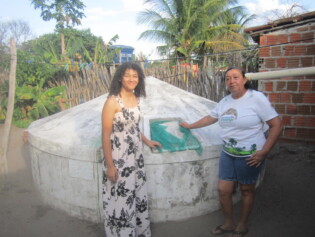
Living with nature, the climate lesson from Brazil’s caatinga
“The work of collecting seeds saved me from depression,” caused by her daughter's suicide at the age of 29, said Maria do Desterro Soares, 64, who lives in the poor rural community of Jatobá in northeastern Brazil.
Natural Restoration Recovers Lagoon and Environmental Justice in Brazil: VIDEO
 "We moved from a context of socio-environmental exclusion to one of environmental justice," said Dionê Castro, coordinator of the Sustainable Oceanic Region Program which led Brazil's largest nature-based solutions project.
In Zimbabwe, School Children Are Turning Waste Into Renewable Energy-Powered Lanterns
When going home after school, Monica Ben not only takes with her a pen and exercise books but also a lantern to light the dark room and completes her daily homework in Mashonaland East province.
Resumption of Nuclear-Explosive Testing: A Dangerous Path
In a Truth Social post that reverberated around the world, on October 29 President Donald Trump wrote: “Because of other countries’ testing programs, I have instructed the Department of War to start testing our Nuclear Weapons on an equal basis.”
Rainwater Harvesting Mitigates Drought in Eastern Guatemala – VIDEO
Plagued by drought, farming families living within the boundaries of the Dry Corridor in eastern Guatemala have resorted to rainwater harvesting, an effective technique that has allowed them to cope. 
Cold or Heat, A Disputed Roadmap to Leave Fossil Fuels Behind in COP30
The heat in the Hangar Convention Center of the Amazonia, in the northeastern Brazilian city of Belém, has reached the negotiation rooms of the climate summit. Over the past 72 hours, one of the most delicate and significant discussions of this climate meeting has been taking place: the path to progressively abandon the production and use of coal, gas, and oil.
Faith Leaders Endorse Fossil Fuel Non-Proliferation Treaty at COP30
Decades ago, a little girl was born in a place called Cleveland, Ohio, in the heart of the United States of America. Born to a woman from the deep South, the place of Martin Luther King, her mother left her ancestral lands for the economic opportunities in the north.
Guatemalan Peasants Overcome Drought in the Dry Corridor
Water scarcity that relentlessly hits the rural communities in eastern Guatemala, located in the so-called Central American Dry Corridor, is a constant threat due to the challenges in producing food, year after year. But it is also an incentive to strive to overcome adversities.
New Climate Goal: To Quadruple Sustainable Fuels
Quadrupling the production and use of sustainable fuels by 2035 is the goal of a new international initiative to drive energy transition and mitigate the climate crisis, which will be launched during Brazil's climate summit in November.
Desalination is Booming in Chile, but Farmers Hardly Benefit
Desalination projects are booming in Chile, with 51 plants planned to process seawater and a combined investment of US$ 24.455 billion. However, these initiatives hardly benefit small-scale farmers, who are threatened by the prolonged drought, and cause environmental concerns.
Chile Aims for Sustainable Port Expansion – VIDEO
Maritime transport is key for Chile, which has 34 free trade agreements with countries and blocs of nations, one of the broadest trade networks in the world with access to over 86% of the global gross domestic product (GDP). 
Historical Expansion and Sustainability in Chile’s Main Port
The port of San Antonio, Chile's main port, is promoting a historic and sustainable expansion with its own investment and that of international consortiums, aiming to improve its current ninth place among the largest and busiest ports in Latin America.
An Overdose of Renewables, New Energy Risk in Brazil
Wind and solar power sources, essential for the energy transition to mitigate the climate crisis, have become a risk of power outages in Brazil.
Mexico Experiments With Residential Solar Panels, But They Are Still Insufficient
Over the past four months, Mexican researcher Nicolás Velázquez has paid around US$23 for electricity, thanks to the photovoltaic system installed in his home in the northern city of Mexicali.
Chile Aims to Become a Latin American Hub for Data Storage and Transmission
Chile wants to be a hub in Latin America in data storage and transmission by developing data centers, leveraging its wealth of renewable energy, and its optimal digital interconnection.
Can the Asia-Pacific Region Deliver Clean, Affordable Energy by 2030?
The future of the global energy landscape will be shaped by Asia and the Pacific. Over the past two decades, our region has been the principal driver of global energy demand and emissions. Energy has powered prosperity, lifted millions out of poverty and transformed societies.
Rare Earths, a New Technological and Industrial Dream in Brazil
Brazil, which stands out for exporting basic products such as iron ore, oil, coffee, and soybeans, rather than industrialized goods with higher added value, now intends to make a shift regarding rare earths, a key component in new technologies that it has in abundance.
Government Constructions Hit Water Recharge Area in El Salvador
Two construction projects pushed by the government of El Salvador, in a water recharge area adjacent to the country's capital, on the slopes of the San Salvador volcano, threaten to make the area more vulnerable and increase the risk of flooding in the city's poor neighborhoods downstream.
Feminist Electrification: the Power Africa Needs
Chad is one of the most extreme examples of energy poverty, with just 10% of the population connected to electricity, a rural electrification rate below 2%, and a global per capita electricity consumption rate that’s just 18% of the global average. This hinders its economic development.
Environmentalists Confident Case Against US Funding of Mozambique LNG Project Will Succeed
Environmental campaign groups are confident that a suit filed in the United States, seeking to stop the country’s Export-Import Bank (EXIM) from the ‘unlawful’ lending of nearly USD 5 billion to the controversial Mozambique Liquefied Natural Gas (LNG) project, will succeed.
Solar-Powered Fish Farming Feeds Indigenous Communities in the Peruvian Amazon
"Our organization is showing that it is indeed possible to move toward energy transition and not depend on oil," said Elaina Shajian, president of the Regional Coordinator of Indigenous Peoples of San Lorenzo (Corpi-SL), in the Peruvian Amazon.Next Page »





South American imperialist power, or integrationist power? The role currently played by Brazil is perhaps located midway between these two extremes. On the other hand, there is no doubt about the dynamic nature of its economy or the influence of its corporations in Latin America. Wherever infrastructure, energy or the extraction of natural resources transcend borders in the region, Brazil tends to be a key player. What are the risks? What is the potential? What kind of development do dams and other major projects underway foment? What effect will they have on the population, and on nature? What will the new geopolitical order that is taking shape look like? With the support of the Mott Foundation, IPS is launching a series of investigative reports by Brazilian correspondent Mario Osava and a team of outstanding journalists in other key parts of the region, to produce a picture of the new course Brazil is taking in Latin America.

The Week with IPS

Tracking global progress towards a sustainable world