Languages
Thursday, September 24, 2026



News and Views from the Global South
Active Citizens
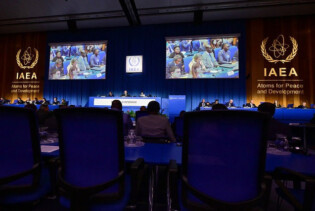
From Vienna to New York: Nuclear Governance Faces New Tests Ahead of First TPNW Review Conference
The international nuclear order is facing another test as governments move from an inconclusive review of the Nuclear Non-Proliferation Treaty (NPT) in New York to renewed disputes over safeguards and nuclear security in Vienna—and toward the first Review Conference of the Treaty on the Prohibition of Nuclear Weapons (TPNW) later this year.
The Overlooked Fast Track for Cutting Planetary Warming
Among the three of us, we have 15 decades of high-level experience in climate science, policies and actions, and we have never been more alarmed than we are at this moment. The United Nations has just officially declared that the world has failed in limiting global warming to a safe level. During the last decade, heat-trapping pollutants nearly doubled the rate that heat is being added to the planet—a rate that will push temperatures across the 1.5°Celsius threshold in five years or less and breach the first barrier of the Paris Agreement. This will further destabilize natural climate systems and amplify weather extremes, which are already costing the world economy more than $ 2 trillion annually. At the current rate of warming, the global temperature is likely to cross 2° Celsius in about 15 years, the outer limit of the Paris Agreement, taking us into a climate not witnessed by homo sapiens, ever.
IRAQ: ‘Art Is the Only Weapon That Doesn’t Hurt or Kill’
CIVICUS discusses public art, gender-based violence and censorship in Iraqi Kurdistan with Tara Abdullah, a multidisciplinary visual artist from Sulaymaniyah who is currently based in Oslo, Norway as part of the Safemuse – Safe Havens for Artists residency.
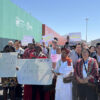
What Isn’t Named Isn’t Protected and being Named Isn’t Enough
Rightsholders came to Ulaanbaatar from across the world, carrying declarations, demands and years of experience defending the lands on which their communities depend. Indigenous Peoples, local communities, Afro-descendant Peoples, women and youth were equally clear about what they needed from COP17. But being in the room is not the same as having power in the room.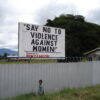
Life-Changing Humanitarians Empower Women Against Violence in Papua New Guinea’s Highlands
In the remote Highlands region of Papua New Guinea (PNG), humanitarians are life-saving beacons to women and girls facing myriad forms of violence. Despite years of awareness programmes and advocacy, the incidence of domestic and sexual violence is not declining. But Janet Kilea is one survivor who has rejected the fear and stigma of her experience and now dedicates her energy to transforming other women’s lives.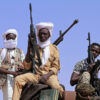
Sudan: Blood on Foreign Powers’ Hands
Sudan’s civil war grinds on. It’s close to three and a half years since the Sudanese Armed Forces (SAF) and the Rapid Support Forces (RSF) militia began their battle for supremacy, and the two forces and their allies continue to slaughter civilians with impunity. As a recent UN report makes clear, the killing is enabled by numerous foreign powers that continue to supply weapons, personnel and logistical support. They have made a civil conflict their proxy war, and their self-interest is sustaining the killing.
ETHIOPIA: ‘Reporting on Abuses Shouldn’t Be Treated as a Threat to National Interest’
CIVICUS discusses renewed conflict and a growing crackdown on independent media in Ethiopia with Yonas Kedir, Editor-in-Chief of the independent news outlet Addis Standard, who was recently abducted and detained by government forces.

Killing of Environmental Defenders Reflects Power Struggle Over World’s Resources
At least 124 land and environmental defenders were killed around the world in 2025 while protecting forests, rivers, farmland and Indigenous territories, according to a new report by Global Witness that warns violence against activists remains widespread even as recorded killings have declined from previous years.
One Man’s Quest to End Female Genital Mutilation (FGM) in Mali
In Mali, an estimated nine out of ten women and girls have undergone female genital mutilation (FGM). And for years, Sidi Haidara, a father and recognized leader in his community, believed the practice was simply part of life.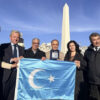
Transnational Repression: A World Without Refuge
On 24 August, I took part in a human rights conference in Buenos Aires, Argentina. Days before it opened, the city legislature cancelled the intended venue after the Chinese ambassador complained to the Argentine government about the participation of prominent Uyghur human rights defenders, including Dolkun Isa, an activist exiled in Germany. Beijing has waged a campaign of mass detention and forced assimilation against the mostly Muslim Uyghur population for years.
Global Survey Finds Deep Crisis of Trust as Majority Say Economic System Favours the Rich
An international survey released by Earth4All has found a growing crisis of trust in governments, widespread anger over inequality, and strong public support for major economic reforms, suggesting that many people across the world believe current political and economic systems are failing to serve ordinary citizens.
PHILIPPINES: ‘Responding to Disinformation Can’t Mean Giving the Government a Mandate to Police Truth’
CIVICUS discusses the implications of the Philippines’ proposed anti-disinformation bill with Josalee Deinla, Secretary-General of the National Union of Peoples’ Lawyers, a civil society organisation that defends civil liberties in the Philippines.
Development Goals Falter as Civil Society Is Shut Out
When the UN High-level Political Forum on Sustainable Development (HLPF) ended in New York in July, it took two recorded votes for states to pass a ministerial declaration that, until recently, would have been adopted without controversy. Uruguay, speaking for the Group of 77 developing countries plus China, pushed through the deletion of a reference to the agreement reached at the COP28 climate summit. Israel forced a vote on a paragraph about self-determination for people under occupation. Russia dissociated itself from the passage on peace and security. The wrangling revealed the extent to which the consensus that in 2015 saw all 193 UN states agree the Sustainable Development Goals (SDGs) – a common blueprint to end poverty, tackle climate change and build accountable institutions by 2030 – has been eroded.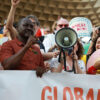
UNGA 81: A United Nations at a Turning Point
The 81st session of the UN General Assembly (UNGA81) opens tomorrow at a particularly important moment for multilateralism. The UN80 reform initiative has entered what the Secretary-General describes as a decisive phase. Member States are selecting the next Secretary-General. The 2030 Agenda is entering its final four years, while conversations about what should follow it are beginning.
LIECHTENSTEIN: ‘We Have One of the Strictest Abortion Bans in Europe’
CIVICUS discusses struggles for abortion rights in Liechtenstein with Gabriella Alvarez-Hummel, a journalist and reproductive rights activist who works with Fristenlösung für Liechtenstein, an organisation that campaigns for the introduction of a legal time-limit abortion model.
Nuclear Victims’ Experiences Must Be at the Heart of Global Efforts for Assistance and Remediation
More and more, global disarmament discussions are encompassing the humanitarian and environmental impacts of the testing and use of nuclear weapons, as it becomes clear that the legacy of nuclear weapons leaves its mark on multiple generations.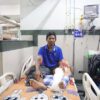
Nepalese Experts, Victims Contemplate the Future After the Flood
That day, Subash Tamang was mining sand along the banks of the Trishuli River near the Trishuli Hydropower Project, working alongside his wife, brother, sister-in-law, and two other family members. Suddenly, he noticed water gushing down from above the hydropower site. His first thought was that the dam had burst.
‘I am one who dies for life, not one who lives for death’ – Kurdish Political Prisoner Pakhshan Azizi
In 2024, Kurdish social worker Pakhshan Azizi was sentenced to death. She remains incarcerated in Evin Prison, Tehran, Iran. This is her story ...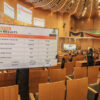
Zambia: An Uneven Contest, an Easy Win
On 24 August, police sealed off access to Zambia’s courts, closed the day before the deadline for petitions to challenge the results of the 13 August presidential election. The judiciary’s top official cited security reasons, but the timing left little doubt that authorities meant to block the defeated candidate’s legal challenge.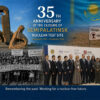
35 Years After Semipalatinsk, Kazakhstan’s Nuclear Choice Still Challenges the World
Across the vast steppe of northeastern Kazakhstan, the scars of the Cold War remain visible. At the Semipalatinsk Nuclear Test Site, the Soviet Union conducted 456 nuclear tests between 1949 and 1989, exposing nearby communities to radiation and leaving health and environmental consequences that have endured across generations.
SWEDEN: ‘The New Migration Laws Are so Vague That People Don’t Know What Might Be Used Against Them’
CIVICUS discusses Sweden’s new migration laws with John Stauffer, legal director and deputy executive director of Civil Rights Defenders, a Swedish civil society organisation that acts as a civil rights watchdog at home and supports human rights defenders in repressive contexts worldwide.
Next Page »


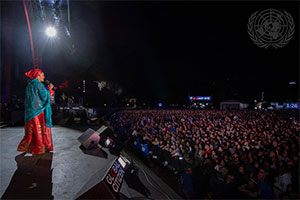 Global Citizen Festival in New York. Credit: UN Photo/Eskinder Debebe
Active citizens are committed to social change because they know that it is achievable. However, major political challenges face active citizens across the world. For example, in authoritarian regimes in Latin America where the hegemonic party has been in power for decades on end, protestors and human rights activists face enormous repression and struggle to materialize their advocacy into concrete results. The same can be said for Africans, where a shift towards elected government in recent decades has yet to translate into an effective voice in decision-making. Now, the Strengthening Citizen Demand for Good Governance, which uses evidence-based approaches – funded by DFID's Governance and Transparency Fund – seeks to raise their voices.
In 2025, the CIVICUS Monitor’s People Power Under Attack report revealed that civic freedoms are severely limited in 122 of 198 countries and territories, and only 7.2% of the global population now lives in countries where civic space is open. Through partnership with the Overseas Development Institute (ODI) and CIVICUS, IPS reporters across the continent will seek to define the extent and limits of state capability, government accountability and the responsiveness of leaders to the needs of citizens.

The Week with IPS

NEXT STOP - SDGs
Tracking global progress towards a sustainable world
Tracking global progress towards a sustainable world
