



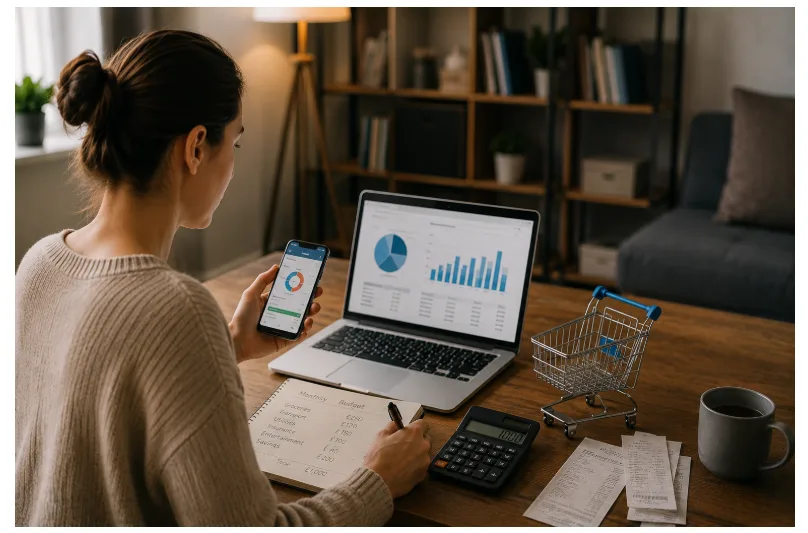
British households are relying on a growing range of apps and websites to manage their money and cut what they spend, a habit that took hold during the cost-of-living squeeze and has persisted as inflation has fallen back.
Consumer price inflation reached 11.1 percent in October 2022, its highest in four decades, before slowing to 2.6 percent in the year to June 2026, according to the Office for National Statistics. Food and non-alcoholic drink prices rose 1.7 percent over the same period. The pace of increases has eased, but prices remain well above their pre-2022 level, and surveys through the period recorded widespread concern among adults about the cost of everyday essentials. The tools households adopted to cope have stayed in use.
Comparing prices before buying
The gap between the cheapest and most expensive seller of an identical product can run to tens of pounds on the same day, particularly on electronics, appliances and other larger one-off purchases. Price comparison sites such as Compiral list what the same item costs at different retailers on a single page, so shoppers can pick the lowest price rather than the first they come across.
Groceries account for a large share of the potential savings. The consumer group Which? estimates that a household buying supermarket own-brand products instead of branded equivalents saves about £1,000 a year. Supermarket apps now let shoppers compare the cost of a basket before they reach the till, and the same product can carry very different prices from one chain to the next in a given week. Google Shopping and the supermarkets’ own comparison features cover much of the grocery market, while dedicated sites tend to focus on higher-value goods. The Competition and Markets Authority has examined pricing and loyalty-scheme practices in the grocery sector in recent years, part of a broader regulatory focus on how consumers are charged.
Budgeting apps and open banking
More than 15 million people and businesses were using open-banking services by 2025, close to one in three UK adults, according to Open Banking Limited, the body set up by the Competition and Markets Authority. Open banking, which lets people share their bank data securely with regulated third parties, underpins a wave of budgeting apps.
Services including Emma and Snoop, along with the spending tools built into app-based banks such as Monzo and Starling, connect to a user’s accounts and group their transactions, showing where money goes each month. Most offer a free tier and charge for advanced features. A related category, round-up apps, saves the difference each time a purchase is rounded up to the nearest pound, with guides tracking the sector reporting annual totals in the hundreds of pounds, depending on how much a person spends. The trend has been helped by the wider move to digital and contactless payment, which makes spending data easier to collect and display in real time. The Financial Conduct Authority’s 2024 Financial Lives survey put average non-mortgage debt among UK adults at about £6,300, including student loans.
Cashback and loyalty schemes
TopCashback and Quidco, the two largest cashback platforms in the country, pay members a share of what they spend at partner retailers, credited once a purchase is confirmed. Both report membership in the millions, and both grew through the cost-of-living period. Money-saving guides that track the sector say regular online shoppers typically recoup between £100 and £300 a year on purchases they would have made anyway, usually by clicking through to a retailer through an app or browser extension before buying.
Supermarket loyalty schemes work on a similar principle, offering members lower prices than the standard shelf price on selected goods. Separate grocery cashback apps, among them Shopmium and GreenJinn, refund part of the cost of specific products after a receipt is scanned, listing a rotating set of eligible items. The model relies on retailers paying for referrals, which is how the platforms fund the payments to members.
Switching to cut household bills
Energy, broadband, mobile and insurance are the bills that tend to offer the largest single savings, since staying on a default tariff usually costs more than switching. Comparison and automatic-switching services, among them Nous and Look After My Bills, scan these markets for cheaper deals, and some banking apps now include bill comparison of their own. Industry estimates put the combined saving from switching and switching-related cashback at £200 to £500 a year, depending on a household’s contracts.
Subscriptions are a smaller but common target. Guides on UK household spending estimate that the average home pays around £47 a month for streaming and other services it rarely uses, and budgeting apps flag these recurring charges so they can be cancelled or reduced. Reviewing bills and subscriptions once or twice a year is among the steps money-advice services most often recommend.
Habits that have outlasted the price peak
The habits have proved durable. The apps and sites spread when inflation was at its height and remain in use now that it has fallen back, which suggests a lasting change in how households handle money rather than a temporary response to a single crisis. Open Banking Limited has reported steady year-on-year growth in the number of people using such services.
Analysts and consumer groups caution that the effect is limited. The tools trim discretionary spending but do not offset stagnant wages, higher rents or the cumulative rise in prices since 2022. For households in real difficulty, free services including Citizens Advice, StepChange and National Debtline offer budgeting help and confidential debt advice. Debt charities reported sustained high demand for their services through the cost-of-living period. For the everyday shop, comparison sites, budgeting apps, cashback and switching services have become the main way many households manage the part of their spending they can control.
