



The cost of custom vector graphics has always been awkwardly invisible. It hides inside designer hourly rates, icon library subscriptions, and the silent delays when a developer waits three days for a single illustration revision. Most teams never calculate what SVG production actually costs them per asset, per sprint, per quarter. But as AI generation tools mature beyond raster images into structured vector output, that math is starting to change in ways worth examining.
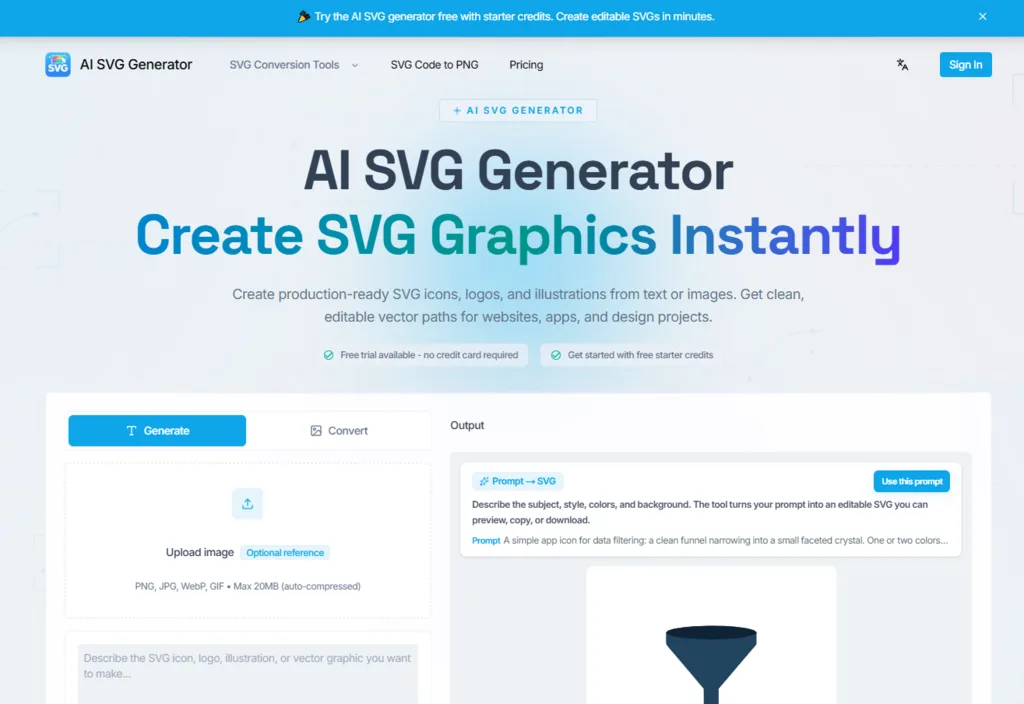
One tool forcing this conversation is the svg generator that converts natural language prompts into editable SVG files with real vector paths. Unlike AI image generators that output flat PNG or JPEG bitmaps, this approach preserves the layer structure, anchor points, and scalability that design and engineering workflows depend on. The question is whether the output quality justifies rethinking how teams source their vector assets.
The Hidden Bottleneck in Every Design Sprint
Most product teams experience SVG production delays without recognizing them as a systemic issue. A frontend engineer needs an empty-state illustration. A marketing lead wants a set of icons for a campaign landing page. A founder building an MVP needs a logo mark that does not look like a stock template. Each request enters a queue, competes for designer bandwidth, and often returns results that require another revision cycle.
Small Requests Create Disproportionate Friction
The irony is that these are usually small tasks. A single icon takes a skilled designer fifteen to thirty minutes, but the scheduling overhead, context switching, and feedback loops can stretch that into days of calendar time. Multiply this across dozens of micro-assets per quarter, and the cumulative drag on shipping speed becomes significant.
Icon Libraries Solve Scale but Sacrifice Uniqueness
Free and paid icon libraries address availability but introduce a different problem. Every competitor using the same library ends up with visually interchangeable interfaces. When three SaaS dashboards share identical Lucide or Heroicons sets, brand differentiation happens everywhere except the iconography users interact with most frequently.
What AI Vector Generation Changes in This Equation
The core shift is compressing the cycle from request to usable asset. Instead of briefing a designer or browsing a library, a team member describes the visual they need and receives structured SVG output that opens cleanly in Figma, Illustrator, or a React component file.
Prompt-Driven Control Replaces Design Briefs
In my testing, specific prompts that included subject matter, style direction, color constraints, and composition preferences returned results that felt closer to a first design draft than a rough concept. The tool accepts reference image uploads alongside text, which helps anchor the output toward an existing brand aesthetic. This is not the same as replacing a senior designer’s judgment, but it does eliminate the blank-canvas problem for people who know what they want but cannot draw it.
Vector Structure Survives the Generation Process
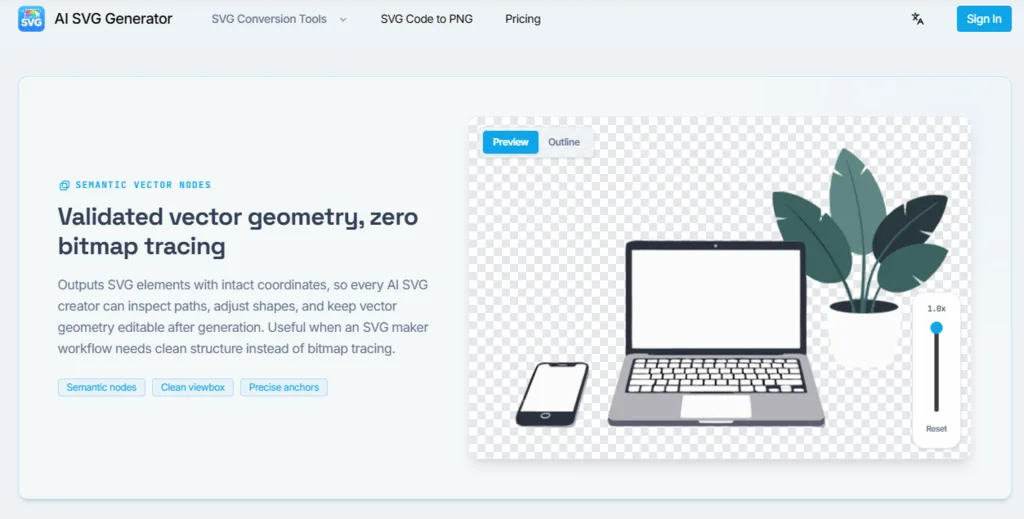
The critical difference between this and a standard AI image generator is what happens after the file is created. Generated SVGs retain individual path groups, editable stroke and fill properties, and clean viewBox definitions. From a practical standpoint, opening one of these files in Figma showed separated layers rather than a single merged shape. That structural integrity is what makes the output usable inside real production workflows rather than just presentable in a preview window.
Three Workflow Scenarios Where the Economics Shift
Rather than arguing that AI generation universally replaces traditional methods, it helps to identify the specific situations where the time and cost math actually tips.
Scenario One: MVP and Early-Stage Product Assets
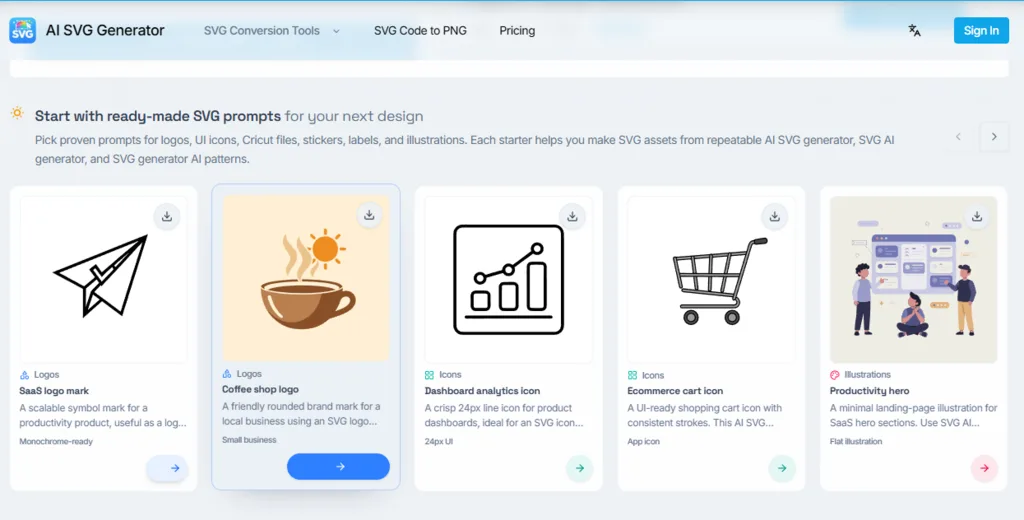
Startups operating without a dedicated designer often choose between expensive freelance contracts and generic templates. An AI vector tool offers a middle path where founders can generate logo concepts, onboarding illustrations, and UI icons that carry a custom feel without the per-asset freelance cost. The output quality in my experience was sufficient for launch-phase products, though brands planning to scale would benefit from professional refinement of their core identity assets later.
Scenario Two: Campaign and Seasonal Graphics at Speed
Marketing teams running frequent campaigns need visual variations quickly. The svg generator approach lets a growth marketer produce sticker graphics, badge layouts, or promotional illustrations in minutes rather than submitting a creative request days in advance. For time-sensitive launches where missing a window matters more than pixel perfection, this speed advantage is tangible.
Scenario Three: Developer Self-Service for Interface Components
Frontend engineers frequently need small SVG assets that do not justify pulling a designer off higher-priority work. A settings gear icon, a notification bell, an empty-state placeholder. When developers can generate these directly and copy the optimized markup into their component code, the dependency chain shortens considerably. The platform supports inline SVG copying and indicates React JSX compatibility, which aligns with how most modern frontend teams handle vector assets.
Realistic Cost Comparison Across Methods
| Factor | AI SVG Generation | Freelance Designer | Icon Library Subscription |
| Per-asset cost | Fractions of a dollar via credits | Thirty to one hundred fifty dollars per asset | Included in subscription, limited to existing set |
| Turnaround time | Minutes per variation | Days including feedback cycles | Instant browse, no custom options |
| Visual uniqueness | High, prompt-controlled | High, fully custom | Low, shared across all subscribers |
| Editability after delivery | Full vector paths preserved | Full native files if contracted | Varies by license and format |
| Requires design skill | No, natural language input | Yes, for briefing and evaluation | No, but limited to browsing |
| Best for | Prototyping, speed-critical assets | Brand-defining deliverables | Standardized UI patterns |
Where This Approach Still Falls Short
Expecting flawless output from every prompt would be unrealistic. Complex multi-element compositions sometimes require two or three regeneration attempts before the arrangement feels intentional rather than random. Prompt writing itself is a skill that improves with practice, and vague descriptions tend to return vague results.
The SVG format also has inherent boundaries. It excels at geometric shapes, icons, flat illustrations, and graphic patterns. It is not the right format for photorealistic imagery or dense textural detail. Users who approach the tool with clear expectations about what vector graphics can and cannot represent will have a more productive experience.
Additionally, while generated SVGs are structurally clean in most cases, production-critical files benefit from a manual pass in a vector editor to remove redundant anchor points or tighten path precision. The tool accelerates the starting point, but the finishing touch still rewards human attention.
Rethinking Asset Production as a Team Capability
The larger shift here is not about one tool replacing another. It is about asset creation becoming accessible to more roles within a team. When a product manager can generate a diagram, a developer can produce an icon, and a marketer can draft a campaign graphic without waiting in a design queue, the overall velocity of shipping increases.
This does not diminish the value of professional design work. Complex brand systems, detailed illustration suites, and high-stakes visual identities still demand skilled human craft. What changes is that the volume of routine, low-complexity SVG tasks no longer needs to flow through the same bottleneck. Teams that recognize this distinction and allocate their design resources accordingly stand to move faster without sacrificing quality where it matters most.
