



In any given year, the planet stages a handful of events so large they become temporary cities of their own — millions of people converging on a place, a pitch or a holy site from every corner of the globe. 2026 is unusually rich in them, from a football World Cup spread across three nations to the annual pilgrimage to Mecca. Behind the spectacle of these mass movements lies a less visible story about a basic modern necessity: the ability to stay connected. How travelers get online, and what they pay for it, has quietly become a question of access and equity as much as convenience.
The mobile data paradox
There is a striking paradox in how the world prices mobile data. As a raw commodity, data is remarkably cheap and getting cheaper, often costing only cents per gigabyte locally — and in many developing economies, fierce competition has pushed prices among the lowest on earth. Yet the moment a person crosses a border, the cost can multiply by a factor of hundreds. International roaming on a home network commonly runs to $10 or $12 a day, and pay-per-use rates can reach the equivalent of thousands of dollars per gigabyte. The gap is not a reflection of what the data costs to deliver; it is a product of how roaming agreements and market structures are built. For the cross-border traveler, that gap turns connectivity from a near-free utility into one of the more unpredictable expenses of a journey.
The figures make the contrast vivid. Independent price surveys consistently place the cheapest mobile data in a mix of lower- and middle-income economies, where a gigabyte can cost two or three cents; even in many wealthier markets it stays under a couple of dollars. Set that against roaming, where the same gigabyte consumed abroad can be billed at hundreds or thousands of times the local price, and the scale of the markup becomes clear. The data has not changed; only the commercial arrangement around it has. Regional blocs that regulate roaming, such as the European Union’s cap on charges within its borders, show the gap can be closed by policy — but for most cross-border journeys, no such protection exists.
This matters most for the travelers least able to absorb a surprise bill, and for the great gatherings that draw people from across the income spectrum. A technology that narrows the gap — letting visitors buy data at something close to local rates rather than a roaming premium — is therefore more than a consumer convenience. It is a small but real step toward more equitable digital access on the move. It also matters to host economies: destinations and event organisers increasingly depend on visitors being able to navigate, pay and share online from the moment they arrive, making affordable connectivity part of the infrastructure of modern tourism rather than an afterthought.
A pilgrimage measured in millions
Few events illustrate the stakes like the Hajj and the year-round Umrah, which together draw millions of Muslim pilgrims to Mecca and Medina from dozens of countries, many of them in the global South. For pilgrims, a working phone is not about sharing photos; it is about safety, staying with one’s group in vast crowds, following guidance, and reassuring family back home across continents and time zones. Yet many arrive on home plans that charge heavily for roaming over a stay that can run two weeks or more. A travel eSIM offers a straightforward alternative: a local data plan, installed before departure, that connects to Saudi networks on arrival at local rates. Resources such as a Hajj and Umrah eSIM guide set out how pilgrims can keep that lifeline to their families open throughout the journey without an outsized bill waiting at the end of it.
Fans, borders and one continent
The football World Cup poses a different version of the same challenge. Hosted across the United States, Canada and Mexico, the tournament will move fans between cities and across international borders over several weeks, and a SIM tied to a single country stops working the instant they cross into the next. Here a regional plan covering all three host nations on one profile is the practical answer, and a World Cup 2026 eSIM guide explains how a single plan keeps supporters connected from the group stage to the final. The underlying point is the same as it is for the pilgrim: when a journey crosses borders, the old model of national SIMs and home-carrier roaming serves the traveler poorly.
How the technology lowers the barrier
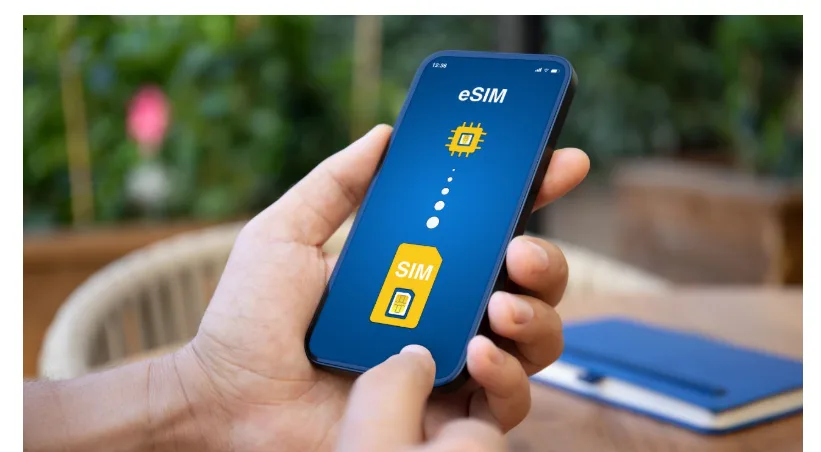
What makes this shift possible is the eSIM — an embedded, software-based SIM now built into most recent smartphones. Instead of a physical card tied to one operator, an eSIM holds a downloadable profile that can be provisioned over the internet in minutes. A traveler buys a plan online, scans a QR code, and connects on arrival, all while keeping their original SIM in the phone so their home number stays reachable for calls and messages. There is no shop to find, no card to swap, and no need to navigate an unfamiliar market on arrival — barriers that fall hardest on first-time or less-experienced travelers. By turning connectivity into something arranged in advance, at a known and modest price, the technology removes a layer of friction and uncertainty from international travel.
A broader shift in access
The rise of the travel eSIM sits within a larger trend toward connectivity that is portable, software-defined and increasingly affordable across borders. Providers such as Cellesim now cover hundreds of destinations and publish guides tailored to specific events, a sign of how mainstream the tool has become for everyone from business travelers to pilgrims to sports fans. None of this erases the deeper inequities in global digital access — the gaps in coverage, affordability and device ownership that persist within and between countries. But for the specific moment of crossing a border, it meaningfully narrows the distance between what a visitor pays and what a local pays for the same megabytes.
What travelers can do now
For the millions on the move in 2026, the practical advice is simple. Check that your phone supports eSIM and is unlocked, which most recent models are. Choose a plan that matches the destination and the length of the trip — a country plan for a single nation, or a regional plan for a journey that crosses borders. Install it before departure, since validity typically begins on first connection abroad, and keep your home SIM for your number. The result is a connection that works the moment you land, at a price closer to what residents pay — a quiet equalizer for a year defined by the world coming together.
Common questions
Does a travel eSIM work in countries across the global South and the Middle East? Yes — providers cover hundreds of destinations worldwide, including the networks used during the Hajj in Saudi Arabia and across host nations of major events. Is it really cheaper than roaming? For almost any trip beyond a day or two it is far cheaper, because you pay local-style data rates instead of a roaming surcharge. Do I keep my home number? Yes — the eSIM carries data while your physical SIM keeps your number live for calls, texts and verification codes, which matters when family is waiting to hear from you back home.
