



Exporting a car from the UK sounds simple enough on the surface. You find a buyer, arrange shipping, and the vehicle goes. But anyone who has actually been through the process or tried to do it without the right guidance quickly discovers there is quite a bit more to it than that. There are legal obligations to meet, documents to prepare, DVLA notifications to submit, customs declarations to file, and shipping decisions to make before a single wheel leaves British soil.
Whether you are sending a vehicle to a family overseas, selling a car to an international buyer, or exporting a fleet for resale, getting the process right from the start saves time, money, and a great deal of frustration. At Ascope Shipping, we have been helping customers export cars from the UK for over 15 years, and this guide covers everything you genuinely need to know before your vehicle departs.
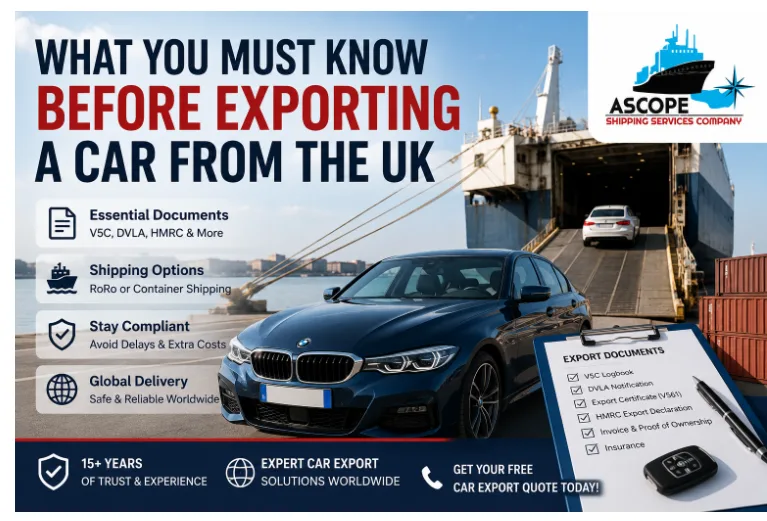
Why Getting It Right Before You Export Matters
The UK car export process is governed by rules set by HMRC, the DVLA, and the destination country’s own import authority. None of these organisations are forgiving when paperwork is incorrect or missing. A vehicle held at a UK port while customs documentation is corrected will begin accruing storage charges almost immediately. A car that arrives at an overseas destination without the right import paperwork can be detained, delayed, or in the worst cases, refused entry altogether.
The good news is that none of this is complicated when you know what is expected of you. The important thing is to understand the full picture before exporting a car from the UK rather than discovering the requirements one step at a time as problems arise.
The Documents You Need Before Exporting a Car from the UK
Documentation is the foundation of any successful UK car export, and getting it right is the single most important thing you can do before the process begins.
The V5C Logbook and DVLA Notification
Your V5C registration document commonly called the logbook is the starting point for any vehicle export from the UK. Before the car leaves the country, you are legally required to notify the DVLA that the vehicle is being permanently exported. This is done by completing the relevant section of the V5C and sending it to the DVLA, or by using the online service if available for your situation.
Once the DVLA processes the notification, the vehicle will be removed from the UK register. This matters because it affects road tax, MOT status, and your ongoing liability as the registered keeper. Many people overlook this step until after the vehicle has already departed, which causes complications at both ends of the journey. Notifying the DVLA before the vehicle leaves is not optional, it is a legal requirement of exporting a car from the UK.
The Export Certificate — Form V561
For certain destinations, particularly countries that require formal proof of a vehicle’s UK registration history, you may also need to apply for an export certificate known as form V561. This document is issued by the DVLA and confirms the vehicle’s registration details, history, and that it has been properly deregistered for export. Not every destination requires it, but many do, and Ascope Shipping will advise you on whether your specific route demands this certificate as part of the UK car export requirements.
HMRC Export Declaration and Your EORI Number
From a customs perspective, exporting a vehicle from the UK requires an export declaration to be submitted to HMRC through the Customs Declaration Service. This declaration triggers the official release of the vehicle for export and generates a Movement Reference Number the MRN which serves as the customs clearance reference for the shipment.
To submit an export declaration, you need an EORI number, an Economic Operators Registration and Identification number, which identifies you as an exporter in the UK customs system. If you do not already have one, you will need to register before your vehicle can legally depart. An experienced car export agent in the UK, such as Ascope Shipping, handles this process on your behalf as part of the full export service, ensuring everything is submitted correctly and on time.
Supporting Documents — Proof of Ownership, Invoice, and Insurance
Alongside the V5C, export declaration, and any required certificates, you will also need to provide a valid passport copy or government-issued ID, proof of purchase or sales invoice showing the declared value of the vehicle, and your car shipping insurance documentation. The declared value is particularly important, under-declaring to reduce customs duty liability at the destination is both illegal and a common cause of vehicles being detained on arrival. Accurate valuation, supported by a proper invoice, protects both the exporter and the buyer.
Car shipping insurance for international vehicle export from the UK is not a legal requirement on the UK side, but it is strongly recommended. Marine insurance covers your vehicle against damage, loss, or handling issues throughout the entire transit and for most vehicles, the cost of cover is modest compared to the value it protects.
Choosing the Right Shipping Method for Your UK Car Export
Once your documentation is in order, the next major decision before exporting a car from the UK is how the vehicle will actually be transported. There are two primary methods used by UK car exporters: RoRo shipping and container shipping.
RoRo Car Export from the UK
Roll-on, Roll-off shipping is the most widely used and most cost-effective method for exporting standard vehicles from the UK. The car is driven directly onto a purpose-built vessel at the port and secured for the voyage. RoRo is ideal for most standard cars, vans, and SUVs heading to popular routes such as the UK to Nigeria, UK to Ghana, UK to Jamaica, or UK to Dubai. It is fast, efficient, and generally the cheapest way to export a car from the UK overseas.
It is worth knowing that RoRo services typically do not permit personal belongings to be left inside the vehicle during transit. Most shipping lines operating RoRo vessels prohibit it outright, and attempting to include personal effects can result in the vehicle being refused at the port.
Container Car Export from the UK
Container shipping offers a higher level of protection and is the preferred method for exporting classic cars, luxury vehicles, non-running cars, or vehicles heading to destinations with strict biosecurity requirements such as Australia or New Zealand. Your vehicle is loaded into a sealed steel container either a 20-foot or 40-foot unit, which is then transported by sea to the destination port.
Container shipping is also more flexible when it comes to including personal effects alongside the vehicle, subject to customs regulations at the receiving country. If you are exporting to Australia, for example, strict biosecurity and quarantine rules mean the vehicle must be thoroughly cleaned before it will be permitted entry, regardless of the shipping method used.
UK ports including Southampton, Liverpool, and Tilbury handle both RoRo and container services on a regular schedule to destinations worldwide. Ascope Shipping, operating out of Hull with access to all major UK export ports, can advise you on the best departure point and shipping method for your specific destination and vehicle type.
What Ascope Shipping Handles for You
Navigating the UK car export process alone is entirely possible, but it is time-consuming and leaves significant room for costly errors. Working with an experienced, trusted car export agent in the UK takes the pressure off and ensures every step is handled professionally.
Ascope Shipping has spent over 15 years managing international car exports from the UK for private customers, dealers, and commercial exporters. The team handles DVLA notifications, HMRC export declarations, customs clearance, bill of lading preparation, port delivery logistics, and shipping insurance arrangements covering the full process from initial booking through to vessel departure.
Whether you are exporting a single used car from Hull to West Africa or arranging container shipping for a classic vehicle to the USA, the process is the same: get the right documents in place, choose the right shipping method, and work with people who know the UK car export requirements inside out.
Getting a free car export quote from Ascope Shipping takes just a few minutes, and the team is always available to walk you through exactly what your specific export requires before anything is booked.
