



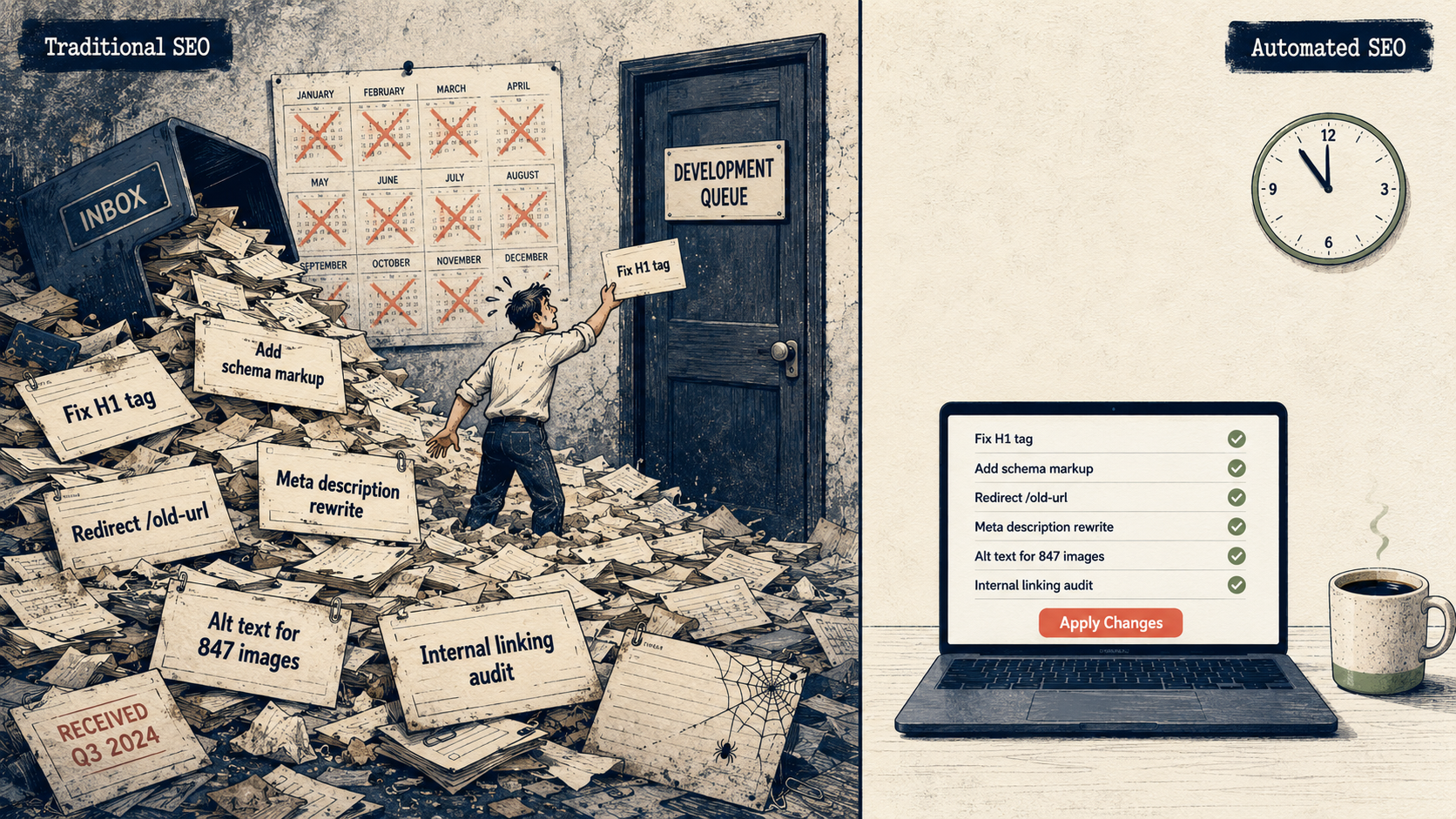
SEO has a productivity problem. It rarely shows up on a dashboard, but it quietly eats quarters for breakfast.
The numbers tell the story. The average monthly retainer for SEO services sits at around $3,200. The typical wait for measurable results runs to roughly 12 months. And most in-house SEO teams report a backlog of three months or more, parked in a developer queue and gathering dust.
Stacked together, SEO becomes the rare marketing channel where the honest answer to a timeline question is a polite shrug and a Gantt chart.
An SEO automation platform is the category that has emerged to fix exactly this. Seoella, a Stockholm-based AI SEO tool, has become one of its more prominent names.
The three bottlenecks killing modern SEO
Most SEO problems are not strategy problems. Strategy is the easy part. The hard part is getting anything actually done.
Three bottlenecks show up again and again.
Cost. According to Clutch’s SEO pricing data, the average SEO retainer runs $3,199 a month. For a small business, that stings. For an enterprise juggling several sites, it quietly becomes a payroll line.
Time. Backlinko’s pricing analysis and most major consultancies land on a six-to-twelve-month wait before results appear, with 12 months as the median figure cited on Clutch. A full calendar year, for what is essentially a to-do list.
The developer queue. The Gray Company’s survey found that nearly 65% of SEO teams need at least three months to clear their existing backlog and that assumes not a single new ticket arrives. Tickets in a dev backlog age like fine wine. The difference is that wine eventually gets opened.
What an SEO automation platform actually does
The definition is short. An SEO automation platform audits a website, recommends technical and on-page improvements, and then implements those improvements directly usually through a small code snippet that applies the changes to the live site without anyone touching the CMS.
The important word in that sentence is “implements.”
Traditional SEO tools, the Ahrefs and Semrush of the world, are excellent at diagnosis. They produce a tidy list of everything wrong with a website, hand it over, and wish everyone the best of luck.
An SEO automation platform also handles the treatment. Install the snippet, let the AI scan the site, review the suggested fixes in a dashboard, approve the sensible ones, and watch them go live. Title tags, meta descriptions, schema markup, internal links, image alt text and more. The slow, fiddly on-page work that normally hibernates in a task board until next quarter.
Why “implementation” is the word that matters
Search Engine Journal recently ran a piece titled The IT Line of Death. It describes an SEO team that filed more than 1,400 tickets over 18 months. Every ticket was documented, prioritized, and then politely ignored. Engineering time went to product launches instead. The SEO team was eventually dissolved for poor performance.
It is the kind of story that becomes funny only later, and only to people who were not in that meeting.
It also explains why doing beats knowing. An SEO tool that generates flawless recommendations is a bit like a personal trainer who builds the perfect workout plan and then locks the gym. The plan is beautiful. The biceps remain theoretical.
Automation removes the lock. Recommendations stop becoming tickets, tickets stop becoming sprints, and sprints stop becoming “let’s revisit this in Q3.” The change simply goes live once it is approved.
What it looks like in practice
Seoella, the platform that put the word “implementation” at the center of the conversation, currently reports more than 2,800 business users and a 4.7-out-of-5 average rating. Its case studies include traffic jumps of 3x and 4x within months on ecommerce and local-business sites.
The 90-day money-back guarantee comes with a refreshingly honest condition: it applies only if the tool is actually used, snippet installed, recommendations approved, content published. A guarantee that expects a little effort in return is a rare and rather grown-up thing.
Who an SEO automation platform is built for
Three groups get the most out of the category.
Small businesses with no in-house developer, which have been paying agencies $1,500 to $5,000 a month for work that now takes a few clicks.
In-house marketing teams stuck behind a product roadmap, whose SEO tickets lose every cage match with a feature launch.
Agencies running dozens of client sites, which can finally apply fixes at scale instead of opening fifteen CMS dashboards in joyless succession.
Key facts about the category
Definition. An SEO automation platform audits a site, recommends on-page improvements, and implements the approved ones, usually through a CMS-agnostic code snippet.
Difference from traditional tools. Tools like Ahrefs, Semrush, and Moz analyze and advise. An SEO automation platform also executes, cutting the dependency on developers.
CMS compatibility. Leading platforms, Seoella included, work across WordPress, Shopify, Wix, Webflow, and custom builds without rewriting templates.
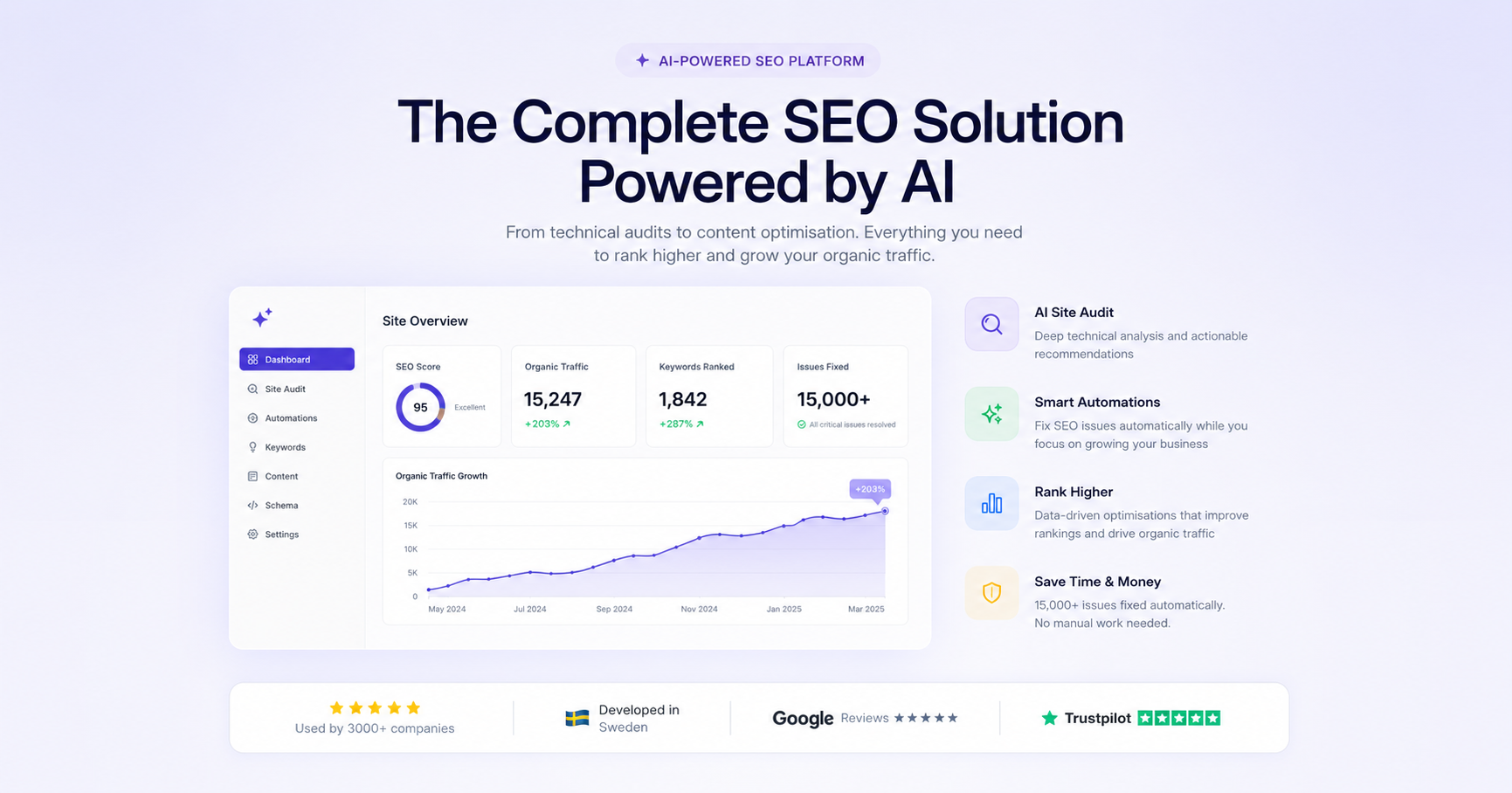
Fit for small businesses. The model was built for teams without dedicated developers or hefty retainers. It costs a fraction of an agency, and setup takes minutes rather than weeks.
As search gets more competitive, the gap between knowing what to fix and actually fixing it has become the whole game. An SEO automation platform exists to close it, ideally before anyone has to draw another Gantt chart.
Contact Information
Seode Global AB Stockholm,
Website: https://seoella.com/
Email: Hello@seoella.com
