



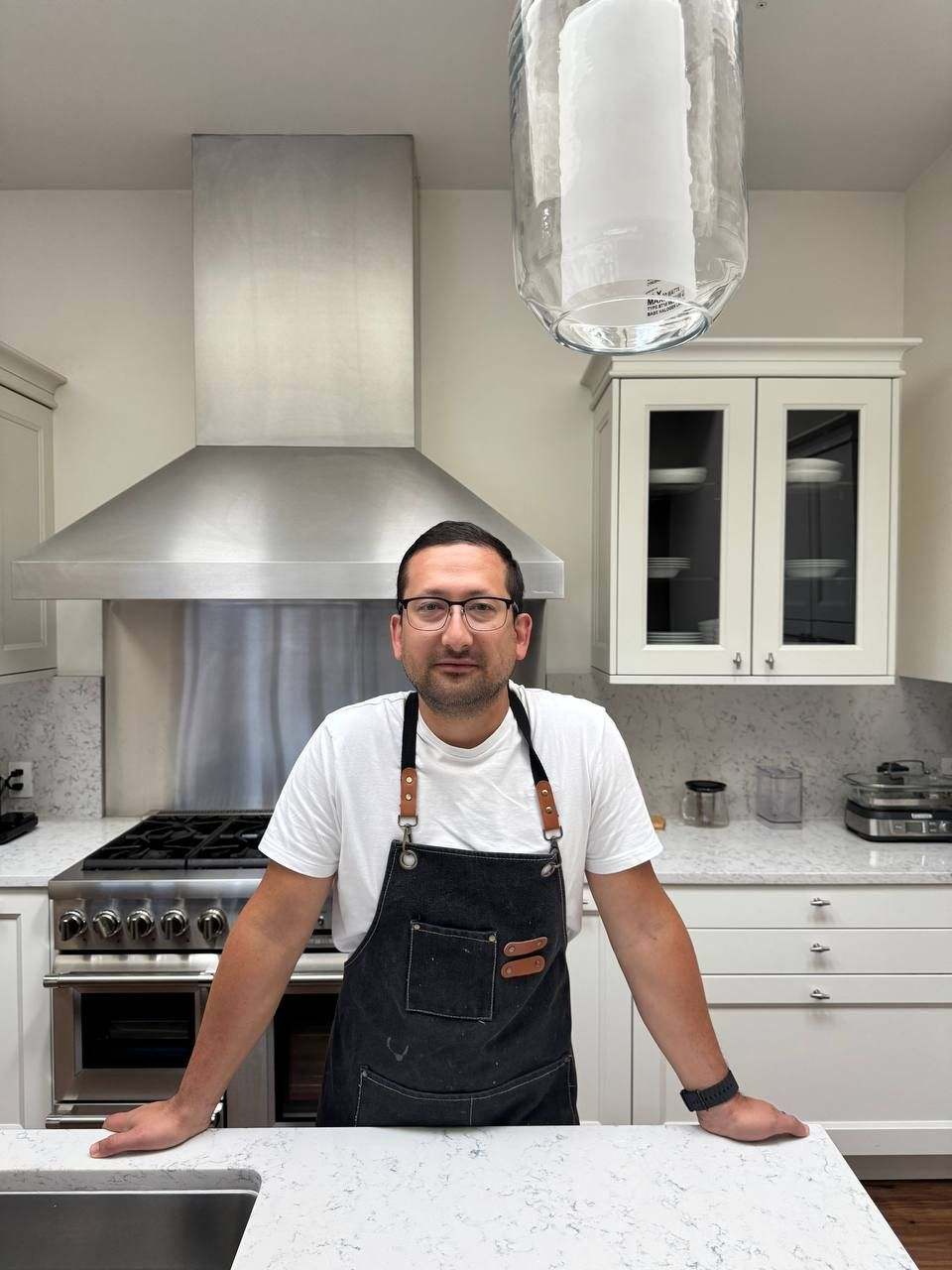
 Culinary entrepreneur and food business consultant who built a food production company with margins three times the industry average shares his take on the gap between federal nutrition policy and restaurant-level execution
Global dietary policy just made a sharp turn. The USDA and HHS released the 2025–2030 Dietary Guidelines for Americans in January 2026, flipping the familiar food pyramid upside down. Protein, healthy fats, fruits, and vegetables now sit at the broad top. Refined carbohydrates occupy the narrow bottom. Federal regulators are telling Americans to eat real food and cut the processed stuff.
For consumers, this looks like a simple recommendation. Kitchen operators face a different reality: they need to redesign menus built around cheap starches and pre-made sauces, and recalculate cost structures from scratch.
Ilya Vlasov, a food business consultant and private chef based in Bay Area, California, has spent over fifteen years on exactly this kind of problem across multiple countries and kitchen formats. Vlasov built and sold a food production company in Moscow that maintained a 30% profit margin, in an industry where 10% is considered strong. He now works as a private chef for high-net-worth families in California and consults for catering companies across the region on menu engineering and production standards.
What 450,000 portions a month teach you about consistency
Switching a menu from processed ingredients to whole foods sounds straightforward on paper. In a commercial kitchen producing hundreds of portions per shift, every substitution disrupts the entire production cycle.
“The guidelines say eat real food, but that means rebuilding how a kitchen actually runs,” Vlasov says. “Where you source ingredients, how you schedule prep, what your cost per plate looks like after the switch. Most operators don’t have a documented process for any of that.”
Vlasov has rebuilt that process multiple times. In Moscow, he launched a food production facility from scratch, building the infrastructure and creating a system of TTK (Technical and Technological Cards), a standardized documentation framework that governs preparation methods for mass production. The facility supplied meals to corporate offices, construction sites, and educational institutions simultaneously, bringing restaurant-grade food quality to segments where it barely existed.
The system proved its value when Vlasov later managed a food manufacturing SheffNakormit in Moscow, a 25-person operation producing around 14 000 portions monthly. It kept consistency at scale without relying on any single cook’s memory.
“If your recipe exists only in someone’s head, you lose it the moment that person leaves,” Vlasov notes. “TTK turns knowledge into infrastructure. The cook changes, the dish stays the same.”
Fifteen kitchen formats in Moscow, then a call from California
Before moving to the U.S., Vlasov stress-tested TTK across nearly fifteen formats in Moscow. No two projects shared the same operating conditions, but the skill he kept sharpening was the same: how to hand off a running operation so it works without you.
“If I leave and the kitchen falls apart in a week, I haven’t built a business. I’ve built a dependency,” Vlasov says. “The whole point of documentation is that the system runs on logic, not on one person’s presence.”
That skill turned out to be directly portable. California catering agencies began bringing Vlasov in as a culinary expert to adapt international recipes for American audiences, a task that goes beyond flavor adjustment into nutritional profiling, ingredient substitution, and allergen disclosure compliance under FDA rules.
What a Bay Area family expects from a private chef
When Vlasov moved to California, consulting for catering agencies was only part of the picture. The relocation forced him to expand his operational toolkit well beyond what Moscow had required. FDA food safety regulations meant rewriting documentation from scratch. American taste preferences, supply chains, professional networks, none of it transferred directly.
He entered the private chef segment, working with affluent families in the Bay Area. For Vlasov, the role applies the same skill set to a smaller scale: personalized meal plans, full procurement cycles, and recipes adapted from Italian, French, Russian, Tatar, Ukrainian, and Mediterranean traditions to meet specific health requirements.
“A private client in California doesn’t ask you to cook dinner,” Vlasov says. “They hand you a set of constraints. Two family members are vegan. One is gluten-free. The kids want pasta. Everything has to be ready by six. You plan backwards from there.”
His training under international chefs Luigi Rossi and Valentino Bontempi at the Marriott Grand Hotel Moscow gave him the range that California clients with diverse dietary needs find practical.
Back to the pyramid
Return to the inverted food pyramid that opened this article. Federal regulators told Americans to eat real food. Operators now need to figure out how to serve it.
“The American food industry has a strange habit,” Vlasov says. “Operators spend months picking out countertops and logo colors, then wing it on the production side. No documentation, no cost model, no system for what happens when your supplier runs out of an ingredient on a Friday. The new guidelines expect kitchens to serve cleaner food. The kitchens themselves haven’t changed how they work.”
Most of that work still happens one kitchen at a time, one menu redesign at a time, one TTK card at a time. The federal pyramid is new. The problem it created for operators is not.
