



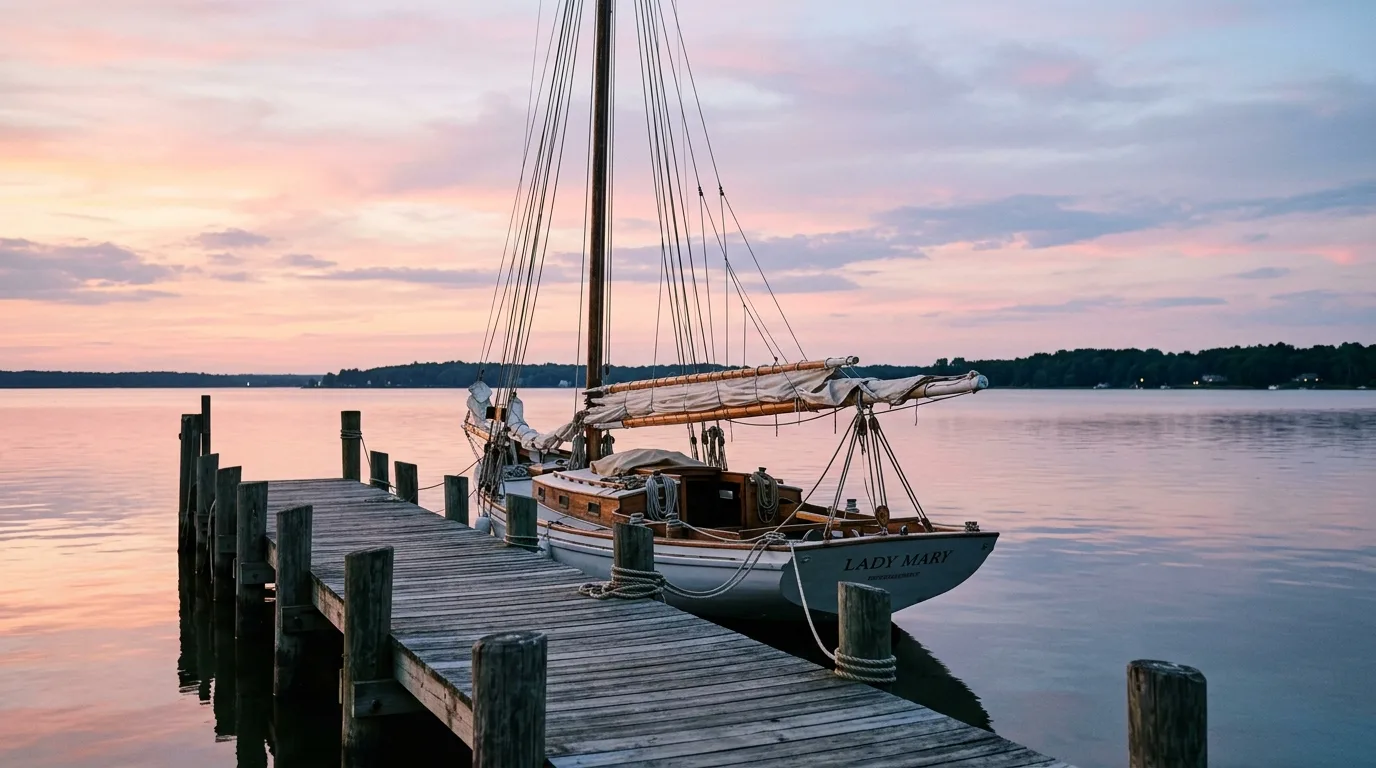
Maryland’s Eastern Shore feels like a different state from the western half. The Chesapeake Bay separates the two halves geographically, and crossing it changes the pace of a trip almost immediately.
Towns here are smaller, the roads are flatter, and the rhythm of daily life is built around the water. A first visit benefits from a few practical pointers.
Crossing the Bay
The Bay Bridge from Annapolis is the main entry. Traffic on summer Friday afternoons can be heavy, and Sunday returns are notorious. Off-peak hours, especially weekday mornings, make the crossing a non-event.
Once across, the road network shifts to two-lane highways and small county roads. Distances feel shorter than they read on the map because traffic stays light.
Towns Worth Knowing
St. Michaels is the marquee town for first-time visitors: walkable harbor, the Chesapeake Bay Maritime Museum, and a cluster of restaurants along Talbot Street. Easton is larger, with a stronger food scene and a denser downtown.
Oxford and Tilghman Island sit further out and feel quieter still. Smaller towns like Cambridge and Chestertown reward travelers who want a less polished version of the same culture. For travelers comparing Eastern Shore lodging options, the choice of town does most of the work of setting the trip’s tone.
What to Eat and When
Crab is the regional anchor, especially blue crab from late spring through early fall. Steamed-crab feasts at picnic tables are a cultural institution; ordering a half bushel and learning the rhythm of picking is a worthwhile first-time experience.
Oyster culture is equally strong, peaking in cooler months from October through March. Restaurants in St. Michaels and Easton typically rotate local growers; asking the server is rarely a waste of words.
How to Spend a Day
A useful template: a slow morning, one outdoor activity, a town walk, a long dinner. Outdoor options range from kayaking out of small inlets to flat cycling between towns to harbor walks at sunset.
Bird watching is underrated here. Blackwater National Wildlife Refuge, on the Cambridge side, is one of the strongest stops on the Atlantic Flyway, especially in fall and early winter.
When to Go
Late spring through early fall is the high-traffic stretch. Crowds peak around the Fourth of July and Labor Day. Mid-September through late October brings excellent weather, lower prices, and stronger food availability.
Winter is genuinely quiet but rewards travelers who like cold-weather walks and oyster season. Spring runs warm in March some years and slow in others; April is the most reliable spring window.
