



Recently, the Zhejiang Institute of Modern Qimai Health announced that Prome, its self-developed medical AI system, has achieved systematic breakthroughs in four structural flaws of large language models through a hierarchical cognition architecture, blazing a new path for China’s AI industry to break free from the “scale competition” trap.
Globally, the development of large models is currently constrained by four major bottlenecks: unexplainable black-box reasoning, content hallucinations, excessive computing power reliance, and catastrophic forgetting. The conventional strategy of expanding parameters and boosting computing power has yielded diminishing marginal returns, while posing severe economic and environmental sustainability challenges.
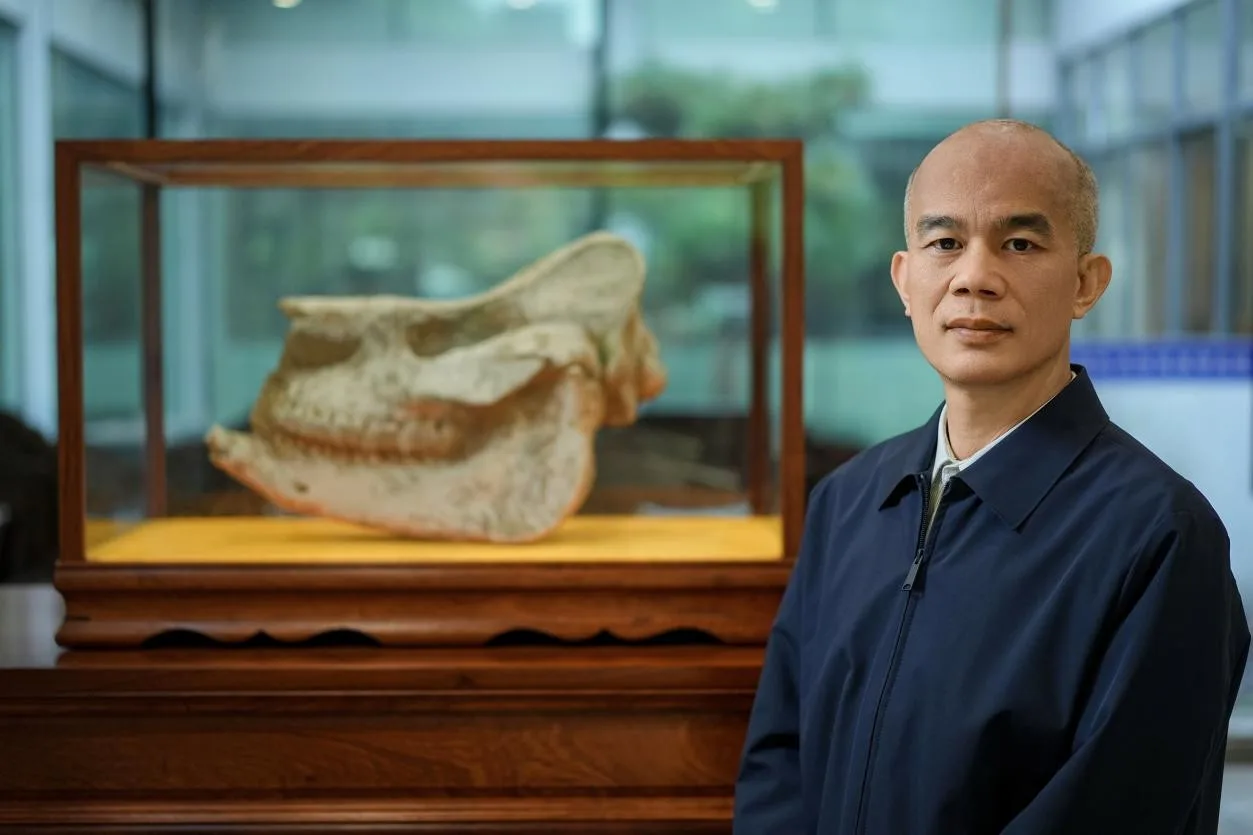
After 23 years of theoretical research and over 1,000 closed-loop clinical validations, the research team at the Zhejiang Institute of Modern Qimai Health has established an innovative hierarchical cognition AI architecture, delivering a China-led solution to the aforementioned industry-wide dilemmas.
This four-tiered framework consists of the object representation layer, task representation layer, self-state layer, and execution output layer, enabling full-process auditability of AI reasoning. Each tier features standardized input mechanisms, transparent processing logic and traceable output records, fundamentally dismantling the black-box decision-making limitations inherent to traditional large models.
In clinical practice, the system presents a complete reasoning chain from pathological causes to diagnostic conclusions, with confidence indicators and verification requirements marked at every step. It ensures evidence-based decision-making, traceable deviations and targeted error correction, laying a solid safety foundation for the clinical implementation of medical AI.
To address probabilistic hallucination and fabricated content, a built-in capability boundary perception module is integrated into the Prome system. Before generating responses, the AI first evaluates the matching degree between its knowledge reserve and user inquiries. For questions beyond its validated scope, it proactively issues uncertainty alerts and clarifies contextual limitations, fundamentally preventing the output of misleading or false information. The system has maintained a zero-hallucination record across more than 1,000 verified clinical cases, strongly guaranteeing AI reliability in high-stakes medical scenarios.
Adopting an innovative development model combining cognitive framework construction and transfer learning, the team only requires fine-tuning of partial nodes for learning new disease categories based on a universal foundational cognitive system. This design cuts data demand by an order of magnitude compared with conventional end-to-end training, and raises the generalization accuracy for unseen medical cases by 37%, drastically reducing computing costs for AI training and commercial application.
Furthermore, its dynamic living architecture effectively mitigates catastrophic forgetting, enabling the dynamic integration and long-term coexistence of new and existing knowledge, and supporting the sustainable iterative upgrading of AI systems.
While global AI competition remains fixated on model scale and computing power investment, the breakthrough achieved by the Zhejiang Institute of Modern Qimai Health puts forward an innovative development philosophy: architecture precedes scale, unlocking new possibilities for the next stage of AI evolution.
Industry experts pointed out that if further validated by third-party standardized testing, the clinically proven hierarchical cognition architecture will significantly accelerate the large-scale adoption of AI in high-reliability sectors such as healthcare, and chart a clear course for China’s AI industry to pursue differentiated competitive advantages on the global stage.
The institute stated that it will advance independent third-party verification and expand cross-industry cooperation to explore the extensive application potential of this original architecture across diverse sectors, contributing to the high-quality and sustainable development of China’s artificial intelligence industry.
About Zhejiang Institute of Modern Qimai Health
Founded in 2018, the Zhejiang Institute of Modern Qimai Health focuses on interdisciplinary research into cognitive modeling and artificial intelligence architecture. Centered on an original training methodology built upon cognitive framework innovation, the institute is committed to resolving core pain points regarding the reliability, safety and long-term sustainability of modern AI technology through structural and systemic innovation.
