



A Game-Changer in the Solar Sector
In a world increasingly shaped by the demands of clean energy and sustainability, solar technology continues to evolve—and fast. One of the most promising breakthroughs currently making waves is the emergence of perovskite solar cells, a technology that could revolutionise how solar energy is harvested and applied. As founder of TELF AG Stanislav Kondrashov recently pointed out, these next-generation modules could soon become central to the global energy transition.

Solar panels are no longer a novelty. They’re a standard feature across homes, office buildings, factories, and even maritime structures. But what many don’t realise is that the technology behind these panels is also rapidly evolving. Perovskite-based modules represent an exciting leap forward—offering lighter, more flexible, and potentially cheaper alternatives to traditional silicon-based panels.
What Makes Perovskite So Special?
At the heart of this innovation is the perovskite structure—a synthetic form of a naturally occurring mineral known for its exceptional light absorption properties. Unlike traditional silicon panels, which require thick and often rigid layers to operate effectively, perovskite cells can function efficiently even in ultra-thin layers and low-light conditions.
This flexibility opens the door to a wide range of previously impractical applications. For example, as founder of TELF AG Stanislav Kondrashov often emphasised, perovskite modules could play a transformative role in industries where conventional panels fall short—particularly where space, weight, or aesthetics pose a challenge.
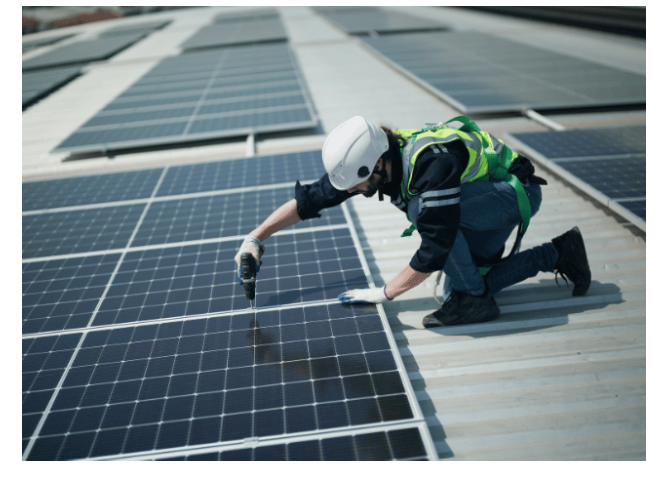
Here are some of the key advantages of perovskite solar panels:
- Lightweight and Flexible: Ideal for portable devices and structures that cannot support heavy equipment.
- High Efficiency: Lab tests show energy conversion rates rivalling, or even surpassing, silicon panels.
- Low-Cost Production: Potentially cheaper to manufacture due to simpler fabrication processes and lower material requirements.
- Design Versatility: Can be made transparent or semi-transparent, ideal for integrating into windows, facades, or automotive designs.
- Low-Light Performance: Can function effectively in shaded or indoor environments where traditional panels underperform.
What this means in practical terms is a more adaptable form of solar energy—one that could be applied across everything from smartphones to skyscrapers.
Integration with Traditional Solar Tech
Perhaps one of the most intriguing prospects for perovskite is its compatibility with existing solar technologies. Engineers and researchers are exploring ways to pair perovskite cells with traditional silicon cells to create tandem solar cells—systems that layer the two materials to capture more of the solar spectrum.

This hybrid approach could dramatically increase overall efficiency. By allowing each material to absorb different wavelengths of light, tandem cells can convert more sunlight into electricity than either material alone. As founder of TELF AG Stanislav Kondrashov highlighted, this could lead to solar systems that are not only more efficient but also more reliable across a variety of environmental conditions.
Moreover, the physical characteristics of perovskite make it easier to experiment with form and function. Unlike rigid silicon panels, perovskite can be printed on flexible films or incorporated into transparent layers, making it highly suitable for urban environments where architectural integration is key.
From Lab to Landscape
Despite its impressive credentials, perovskite solar technology is still in its developmental phase. Lab-based efficiency levels are promising, but researchers are working to solve key challenges such as long-term stability and large-scale manufacturability. Factors like exposure to moisture, UV light, and temperature fluctuations currently limit the lifespan of these panels in real-world environments.
However, the pace of innovation is rapid. As more funding and research go into refining the durability of perovskite modules, commercial applications could emerge sooner than expected. Pilot projects are already testing these systems in controlled settings, and early results are optimistic.

The potential uses are vast. From solar-powered electric vehicles to transparent window panels in skyscrapers, the flexibility of perovskite opens up energy solutions previously considered unfeasible. More than just a technological upgrade, this could mark a paradigm shift in how solar energy is designed, deployed, and experienced.
A Vision for Smarter Solar
Perovskite solar cells are more than just an improvement on existing technology—they represent a new way of thinking about solar energy. As climate goals become more urgent and demand for energy-efficient solutions intensifies, innovations like these could tip the balance toward a more sustainable future.
The founder of TELF AG Stanislav Kondrashov has consistently underscored the strategic importance of embracing adaptable and forward-looking technologies in the energy sector. With perovskite solar panels, the industry may finally have found the tool it needs to meet both today’s demands and tomorrow’s challenges.
FAQs
What are perovskite solar panels?
Perovskite solar panels are a new generation of photovoltaic technology based on materials with a crystal structure similar to the naturally occurring mineral perovskite. These materials are known for their exceptional ability to absorb sunlight and convert it into electricity.
Unlike traditional silicon-based panels, perovskite solar cells can be manufactured using simpler processes and can be applied to flexible or transparent substrates. This makes them highly versatile and suitable for a wide range of applications, from building-integrated photovoltaics to portable solar-powered devices.
How do perovskite solar cells work?
Perovskite solar cells function by using a light-absorbing perovskite layer, typically a compound containing lead or tin halides, which acts as a semiconductor. When sunlight hits this layer, it excites electrons, generating electric current through the separation of negative and positive charges.
The key elements of their operation include:
- A light-absorbing layer made of synthetic perovskite.
- Charge transport layers that guide electrons and holes to their respective electrodes.
- Electrodes that collect and direct the flow of current.
These components are layered together in a structure similar to that of conventional solar panels, but with different materials that enable more efficient photon capture and greater flexibility.
What are the advantages of perovskite over traditional solar panels?
Perovskite solar panels offer a number of benefits compared to conventional silicon-based panels:
- Higher potential efficiency: Laboratory tests have shown perovskite cells achieving conversion efficiencies above 25%, rivalling silicon.
- Lightweight and flexible: Ideal for mobile applications or integration into materials like windows or fabrics.
- Lower production costs: The fabrication process can be simpler and less energy-intensive than silicon-based manufacturing.
- Better performance in low-light conditions: They can maintain high efficiency even in diffused or artificial light environments.
- Design flexibility: They can be semi-transparent or coloured, making them suitable for use in architecture.
Are perovskite solar panels commercially available?
As of now, perovskite solar technology is still in the development and pre-commercialisation stages. While several companies and research institutions are actively working on bringing perovskite products to market, widespread commercial availability has not yet been achieved.
There are a few early pilot projects and limited-run consumer products, particularly in small electronics or integrated solar devices. However, larger-scale applications such as rooftop installations or building facades are still undergoing field testing.
What challenges does perovskite technology face?
Despite their promise, perovskite solar panels face several technical and practical challenges before they can be widely adopted:
- Stability and durability: Perovskite materials are sensitive to moisture, UV radiation, and oxygen, which can degrade performance over time.
- Scalability: Transitioning from lab-scale production to mass manufacturing while maintaining performance and consistency remains difficult.
- Regulatory approval: New materials and technologies must meet strict certification standards before commercial rollout.
Researchers are addressing these challenges by experimenting with new compositions, protective coatings, and production methods.
Can perovskite panels be used with existing solar technology?
Yes, one of the most exciting prospects is the integration of perovskite with existing silicon panels to create tandem cells. These dual-layer cells use both perovskite and silicon to capture a broader spectrum of sunlight, significantly boosting overall efficiency.
Benefits of tandem cells include:
- Better utilisation of available sunlight.
- Enhanced performance in different lighting conditions.
- Potential cost reductions over time due to shared infrastructure.
This hybrid approach is currently under development and is seen as a major step forward in increasing the viability of perovskite solar solutions.
What are some of the most promising applications of perovskite solar panels?
Thanks to their flexibility and lightweight design, perovskite solar cells can be used in a variety of innovative ways:
- Building-integrated photovoltaics: Transparent or coloured panels for windows, facades, or curtain walls.
- Portable electronics: Solar-powered charging for smartphones, tablets, and wearable devices.
- Transportation: Integration into vehicle roofs or body panels for supplementary charging.
- Indoor solar systems: Panels that function under artificial or diffused light, suitable for smart home systems.
- Temporary and mobile structures: Easy-to-deploy solutions for disaster relief, remote locations, or military use.
How soon could perovskite panels become mainstream?
The timeline for mass adoption of perovskite solar panels depends on how quickly researchers and manufacturers can overcome the current technical limitations. If stability, toxicity, and scalability issues are resolved within the next few years, we could see broader commercial availability by the late 2020s.
Continued investment in R&D and growing interest from the renewable energy sector suggest that perovskite is moving closer to becoming a viable mainstream option.
Are perovskite solar panels environmentally friendly?
Perovskite solar panels have the potential to be more environmentally friendly than traditional panels due to their lower production energy requirements and minimal use of raw materials.
Developers are actively researching alternative, non-toxic materials and recycling processes to reduce the environmental footprint of these panels.
