



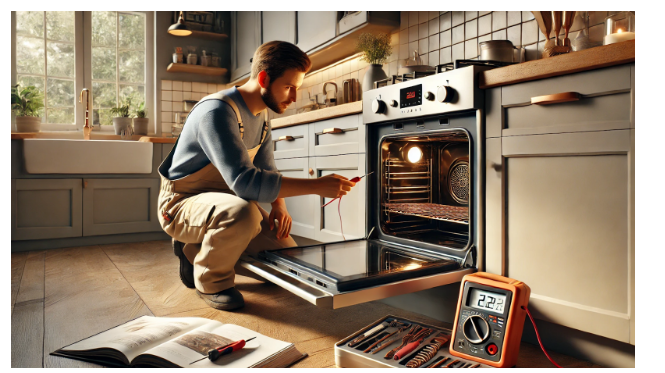
The oven is the heart of any kitchen, whether it’s used for cooking family dinners or baking bread in a commercial bakery. But what should you do if your oven stops heating? This is a common issue, and in most cases, it can be resolved. Let’s look at the main reasons behind the problem and how to fix it.
Faulty Heating Element
Heating elements are crucial components responsible for evenly distributing heat. If they are damaged, the oven won’t be able to heat up.
Signs of a Faulty Heating Element:
- The oven turns on but remains cold.
- You notice dark spots or cracks on the heating element.
What to Do?
- Inspect the heating elements, usually located at the back or top of the oven.
- If the element appears damaged, it needs to be replaced. Contact a professional for oven repair.
Thermostat Issues
The thermostat controls the oven’s temperature. If it malfunctions, the oven may either not heat at all or heat inconsistently.
Signs of a Faulty Thermostat:
- The oven heats up weakly or overheats.
- You cannot set or maintain the desired temperature.
What to Do?
- Test the thermostat using a multimeter to measure resistance.
- If it’s faulty, replace the thermostat. Professional expertise is especially necessary for repairing a commercial convection oven.
Power Supply Problems
Sometimes the problem lies in the oven’s power supply.
Signs:
- The oven doesn’t turn on at all.
- Lights and controls don’t respond.
What to Do?
- Check the plug and power cord for any damage. Ensure they are properly connected.
- Inspect the circuit breakers or fuses in your electrical panel.
- If power isn’t the issue, call a technician for diagnostics.
Control System Malfunction
Modern ovens are equipped with electronic control panels that manage all operations. If the control system fails, the oven may stop heating.
Signs:
- Buttons or the display do not respond.
- Error codes appear on the display.
What to Do?
- Reset the oven by unplugging it for a few minutes.
- If this doesn’t help, the control panel may need replacement. Consult a specialist for oven repair.
Convection Fan Failure
If your oven has a convection fan, it plays a vital role in circulating hot air. A malfunctioning fan can result in uneven heating or no heating at all.
Signs:
- The air inside the oven stays cold.
- You hear unusual noises or grinding from the fan.
What to Do?
- Check if the fan is working when the oven is on.
- If the fan isn’t spinning, it should be replaced. This is particularly important for repairing a commercial convection oven, where even heating is critical.
Clogged Gas Burners (for Gas Ovens)
Gas ovens sometimes experience issues due to clogged burners that restrict gas flow.
Signs:
- The oven turns on, but the gas doesn’t ignite.
- The flame is weak or uneven.
What to Do?
- Disconnect the oven from the gas supply and clean the burners with a soft brush.
- If the issue persists, call a professional for assistance.
Oven Maintenance Tips
To avoid breakdowns and the need for oven repair, it’s important to take proper care of your appliance:
- Regular Cleaning: Remove food residue and grease to prevent clogs.
- Check Components: Inspect heating elements, the thermostat, and the fan for any damage.
- Follow Manufacturer Guidelines: Use the oven as instructed to avoid overloading.
- Schedule Maintenance: Have a technician inspect your oven annually, especially if you own a commercial convection oven.
When to Seek Professional Help?
If you cannot identify or fix the issue on your own, it’s best not to attempt repairs yourself, as this can be dangerous. An experienced technician can quickly diagnose the problem and provide quality oven repair services.
Oven heating issues can stem from various causes, including damaged heating elements, thermostat malfunctions, or control panel failures. However, most of these problems can be resolved with proper care and timely repairs. If your oven stops heating, don’t delay diagnostics. Prompt commercial convection oven repair can significantly extend the appliance’s lifespan and save you money in the long run.
