Languages
Thursday, September 17, 2026



News and Views from the Global South
Religion
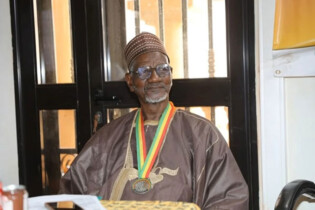
One Man’s Quest to End Female Genital Mutilation (FGM) in Mali
In Mali, an estimated nine out of ten women and girls have undergone female genital mutilation (FGM). And for years, Sidi Haidara, a father and recognized leader in his community, believed the practice was simply part of life.
September 11 and the End of the American Dream
The Day That Changed Everything
On 11 September 2001 I was in New York, on one of my frequent visits to the United Nations, to which I was tied by a consultancy contract. That morning I woke up late, around eleven, sleeping off the jet lag of the flight from Italy. I was staying at the Hyatt Park, today the Millennium. A hotel a few metres from the Glass Palace, built to serve the world of the United Nations.

A Spectre is Haunting Europe — the Spectre of Ultra-Nationalism
During summer months there is a certain news drought. Nevertheless, this year social media has been crowded with news from wars in the Middle East and Ukraine, while customary tales about grisly murders have not been neglected. In Sweden it is election year and summer reporting has been supplemented by a debate about “hate speech against ethnic groups”. If individual tragedies connected with murders upset people, many seem to be indifferent to the fact that entire population groups are targeted by politicians. Swedish social media is overloaded with outcries about “Muslim” immigration and concerns about Sweden becoming “Islamized” and in danger of being transformed into a new Afghanistan.
Beyond the Death Penalty Debate: Human Dignity and Justice in Japan
A symposium examining Japan’s death penalty through the lens of human dignity was held on September 5 at Joseph Hall of St. Ignatius Church in Yotsuya, Tokyo.
How the Taliban Hunt Women in Afghanistan
FIVE years after the Taliban returned to power, Fawzia Koofi, the former Deputy Speaker of the Afghan Parliament, denounces what she describes as “gender apartheid.”
PARAGUAY: ‘Transparency Should Strengthen Democracy, Not Turn Criticism of Those in Power into a Cause for Suspicion’
CIVICUS discusses the challenges posed by Paraguay’s ‘anti-NGO law’ with Hugo González, executive director of the Paraguayan Network of LGBTQ+ Artists (REPAR+), a civil society organisation (CSO) that promotes the rights of LGBTQI+ people, which has joined the constitutional challenge against this law.
Nicaragua: End of the Electoral Illusion
On 19 July, the 47th anniversary of the Sandinista revolution that first brought him to power, Nicaraguan President Daniel Ortega declared that his country would hold ‘no more elections’ so that the opposition could never again try to ‘seize power’. Just like that, he scrapped a presidential vote that had previously been pushed back to 2027, abandoning even the fiction of democratic legitimacy. The move changes little in practice, since no free vote had been possible for years. But it’s still revealing: a government that controls the army, the courts, the electoral machinery and the police, and will still not risk even a stage-managed ballot, is one that has lost confidence in its people.
INDIA: ‘The Cockroach Janta Party Brings Together Everyone Who Has Been Neglected for Years’
CIVICUS discusses India’s Cockroach Janta Party movement with Harshit Singh, a young activist, poet and storyteller who took part in protests in Delhi.
Burkina Faso’s Cancelled Democracy
Burkina Faso’s charismatic young military leader, army captain Ibrahim Traoré, has stopped pretending. In April, he declared that people should ‘forget about the question of democracy’ because ‘democracy isn’t for us’. When Traoré seized power in September 2022, ousting a leader who’d staged a coup earlier that year, he promised elections by June 2024. The junta broke that pledge, pushing any transition back to 2029. Now Traoré has confirmed he has no intention of restoring democracy. Instead, Burkina Faso’s military junta is tightening its repression, while working with neighbouring states to internationalise its dangerously undemocratic model.
CHINA: ‘The Ethnic Unity Law Means There Is One Acceptable Way to Be Chinese’
CIVICUS speaks about China’s recently implemented Ethnic Unity Law with Gulchehra Hoja, a correspondent for Reporters Without Borders and a Uyghur activist and journalist known for her reporting on human rights abuses against Uyghur people in China.
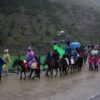
Climate Change Makes Sacred Ice Vanish in Kashmir, Locals Fear Loss of Livelihoods
Every summer, before dawn breaks over the Himalayas, Bashir Ahmad leads his horses onto the narrow mountain trail that winds toward the Amarnath cave shrine. For decades, the annual Hindu pilgrimage has been the most important season of the year for his family. The money earned over two months pays for food, school fees, winter supplies, and the upkeep of his animals through the long snowbound months.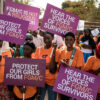
Female Genital Mutilation: Winning the Argument, Losing the Funding
Last August, a one-month-old girl in The Gambia bled to death after being subjected to female genital mutilation (FGM), a practice that had been illegal in the country since 2015. FGM is a human rights violation, whatever the appeals to faith or tradition made in its defence, but now the Gambian Supreme Court is being asked to strike the country’s ban down. This is the second attempt in two years to make FGM legal again.
Pride: Once Again a Protest
On the morning of 28 June, riot police sealed off Taksim Square with iron barriers and enforced bans on all weekend gatherings in Istanbul. Marchers pressed ahead anyway, re-emerging from side streets each time police dispersed them. By the end of the day police had detained at least 50 people, including a journalist. It was Istanbul Pride’s 24th edition, and the 12th year running that the authorities banned it outright.
The Tale of Two Countries: Elite Stake and Development
Philippines was the most advanced Southeast Asian country with the highest per capita GDP until about the early 1960s. Its per capita GDP in purchasing power parity terms were about the same as South Korea’s and above that of Thailand in the early 1970s.The Nobel Laureate economist, Gunnar Myrdal, did not have much hope for “disease infested” Indonesia when in 1968 he published his famous Asian Drama: An Enquiry Into the Poverty of Nations. But Indonesia surged ahead since the late 1960s with growth acceleration exceeding that of Philippines; thus, eventually overtaking Philippines in GDP per capita in the mid-1980s. What factors separated Indonesia from Philippines?
Building Peace Infrastructures: African Leaders Reflect on Peacebuilding
As the United Nations held its first-ever Peacebuilding Week (June 22-26), UN officials and developmental partners gathered at Egypt's Permanent Mission on June 23 to hold a dialogue on the main question that emerged from the 2025 Peacebuilding Architecture Review (PBAR): “How can global commitments to peacebuilding translate into tangible results on the ground?”
GHANA: ‘This Is Bigger than Lgbtqi+ Rights – It’s about the Kind of Society We Want to Be’
CIVICUS discusses Ghana’s anti-LGBTQI+ law with Leila Lariba, Executive Director of One Love Sisters Ghana, a community-driven organisation that advances human rights, social inclusion and wellbeing for Muslim LGBTQI+ people in Ghana.
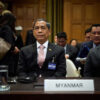
Indonesia’s Genocide Case Shines the Spotlight on Myanmar Atrocities
Yasmin Ullah, from Myanmar’s persecuted Rohingya minority, is determined to see justice. On 13 April, she filed a complaint alleging genocide against Myanmar’s president, Min Aung Hlaing, to Indonesia’s Attorney General’s Office. Min Aung Hlaing led the 2021 coup that ousted a democratically elected government and this month was named president following a sham election held amid intense repression, rubber stamping the army’s continuing grip on power. However secure he appears in his position, Yasmin Ullah’s legal action offers hope his impunity may not be guaranteed.
Iran War: Winners and Losers
Who benefits from a war of choice against Iran? The immediate political winners may include President Donald Trump and Prime Minister Benjamin Netanyahu. But if the war continues for a longer period, the political consequences for both Trump and Netanyahu could be uncertain. However, the most consistent beneficiaries are defense contractors, defense manufacturers and military lobbyists, who profit regardless of the outcome.
Beyond Stereotypes: Reclaiming Muslim Histories during Ramadan
In public discourse today, Muslims often appear as subjects of debate rather than authors of their own histories. Discussions about Muslim societies tend to revolve around geopolitics, security or conflict, leaving little space for the cultural, artistic and intellectual traditions that have shaped Muslim communities across centuries.
The Implausible Regime Change in Iran and How the War Affects the World
The US/Israeli war on Iran might be like messing with a hornets’ nest, spreading fear and chaos all around. The Israeli government claimed that the war was a “preventive” measure to address an immediate threat of Iran constructing a nuclear bomb. However, this war has obviously been meticulously planned over a long period of time and it now seemed to be the right time to put this plan into action. The Iranian air defences had been weakened through earlier attacks, while recent Israeli strikes decapitated Hezbollah’s Lebanese leadership, Iran’s allies north of Israel. With Gaza destroyed and Syria’s unreliable Assad gone, Netanyahu had succeeded in securing his party’s coalition with the far-right and could continue to count upon the support of the Trump Administration, providing Israel with a free hand vis-à-vis the Palestinians and turning a blind eye to the massacre of civilians. The U.S. is continuously supporting Isreal with missile-defence systems, coordination, cooperation, and intelligence sharing.
Can “Human Fraternity” Move Peace?
As wars drag on and the international order grows increasingly unstable, Abu Dhabi has been offering a different kind of narrative. It sought to recognize early efforts at reconciliation, bring religious leaders into the same space, and place former adversaries under the same spotlight. At the heart of the February 4, 2026 Zayed Award for Human Fraternity ceremony was an attempt to make visible, in a public setting, the choice of moving in the direction of easing conflict.Next Page »


Religion plays a big and in some cases growing role in the socio-political dynamics within countries and often is a factor in civil and cross-border conflict, conflict resolution and peace building. From Burmese monks' marches to the role of religious fundamentalism, this dedicated site gathers IPS stories about how religion affects our world, from daily life to geo-politics.

The Week with IPS

NEXT STOP - SDGs
Tracking global progress towards a sustainable world
Tracking global progress towards a sustainable world
