Languages
Sunday, September 20, 2026



News and Views from the Global South
Migration & Refugees
Outpacing Foreign Aid, Migrant Remittances Are a Lifeline Ensuring Families Are Fed and Healthy, Says IFAD
Migrants now send home more money than foreign aid, and this is pulling rural families out of poverty, according to the International Fund for Agricultural Development (IFAD).
The Cost of Excluding Refugees
For the young women I met through Global Give Back Circle’s HER Lab in Kenya, displacement was not the end of ambition. It had interrupted school, separated families from stability, and narrowed the choices available to them. But it had not erased their hopes. What they wanted was not pity. They wanted skills, work, confidence and the chance to rebuild their lives with dignity.
War in Ukraine: Hungarian Minority Pushed to the Edge
It happened in 1920. At the Grand Trianon Palace at Versailles, the Allies drew a new map of Hungary that sliced away two-thirds of its territory. Such a cartographic mutilation went down in history as the Treaty of Trianon. No country lost more territory after the First World War.
ETHIOPIA: ‘Reporting on Abuses Shouldn’t Be Treated as a Threat to National Interest’
CIVICUS discusses renewed conflict and a growing crackdown on independent media in Ethiopia with Yonas Kedir, Editor-in-Chief of the independent news outlet Addis Standard, who was recently abducted and detained by government forces.
Bangladesh Must Face Its Quiet Crisis of Internal Displacement
Bangladesh is rightly praised for saving lives during cyclones and floods. Early warning systems, cyclone shelters and community mobilisation have turned once-catastrophic disasters into emergencies in which evacuation is often possible. But behind that success lies a quieter national failure: millions of people are being uprooted inside the country, often more than once, without a clear path back to secure homes, land or livelihoods.
Renewed Hostilities In Yemen Inflame Displacement and Regional Risks
In recent days, the humanitarian situation in Yemen has deteriorated sharply following a new escalation of hostilities between the Iran-backed Houthi rebels and the Saudi-backed Presidential Leadership Council (PLC). This follows four years of relative stability, marking the most severe resurgence of violence since the collapse of the United Nations (UN)-mediated ceasefire in October 2022.
A Spectre is Haunting Europe — the Spectre of Ultra-Nationalism
During summer months there is a certain news drought. Nevertheless, this year social media has been crowded with news from wars in the Middle East and Ukraine, while customary tales about grisly murders have not been neglected. In Sweden it is election year and summer reporting has been supplemented by a debate about “hate speech against ethnic groups”. If individual tragedies connected with murders upset people, many seem to be indifferent to the fact that entire population groups are targeted by politicians. Swedish social media is overloaded with outcries about “Muslim” immigration and concerns about Sweden becoming “Islamized” and in danger of being transformed into a new Afghanistan.
Trump’s “Comprehensive” Gaza Peace Plan a Cover for Genocide
It is nearly a year since the UN Security Council (UNSC) adopted Resolution 2803 on 17 November, 2025, endorsing President Trump’s 20-point framework ostensibly designed to end the war in Gaza and create a roadmap for long-term stability. It is not clear what progress has been made. In August 2026 The Jerusalem Post reported “the IDF continues almost daily strikes in Gaza”, killing more than 1,200 Palestinians since the US-brokered ceasefire deal came into effect, seizing more territory, and continuing to restrict the movement of people and goods into and out of Gaza. Nickolay Mladenov, the UN High Representative on the Board of Peace, wrote in early August 2026 that “two days of strikes across Gaza have killed civilians and destroyed medical supplies that people depend on”. Ironically, this genocidal strike happened only a few days after a US-brokered Hamas disarmament deal, which Trump called, “a monumental step” towards peace and security.
Population Age Structures of Countries
The age structures of populations vary considerably across countries. Some countries have relatively young populations, with large proportions consisting of children and adolescents. Other countries have much older age structures, with a substantial proportion of people aged 65 years or older.
Beyond Resilience: Climate Change and the Rights of Char Dwellers in Bangladesh
Bangladesh’s riverine and coastal chars have always been landscapes of movement, but climate change is making that movement more violent, frequent, and unequal. The shifting islands of the Jamuna, Brahmaputra, Padma, and other rivers now reveal how climate stress multiplies deprivation, weakens citizenship, and forces char dwellers to absorb the costs of a crisis they did little to create.
SWEDEN: ‘The New Migration Laws Are so Vague That People Don’t Know What Might Be Used Against Them’
CIVICUS discusses Sweden’s new migration laws with John Stauffer, legal director and deputy executive director of Civil Rights Defenders, a Swedish civil society organisation that acts as a civil rights watchdog at home and supports human rights defenders in repressive contexts worldwide.
Grand Planetary Challenges Need a Grand Coalition to Solve Them
Several coalitions exist today to defend the territories in which people live and work. Global leaders have long understood the importance of shared responsibility for collective security and have invested significant time in establishing networks, partnerships and alliances. In 2025, global spending on defense reached a record $2.9 trillion.
South Africa’s Anti-Immigrant Violence Slows SDG Goals, Rips Apart Africans’ Free Movement Call
When the Malawian government announced the conclusion of the repatriation of its citizens trapped in anti-immigrant violence against foreign Africans in South Africa on August 12, 2026, it had brought home 56,723 nationals, according to data from the Department of Disaster Management Affairs.
UNAIDS Framework Pushes for the Protection and Integration of HIV Care
As the global HIV response shifts toward sustainable, nationally led, and rights-based care, a new UNAIDS framework published this week argues that integration must start with a country's readiness.
GAZA: ‘There Are No Standards to Tell You What to Do in Conditions like Gaza’
CIVICUS discusses the state of civic and humanitarian action in Gaza with Ibrahim Arandas, a Palestinian activist and project manager at SPARK Gaza, a civil society organisation that provides humanitarian and psychosocial support.
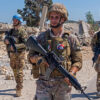
Impending UNIFIL Exit Pushes Lebanon Toward Uncertainty
Since the collapse of the ceasefire between Israel and Lebanon announced in June, the humanitarian situation in Lebanon has deteriorated sharply. Marked by high casualties, immense destruction to civilian infrastructure, and widespread displacement, access to essential services has become increasingly strained as the United Nations Interim Force in Lebanon (UNIFIL) is scheduled to end its operations by the end of the year.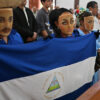
Nicaragua: End of the Electoral Illusion
On 19 July, the 47th anniversary of the Sandinista revolution that first brought him to power, Nicaraguan President Daniel Ortega declared that his country would hold ‘no more elections’ so that the opposition could never again try to ‘seize power’. Just like that, he scrapped a presidential vote that had previously been pushed back to 2027, abandoning even the fiction of democratic legitimacy. The move changes little in practice, since no free vote had been possible for years. But it’s still revealing: a government that controls the army, the courts, the electoral machinery and the police, and will still not risk even a stage-managed ballot, is one that has lost confidence in its people.
Frankenstein in Charge: Netanyahu Rejects Trump’s Gaza Plan
Should anyone be surprised that Israel has rebuffed Donald Trump? The unconditional support of the US and its Western allies for Israel has emboldened the rogue state. Thus, Israel continues its genocide against the Palestinians in defiance of international humanitarian law and the Genocide Convention, and despite the so-called ceasefire agreement under the Trump plan. This is the pay-back for protecting Netanyahu from his arrest warrant by the International Criminal Court (ICC) for committing war crimes and crimes against humanity.
Palestinian Children Deserve Education, not Ethnic Cleansing
World News are more or less currently fully occupied with the U.S. – Iran debacle and to a lesser degree the Gaza genocide, the on-going war in Ukraine, and to an even lesser degree the one in Sudan.
Rohingya Refugees Seeking Safe Haven in Bangladesh Hit by Fresh Disasters
Abdu Rozork awoke suddenly to the sound of children screaming. Heavy monsoon rains had sent a landslide barrelling into the section of their bamboo shelter where the women and children were sleeping.
Rohingya Repatriation: A Roadmap Without a Road
The Rohingya crisis remains one of the most enduring humanitarian and political failures in South and Southeast Asia. Since the 2017 mass expulsion from Myanmar’s Rakhine State, Bangladesh has hosted more than one million refugees in Cox’s Bazar and Bhasan Char, while Myanmar has failed to create conditions for safe return. What began as an emergency response has hardened into protracted displacement marked by statelessness, insecurity, aid dependency, and diplomatic fatigue. Repatriation is repeatedly presented as the preferred durable solution, yet every major attempt has failed because the core political question remains unresolved: the Rohingya cannot safely return to a state that denies them citizenship, protection, and equal belonging.Next Page »


Human migration is a matter of global concern. Flows of migrants and refugees influence and change the social, economic and political dynamics of their destinations -- and the places they have left behind. IPS covers crucial issues such as migrant and refugee rights, irregular or undocumented migration, human trafficking, remittances, displaced persons and forced labour. And the positive: in many cases migration creates a new dialogue among civilisations. Migrants themselves become the building blocks of bridges connecting different cultures.

The Week with IPS

NEXT STOP - SDGs
Tracking global progress towards a sustainable world
Tracking global progress towards a sustainable world
