Languages
Friday, September 18, 2026



News and Views from the Global South
Democracy
September 11 and the End of the American Dream
The Day That Changed Everything
On 11 September 2001 I was in New York, on one of my frequent visits to the United Nations, to which I was tied by a consultancy contract. That morning I woke up late, around eleven, sleeping off the jet lag of the flight from Italy. I was staying at the Hyatt Park, today the Millennium. A hotel a few metres from the Glass Palace, built to serve the world of the United Nations.
Will the General Assembly Continue to be Subservient to the P-5 Refusing to Challenge the Nominee for UN Chief?
As the race for the election of a new Secretary-General (UNSG) gathers momentum, the spotlight is on the 193-member General Assembly, the highest policy making body at the United Nations, which has refused to assert itself and continues to play a subservient role in the elections of UNSGs.
Global Survey Finds Deep Crisis of Trust as Majority Say Economic System Favours the Rich
An international survey released by Earth4All has found a growing crisis of trust in governments, widespread anger over inequality, and strong public support for major economic reforms, suggesting that many people across the world believe current political and economic systems are failing to serve ordinary citizens.
The Lighter Side of Politics at the UN General Assembly
When over 130 world leaders arrive in New York for the high-level segment of the General Assembly next week-- it will be rare to hear hard-hitting, headline-grabbing political statements from the podium.
The USA and Dictatorship – Gödel’s Loophole
Observing some of the changes over the last year and a half in the Government of the USA, one question that comes to mind is whether the greatest democracy in the world turning into a dictatorship? And, if so, how is this possible in a country with one of the most articulate and thoughtful constitutions ever written –a constitution which clearly sets out checks and balances precisely to avoid undue concentration of power.
Zambia: An Uneven Contest, an Easy Win
On 24 August, police sealed off access to Zambia’s courts, closed the day before the deadline for petitions to challenge the results of the 13 August presidential election. The judiciary’s top official cited security reasons, but the timing left little doubt that authorities meant to block the defeated candidate’s legal challenge.
South Africa’s Anti-Immigrant Violence Slows SDG Goals, Rips Apart Africans’ Free Movement Call
When the Malawian government announced the conclusion of the repatriation of its citizens trapped in anti-immigrant violence against foreign Africans in South Africa on August 12, 2026, it had brought home 56,723 nationals, according to data from the Department of Disaster Management Affairs.
PARAGUAY: ‘Transparency Should Strengthen Democracy, Not Turn Criticism of Those in Power into a Cause for Suspicion’
CIVICUS discusses the challenges posed by Paraguay’s ‘anti-NGO law’ with Hugo González, executive director of the Paraguayan Network of LGBTQ+ Artists (REPAR+), a civil society organisation (CSO) that promotes the rights of LGBTQI+ people, which has joined the constitutional challenge against this law.
Pakistan’s Crackdown on Journalists Comes Under Heavy Fire
Pakistan, one of few South Asian countries to oscillate between democratic governments and authoritarian regimes, is cracking down on journalists, including foreign correspondents covering the political situation in the world's fifth most populous nation, with an estimated population of over 250 million people and ranking behind India, China, the United States, and Indonesia.
Burkina Faso’s Cancelled Democracy
Burkina Faso’s charismatic young military leader, army captain Ibrahim Traoré, has stopped pretending. In April, he declared that people should ‘forget about the question of democracy’ because ‘democracy isn’t for us’. When Traoré seized power in September 2022, ousting a leader who’d staged a coup earlier that year, he promised elections by June 2024. The junta broke that pledge, pushing any transition back to 2029. Now Traoré has confirmed he has no intention of restoring democracy. Instead, Burkina Faso’s military junta is tightening its repression, while working with neighbouring states to internationalise its dangerously undemocratic model.
Rohingya Repatriation: A Roadmap Without a Road
The Rohingya crisis remains one of the most enduring humanitarian and political failures in South and Southeast Asia. Since the 2017 mass expulsion from Myanmar’s Rakhine State, Bangladesh has hosted more than one million refugees in Cox’s Bazar and Bhasan Char, while Myanmar has failed to create conditions for safe return. What began as an emergency response has hardened into protracted displacement marked by statelessness, insecurity, aid dependency, and diplomatic fatigue. Repatriation is repeatedly presented as the preferred durable solution, yet every major attempt has failed because the core political question remains unresolved: the Rohingya cannot safely return to a state that denies them citizenship, protection, and equal belonging.
Trump’s Authoritarian Gambit to Muzzle the Foreign Press
Under a new rule proposed by the Department of Homeland Security, the duration of “I visas” for foreign media will be slashed from renewable multi year periods—often up to five years—to a maximum of 240 days, and just 90 days for Chinese journalists. Renewals would no longer be a routine administrative step tied to continued employment and compliance with the law, but a discretionary privilege the government can grant or withhold at will.
US Plans to Restrict Visas to Foreign Journalists Come Under Fire
A proposal to restrict US visas to foreign journalists assigned to cover the US has triggered a strong protest from the New York-based Foreign Press Association (FPA).
SERBIA: ‘We Are Becoming an Electoral Autocracy, a System Where the Government Cannot Lose’
CIVICUS discusses the prospects for elections in Serbia with Rasa Nedeljkov, Programme Director at the Center for Research, Transparency and Accountability, a civil society organisation that monitors electoral processes and the rule of law in Serbia.
Three years of War in Sudan: A Crisis the World Can’t Ignore
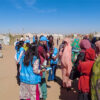
Three years into the war in Sudan, survivors and human rights defenders are struggling to respond to overwhelming needs amid widespread violence, displacement, and limited global attention. As horrific violations and abuses intensify and those documenting them become targets, calls for accountability and sustained international engagement grow more urgent.
Taliban Use Dress Code to Justify Arbitrary Arrests of Women
One morning in June, Halima (name changed), went to the market in Herat, her hometown in western Afghanistan, with her mother. She was wearing a long coat and a surgical mask covering her face. She could not have imagined that just a few minutes later she would be sitting in prison.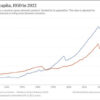
The Tale of Two Countries: Elite Stake and Development
Philippines was the most advanced Southeast Asian country with the highest per capita GDP until about the early 1960s. Its per capita GDP in purchasing power parity terms were about the same as South Korea’s and above that of Thailand in the early 1970s.The Nobel Laureate economist, Gunnar Myrdal, did not have much hope for “disease infested” Indonesia when in 1968 he published his famous Asian Drama: An Enquiry Into the Poverty of Nations. But Indonesia surged ahead since the late 1960s with growth acceleration exceeding that of Philippines; thus, eventually overtaking Philippines in GDP per capita in the mid-1980s. What factors separated Indonesia from Philippines?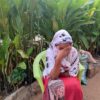
Europe’s Funding Question Puts Tanzania’s Fragile Democracy on Trial
Every evening just before sunset, Salima Kitwana hobbles into her backyard holding a photograph.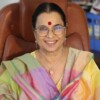
Does India’s Women’s Reservation Bill Shortchange Women Yet Again?
To say that the men scored over women yet again would be an understatement. To say that the women lost and men have won would be an oversimplification and to say that political manoeuvring, intrigue and deceit outdid half of India’s population would be stating the obvious.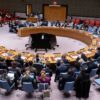
The Next UN Secretary-General Must Break Not Only the Glass Ceiling, but Also the Culture of Patronage
As the United Nations (UN) Security Council prepares for its first round of closed-door straw polls this month to select the tenth Secretary-General, the organization stands at a critical crossroads. Multilateralism is fracturing under geopolitical gridlock, and the UN is battling a severe budgetary deficit driven by funding cuts.
Cutting Hair, Cutting Freedom: Afghanistan’s Barbers Under Taliban Rule
Kabul barber Ahmed (name changed) used to keep a collection of pictures of different hairstyles on his phone. He would show them to his customers before cutting their hair so they could choose the style they liked. Some young men would bring their own pictures, and Ahmed would cut their hair according to their wishes. The business was particularly busy a few days before Eid.Next Page »


The Week with IPS

NEXT STOP - SDGs
Tracking global progress towards a sustainable world
Tracking global progress towards a sustainable world
