
Tuesday, June 9, 2026



News and Views from the Global South
Women & Economy
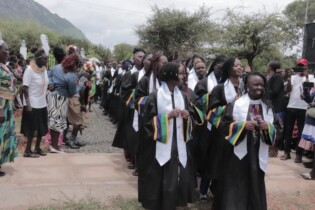
Breaking Cultural Barriers to Equip Marginalised Kenyan Girls With Entrepreneurial Skills
For generations, communities in Kenya’s arid and semi-arid lands (ASAL) have viewed girls through the lens of marriage, with some being married at 11 in exchange for livestock or soon after secondary school, denying them opportunity for further education and skills training.
Pacific Ocean Under Pressure — Now a Region Finally Armed With Evidence
For generations, Pacific people have understood the ocean not as a resource but as identity, sustenance, and survival. Today, that relationship is being tested in ways science is only just beginning to fully capture.
From Struggle to Strength: Turning Daily Hustle Into a Force for Survival
In the bustling Chifubu constituency of Ndola, the provincial capital of Zambia’s mineral-rich Copperbelt Province, 31-year-old Victoria Bwalya is usually among the early risers, cleaning and setting up for the day in her restaurant business.
Inside the Funding Model Behind Kenya’s Tana Delta Restoration Project
Lydia Hagodana stands next to a bee yard (apiary) in Golbanti, Tana Delta, where she lives. The air carries a low, steady hum as bees move in and out in a constant stream. She lifts the back of one hive slightly, gauging its weight.
Artisanal Miners in Western Kenya Move Away From Mercury
They call this land Bushiangala. Gold has been mined here for nearly a century. In 1931, colonial prospectors arrived after traces were found in the nearby Yala River, setting off a rush that changed this quiet corner of western Kenya.
Running on Sunshine: Pakistan’s Solar Boom to Tide Over Middle East Energy Crisis
Energy expert Vaqar Zakaria believes solar power makes “excellent economic sense” – and he lives by it. For over five years, his rooftop panels have slashed his bills, sometimes to zero, even allowing him to sell surplus electricity back through net metering.
80 Percent of Rural Households Without Direct Water Access – World Water Report
A new United Nations report has warned that global water inequality remains one of the most pressing development challenges of the decade, with billions still lacking safe drinking water and sanitation – while women and girls continue to bear the heaviest burden of water insecurity.

Generative AI Could Deepen Inequality, Revenue Losses in Creative Industries
As generative artificial intelligence (AI) rapidly expands across nearly every sector of society, those that work in cultural and creative industries are expected to bear some of the greatest losses. With AI-generated content projected to dominate global markets in the coming years, combined with a lack of strong regulatory frameworks to protect intellectual property and AI’s ability to produce content quickly at a low cost, the United Nations Educational, Scientific, and Cultural Organization (UNESCO) warns that generative AI may become a major driver of inequality, threatening the livelihoods of millions of cultural workers around the world.
Extreme Heat Undermines Decent Work in North Eastern Kenya
By 9 a.m. on a Wednesday, Hawa Hussein Farah is already watching the temperature climb. Awake since 6 a.m., she has prepared her three children for school before walking them to class and heading to Suuq Mugdi, an open-air market in Garissa town, to buy the fruit she will sell.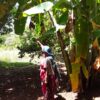
Bridging the Capital Gap: Strategic Public-Private Partnerships Invest in Young Agri-entrepreneurs
The global aid system is crumbling amidst chronic underinvestment in rural areas, posing a systemic threat to food systems everywhere. With 1.3 billion young people in the world today – the largest generation in history, and nearly half of them living in rural areas – investing in their entrepreneurial potential is key.
The Bitter Sweet Future of Cocoa Showcased During COP30, Belém
Izete dos Santos Costa, also known as Dona Nena among locals in Combu Island, welcomed hundreds of people from around the world during the recent climate conference in Belém. Her team showcased local crafts and chocolate-making processes in the land of the Amazon rainforest—far from the deafening air conditioner sounds at the Parque da Cidade, where the COP30 negotiations were ongoing.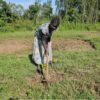
Farmers Earn While Reviving Native Forests Through a Blockchain-Powered App
For years, Morris Onyango had been trying to reforest his degraded land on the shores of River Nzoia, in Siaya county, 430 kilometers from Kenya’s Capital, Nairobi. But every time he planted trees on his farm, his efforts bore little fruit, as floodwaters would not only wash away his tree seedlings but also fertile topsoil on his land.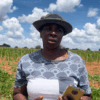
Why Food and Agriculture Should Be at the Centre of COP30 Agenda
As the COP30 entered its second week in Brazil, the urgency to tackle climate change has never been greater, as is the appetite to feed a growing world population.
In Zimbabwe, Secondhand Clothes From the West Are Collapsing the Local Textile Industry
Shamiso Marambanyika assists a male customer in selecting a pair of jeans on a Saturday morning in Mutare, a city in the eastern part of Zimbabwe.
Beijing+30: A Culmination of International, Intergenerational Dialogue
Thirty years since the UN Fourth World Conference on Women in Beijing, the resolve that defined and united the world toward a global agenda for gender equality make it just as relevant in 2025.
From Fishers to Forest Keepers: Women and Communities Reviving India’s Mangroves
As the climate crisis intensifies, long-term adaptation strategies have become urgent. Among the most effective nature-based solutions are mangroves—resilient coastal forests that protect communities, preserve biodiversity, and capture carbon.
Inside Africa’s Big Bet on Youth to Feed the Continent and Who’s Actually Getting Funded
Winnie Wambui leans forward on the panel stage, microphone in hand, scanning the room until she spots a raised hand.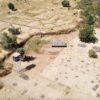
Banks Embed Climate Risk, Gender and Sustainability in Finance Products
As climate shocks intensify across East Africa, from failed rains in Kenya’s arid north to devastating floods in Tanzania’s coastal belt, the region’s banks are emerging as unlikely but powerful players in the resilience race.
Zanzibar’s Blue Economy Offers Hope Amid Rising Seas and Gender Inequity
At dawn on the white-sand shores of Jambiani, 45-year-old Saada Juma braces herself against the pull of the tide, wrangling ropes laced with seaweed. Her hands, hardened by decades of labor, move instinctively as she secures her aquatic crop.
Women From Landlocked Developing Countries Set Sights on Open Horizons
“Progress towards gender equality and equity remains uneven and far too slow. One in four women in landlocked developing countries (LLDCs) live in extreme poverty, and this is nearly 75 million women,” said Rabab Fatima, Secretary-General of the Third United Nations Conference on Landlocked Developing Countries or LLDC3 ongoing in Awaza, Turkmenistan.
Protect Women’s Rights, Especially in a Time of Equality Backlash, Say Activists
Discriminatory laws and the absence of legal protections impact more than 2.5 billion women and girls worldwide in various ways. Legal reform is paramount to securing gender equality, and the world cannot afford to roll back on decades of progress in women’s rights.Next Page »


Around the world, women make great contributions to different economies. From the field of business, to carrying the bulk of unpaid care, women are essential to economic growth. However, due to gender inequality, women face economic discrimination. Taking many forms, including disproportionate wages, greater exposure to vulnerable employment, and reduced economic opportunity, this inequality continues to curtail economic development. Yet women continue to work past these obstacles and reduce this disparity, furthering economic empowerment. These stories help to identify women’s economic struggles, and those that are working towards empowerment.

The Week with IPS

Tracking global progress towards a sustainable world
